Industry Q&A: Tension Control
Tension Control Equipment: The Invisible Hero in Film Converting

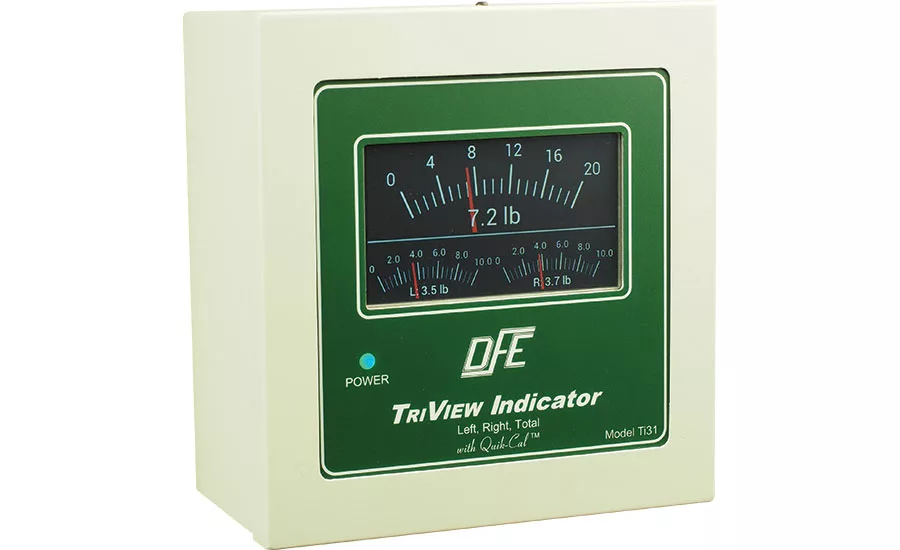

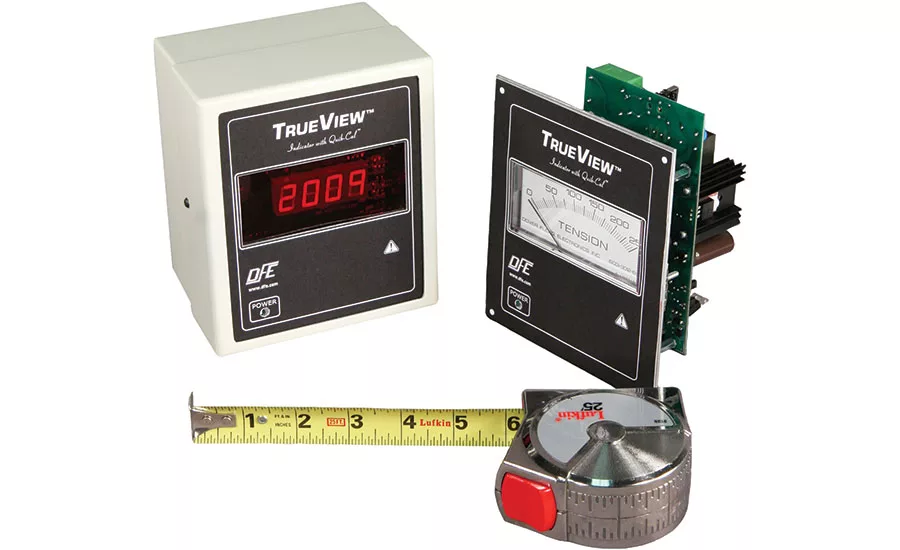
Flexible Packaging recently caught up Mark Breen, marketing manager at Dover Flexo Electronics (DFE), to chat about new innovations in tension control, when (and why) to upgrade equipment and more.
What’s new in tension control? Have you released — or do you plan to release — any new products?
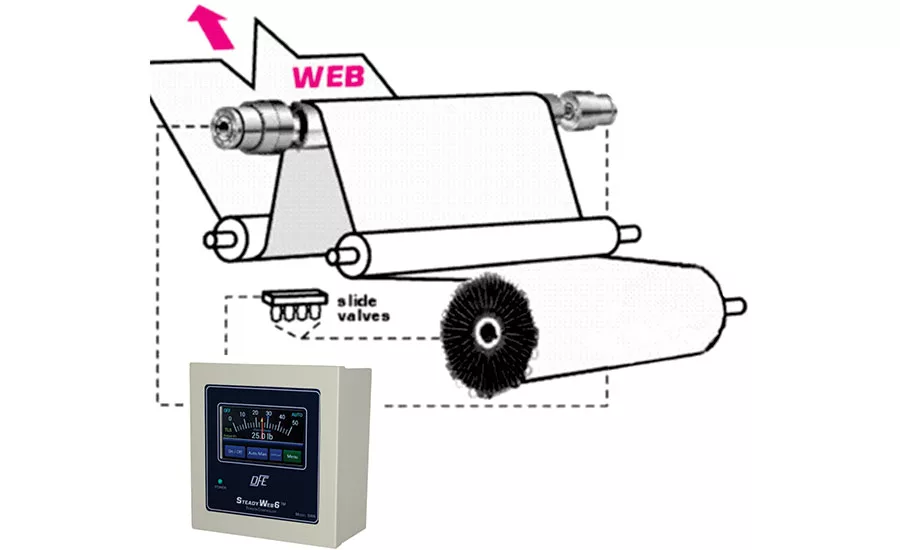
Breen: One new development is the integration of full touch-screen technology into the graphic user interfaces of the tension indication and control electronics. Touch screens provide a more intuitive user experience and replace the need for separate navigation buttons and switches on controller overlays and front panels. DFE has begun the migration of all of our electronics products over to the touch-screen only interfaces with the recent release of the TriView Tension Indicator and the SteadyWeb6 Tension Controller.
Can you explain the difference between a transducer/load cell-based system and a dancer control system?
Breen: Both of these web tension control systems are closed loop, meaning that they actively make output adjustments to the system based on changing input data from the moving web. But in a dancer system, the controller signals the dancer roll (which has the moving web crossing it) to move in response to a change in position. Although the initial position change is the result of a change in web tension, the controller does not measure tension or react to force changes as directly as a transducer-based system does.
If tension increases, the dancer changes position, moving a sensor, which is usually a potentiometer, and signaling the controller to reduce or increase torque to allow the dancer to return to its original position. If tension decreases, the opposite sequence occurs. Dancers are actually position controllers, not tension controllers. The system’s principal advantage is its web accumulation ability, which tension transducer schemes lack. A dancer system may be more forgiving of speed variations as created by out-of-round rolls or frequent starts and stops, but dancers have certain drawbacks. Compared to tension transducer systems, they are expensive to design, build and install. They are difficult to properly engineer, and they are prone to errors caused by mass, damping and friction. They cannot read out tension or compensate for small but significant tension transients in the process.
In a tension transducer system, specially designed force transducers (tension sensors) measure actual web tension in the converting process. The transducers are typically used in pairs with one installed on each end of an ordinary idler roll shaft.
What’s the typical cost of a tension monitoring system?
Breen: If a web printer or converter is shopping for a lower cost alternative to a full-featured closed-loop tension-management system with plans to let a machine operator or a PLC make speed or torque adjustments to a tensioning device, then a simple tension monitoring system with a tension transducer pair (or integrated sensing beam pair on a single tension roll transducer) could be adequate. Pricing for a base tension monitoring package with transducers and an indicator or tension amplifier start at about $2,000.
What are some of the common parts/components that fail in a tension control system? Should converters consider stocking these parts to prevent lost productivity from malfunction?
Breen: Because of the static nature of most of these products, given that they bolt to the machine frame and typically experience minimal physical trauma in their lifetimes, we see very few true product failures in the field. The components that have the shorter lifespans are the ones at friction and wear points. Bearings in the transducers, for instance, which rotate with the idler roll shaft in the case of live-shaft mounting transducers, may wear over time and need to be replaced after a few years. Also, the friction pads on the pneumatic brakes are consumable items that need replacement on a routine schedule depending on the demand levels of the application.
Other than replacement brake friction pads, there are no components that we recommend to our customers to stock, except for maybe a spare transducer or two in the case of the rare need for an emergency malfunction replacement.
Say you have old tension control equipment that is seemingly working fine. When should someone consider replacing it?
Breen: That is a perplexing question for us. While we like to sell new product, our mission to our customers is to supply them with equipment and a total solution that will last them for many years without the need for replacement. The only real driver for a converter or printer to upgrade an old tension control system that is working fine is their personal preference. Two reasons to upgrade would be: 1) The newer tension control and indication electronic devices have advanced feature sets that might be appealing, like easier-to-use graphic interfaces with touch screens; and 2) Any type of warranty that comes with the purchase of new equipment.
As with consumer electronic devices, as microprocessors shrink and become more powerful, the number of features and benefits that can be realized in a single industrial electronics device increases, too. When a new tension controller with more advanced technology, a larger feature set and a smaller footprint becomes available on the market, and at a reasonable price, users can often justify the retirement of an older controller on a cost/benefit basis.
The truth is that many of our customers are happy to stick with their old equipment if it’s working fine. We have thousands of tension controllers, indicators and transducers on machines across North America that have been working steadily in industrial production for two and even three decades.
Is there anything else you’d care to share about tension control?
Breen: Although tension measurement and control equipment plays a vital role in the production quality aspect of flexible packaging, converting and web printing, it’s a process variable that our customers want to work invisibly, without them having to worry about how or why it’s working. The greatest compliment we can hear from customers is that they’re not even aware that their tension control equipment is doing anything.
Looking for a reprint of this article?
From high-res PDFs to custom plaques, order your copy today!