Proper Food Safety Means Proper Packaging Inks
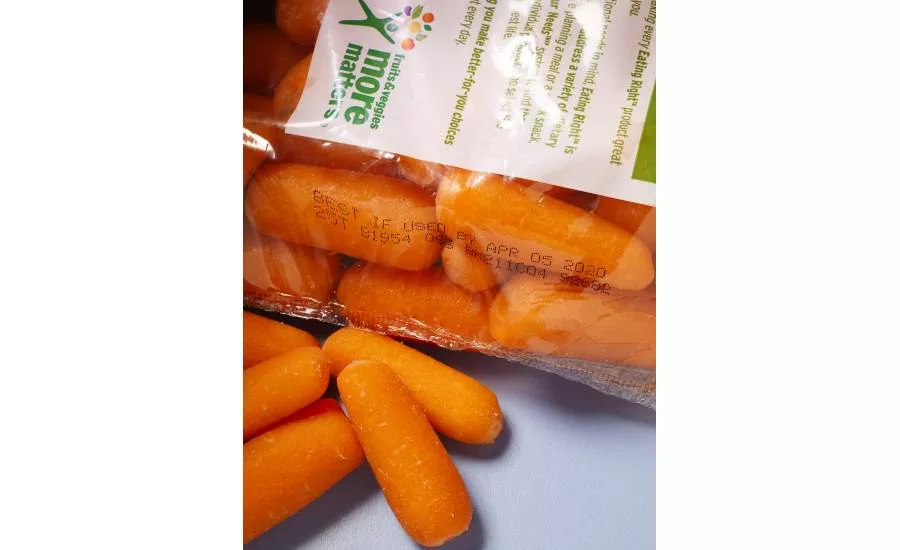
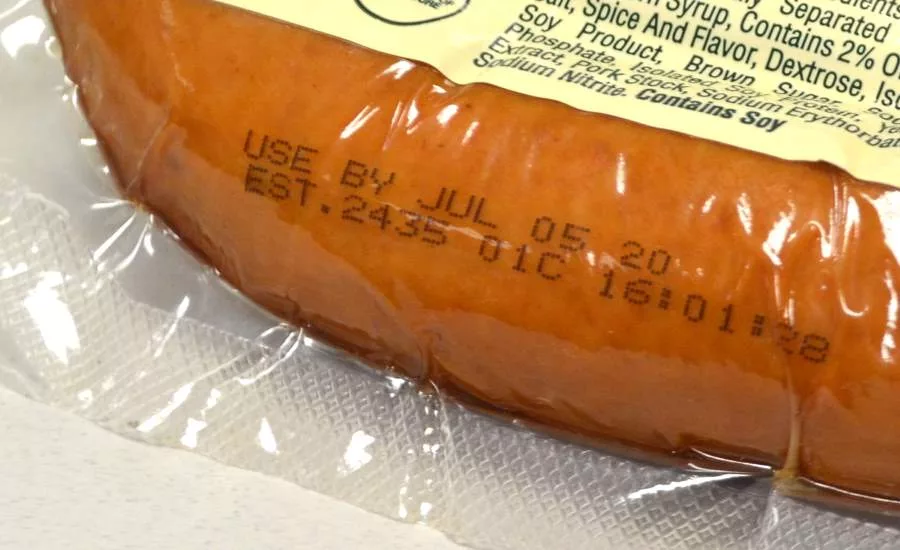
Flexible food packaging gives brand owners the opportunity to attract customers and communicate food benefits, allergen warnings and traceability information. The ability to provide information on the packaging without compromising the food’s quality or safety is essential.
Continuous inkjet (CIJ) printing is a versatile coding method to produce clear, readable alphanumeric codes on irregular and curved surfaces such as pouches, bags and packs. Food manufacturers often employ CIJ printers on their packaging lines to print manufacturing information, expiration dates and other variable data directly onto flexible food packaging.
Meeting Regulation Requirements
Ink plays a critical role in food safety as it may come into contact with food due to ink migration or the nature of the packaging. Generally, if it is reasonably expected that the ink may make contact with the food, its formulation must follow Food and Drug Administration regulations in the U.S., Health Canada and Canadian Food Inspection Agency standards in Canada, and other global regulations depending on the food’s destination.
While specific inks are not identified by the FDA as appropriate for direct and indirect food contact, the Code of Federal Regulations (CFR) Title 21 regulates food contact materials. The CFR includes general provisions applicable to indirect food additives and a threshold of regulation for substances used in food contact. Even more stringent, Switzerland’s ordinance 817.023.21 lists specific ink components allowed for food contact printing and identifies migration limits of inks printed on particular substrates. As one of the most restricting regulations, it is often referenced globally by manufacturers to determine an ink’s safety for use in food applications.
While CIJ printing uses much less ink compared to full coverage printing, the possibility of substances migrating through packaging is still possible depending on the ink type and amount used as well as the kind of packaging. Migration tests should be conducted to determine exactly what substances can pass through the packaging and make contact with the food. Even if an ink is not expected to have contact with food, the food manufacturer must ensure that the material forms a functional barrier between the food and ink.
Direct Food Contact and Food Grade Inks
Food-grade printing ink may be required for certain flexible packaging applications, like when a batch number is printed on a flavor pouch that is inserted into a box of pasta. The printed batch number will intentionally make contact with food. Therefore, the ink’s components should meet the requirements of food grade ink.
When direct food contact is intended, food-grade inks manufactured under Good Manufacturing Practices and approved for the application should be used. These food-grade inks usually contain solvents such as beverage-grade ethanol, food-grade acetone and potable water. Once printed, most of the solvent evaporates in the air, leaving only residual trace amounts of solvent on the surface. For FDA compliance, a CIJ food-grade ink’s ingredients must be identified as allowed food additives on the CFR 21 list and used for their intended purpose.
Indirect Food Contact
The FDA defines indirect food contact as when an additive, such as a printing ink, unintentionally comes into contact with food as part of the packaging. The food manufacturer is responsible for testing the application to ensure that the packaging is acting as a functional barrier between the ink and food and that the finished package meets all applicable regulations. The ink manufacturer is responsible for supplying users with a complete list of each ink’s components to aid in testing.
Printing on Flexible Packaging
While many CIJ ink compositions may be similar to flexographic, lithographic and other printing inks, the key difference is in the printing method and the unique demands of a CIJ printer. CIJ inks have significantly lower viscosities than other inks and are printed with a non-contact method, making good adhesion challenging. CIJ inks must also be able to hold an electrical charge to enable the variable placement of each drop. While complete substrate coverage would be impossible, a CIJ ink’s chief job is to produce clear, readable alphanumeric codes on the food’s packaging.
Another code-printing technology, thermal transfer overprinting (TTO), has its advantages with flexible packaging including the ability to produce high-resolution codes and large amounts of text. Yet CIJ remains an excellent choice for many manufacturers who are looking for integration options. CIJ printers can apply codes before or after the film is formed and the product is packaged. In addition to inks of various colors with food-grade, fast-drying and high-contrast properties, certain CIJ inks are specifically engineered for printing on flexible packaging including BOPP, LDPE and PE.
Inks from Trusted Manufacturers
Whether a printed code on a flexible food package will have direct or indirect food contact, it is important to work with a trusted ink manufacturer to identify food packaging inks that have been developed with appropriate solvents, resins, colorings and other components. Companies like Videojet Technologies are dedicated to the creation of leading ink solutions for a vast range of substrates and applications. Videojet, for example, follows a rigorous ink development process that includes extensive analytical instrumentation to aid substrate evaluation and testing, and rigorous development processes such as full application simulation and environmental testing. In-house experts ensure compliance with global environmental and safety regulations to provide safe products that fit customer’s needs.
Looking for a reprint of this article?
From high-res PDFs to custom plaques, order your copy today!