Europe Leads Way in Plastic Reduction; Can U.S. Follow Suit?
Single-use plastics are incredibly damaging to the environment. In fact, the Everyday Plastic Report shows that 70 per cent of all plastic thrown away is not currently recyclable. Things need to change.
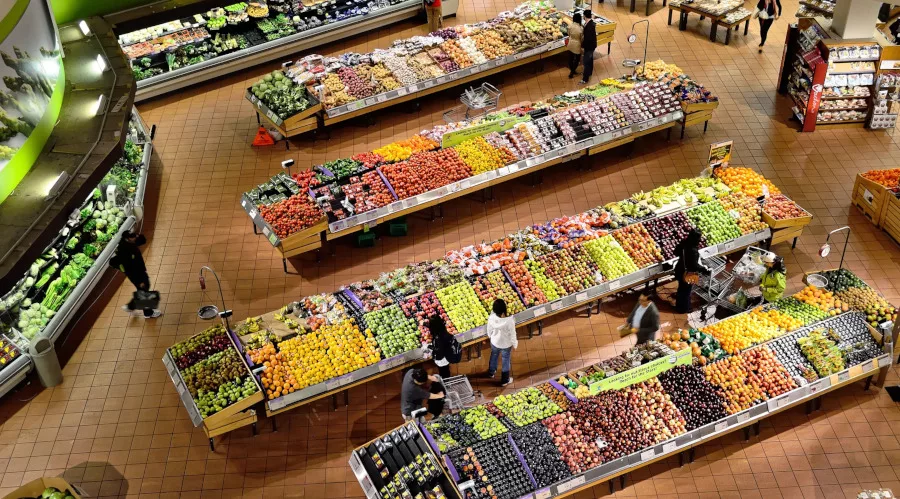
Both the United Kingdom and Germany are beginning to court the idea of new legislation. But what about the United States? Ever taken a closer look at fruit and vegetable pricing? It may come as a surprise that packaged fruit and vegetables are often cheaper to buy than their loose counterparts. But, doesn’t this seem counter-intuitive? Surely, it would cost less for producers to make unpackaged products, as they would not have to buy packaging.
The Everyday Plastics Report shows that food packaging accounts for two-thirds of the average person’s plastic footprint every year. . It is widely understood that the United States is lagging behind other nations in the war against plastics. In fact, a Wagner report states that in 2014, 103.465 billion single-use plastic shopping bags were used in the United States.
In Europe, governments are beginning to become more interested in solving sustainability problems. So, what is being implemented, and can the U.S. follow suit?
United Kingdom
Following an e-petition backed by 123,000 members of the British public, members of the UK parliament were forced to debate whether supermarket should be required to offer plastic-free fruit and vegetables. The crux of the debate was that, as fruit and vegetables often come in their own natural wrapping, why do we smother them in plastic? During the debate, the UK Government reaffirmed its pledge to support the Plastic Pact — an initiative to create a circular economy for plastics. The imitative aims to make sure all plastic packaging is fully reusable, recyclable or compostable by 2025, while also striving to eliminate single-use plastics.
Britain has also witnessed a movement to introduce the use of paper bags for certain fresh produce, to reduce reliance on single-use plastics. However, the point was made that certain products, especially soft fruits and salads, do benefit from plastic packaging as it increases their lifespans and therefore reduces food waste. There is certainly a balance to be struck between the use of plastic packaging and ensuring products are protected to extend their lifespan. Germany, for instance, suggests banning the use of unnecessary plastic packaging, but does advocate vacuum sealing when required to extend a products shelf life. That said, this type of sealing could also be compatible with aluminum packaging, a highly recyclable material.
Changing packaging habits
Vacuum Sealed Packaging (VSP) and Modified Atmosphere Packaging (MAP) are both ideal methods of packaging for products that are stored for long periods of time. Primarily, these options are used for packaging meat products, rather than loose fruit and vegetables. But, that’s not to say fruit and vegetable suppliers cannot take advantage of these techniques.
MAP and VSP both extend the lifespan of food by removing oxygen from encountering the product. This prevents bacterial growth and therefore stops the food from spoiling as quickly. As the name suggests, VSP sucks oxygen out of packaging to create a vacuum, thus preventing bacteria growth by starving it of oxygen.
Comparatively, MAP replaces air in the packaging with specific gases, like CO2 and nitrogen. This method introduces gasses that reduce the rate at which respiration happens. The respiration rate of a product simply refers to how fast the food will spoil. Products with very high respiration rates include spinach, avocado, broccoli, mushrooms and strawberries.
Clearly, there are instances where plastics should be used in food packaging. However, this shouldn’t be done unnecessarily, particularly for fruit and vegetables, which often have their own protective layers. While the United States is slightly behind European directives in relation to reducing plastics, the nation is making some changes. As of September 2017, there were 271 local governments in the US with plastic bag ordinances, in an effort to reduce their use.
This shows that local governments are interested in working towards reducing single-use plastics, but the country is yet to implement any kind of national government initiative. By taking inspiration from European legislation and by renovating the way that food is packaged, more can be done to prevent pollution in our environment. This initiative could be bolstered by introducing, more VSP and MAP aluminum-packaged products, to make sure that products that do need packaging last for longer — thus preventing unneeded waste, overproduction and spoiled food.
Looking for a reprint of this article?
From high-res PDFs to custom plaques, order your copy today!