Labeling: Adhesives
Strict Regulations Govern Food Label Adhesives
Testing can ensure use of adhesives that don’t negatively affect consumers’ health.

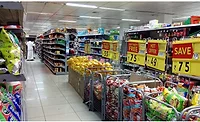
When walking through the supermarket, have you ever noticed how many products feature labels? By labels, we don’t mean the small price tags — these have in recent years been almost completely done away with and prices are instead displayed on shelves — but rather the larger labels that are used as an advertising medium and to display the product information.
If you look closely, you will see that a large number of products – mainly sausages and cheese – are labelled in this way. This is not the only place in which these labels are used — in the fruit and vegetables section, you choose your products, weigh them and stick the price and product label that is printed at the scales to the plastic bag in which they are weighed or even directly to the fruit or vegetable.
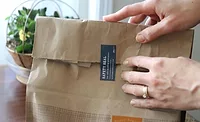
Fresh cheese and sausages are placed in a plastic bag at the deli counter, weighed and a self-adhesive label on which the price information is printed is used to seal the bag. Other products, such as seasoning sauces, spice jars and drink bottles also feature labels that are used as advertising media.
However, you have probably never thought about whether the adhesive used in these labels is allowed to be used for this purpose.
Food Contact Regulations
There are strict regulations for the packaging and materials, including adhesive, that are allowed to come into contact with foodstuffs. Within the United States, these regulations are set out by the Food & Drug Administration (FDA) and in Europe by the European Commission.
Although there are differences between the regulations and legislation, there are so-called approved lists in the U.S. These lists define the materials (including adhesive) that are permitted to come into contact with foodstuffs, as well as the ways in which they are allowed to be applied to foodstuffs. The lists also specify whether the materials are permitted to come into direct or indirect contact with foodstuffs.
Direct contact with foodstuffs means that the adhesive is allowed to touch the foodstuff itself. Indirect contact is where the adhesive is applied to another material that comes into direct contact with the foodstuff.
For example, you create a label that you want to attach to an apple. The label comes into direct contact with the foodstuff when applied. Another label is stuck to the packaging for a piece of cheese. This means that the label does not come into direct contact with the foodstuff, but with the packaging instead. This is what is referred to as indirect contact with foodstuffs.
The FDA only approves substances that have undergone thorough prior testing which shows that no components of the substance that could pose a hazard to the health of consumers are transferred to foodstuffs.
Regulations in Europe
In Europe, the distributor of the foodstuff must prove that the foodstuff and the packaging including adhesive in which the foodstuff is contained are safe and the consumption of the foodstuff does not pose any risks to consumers.
To help with this, there is also a wide range of resources available for the distributor to use, e.g. approved lists for plastics that are permitted to come into contact with foodstuffs (EU Regulation 10/2011). This regulation clearly stipulates the raw materials that have been tested and have been found to be suitable for coming into contact with foodstuffs. These raw materials are subsequently allowed to be used in the manufacture of foodstuff packaging made from plastic, provided that they also comply with global migration values and/or specific migration limits. The limits specify the maximum amounts of substances that are allowed to be transferred to foodstuffs.
Independent Testing Institutes
It has become common practice for suppliers to support the distributors by having the individual components of foodstuff packaging tested by independent institutes to prove that the components supplied by them are safe.
For the purpose of this testing, samples of the adhesive and information on the exact way in which it is intended to be used are sent to the institute. The testing institute then carries out its testing in accordance with the generally binding testing standards to determine whether components of the adhesive are transferred to a food simulant. The food simulants used in the testing include, for example, olive oil (which simulates contact with greasy foodstuffs) and Tenax (which simulates contact with dry foodstuffs).
Depending on the conditions in which the foodstuffs are stored (sausages and cheese are usually stored in a fridge, while cookies are usually stored at room temperature), a wide range of testing programs can be selected. At the end of the test series, the institute draws up a final report as well as a certificate which specifies the types of food (dry, wet, greasy) to which the adhesive is permitted to come into contact.
This ensures that only adhesivesthat do not release any substances that could negatively affect the health of consumers are used.
In summary:
Labels are attached to a great many foodstuffs and foodstuff packaging nowadays.
The adhesive (and its components) used for these labels must be tested to determine whether they can come into contact with foodstuffs and be assessed as safe.
Approved substances lists make it easier to select the right components in the development of the adhesive.
Looking for a reprint of this article?
From high-res PDFs to custom plaques, order your copy today!