Teabags' Plastic Content Creates a Problem
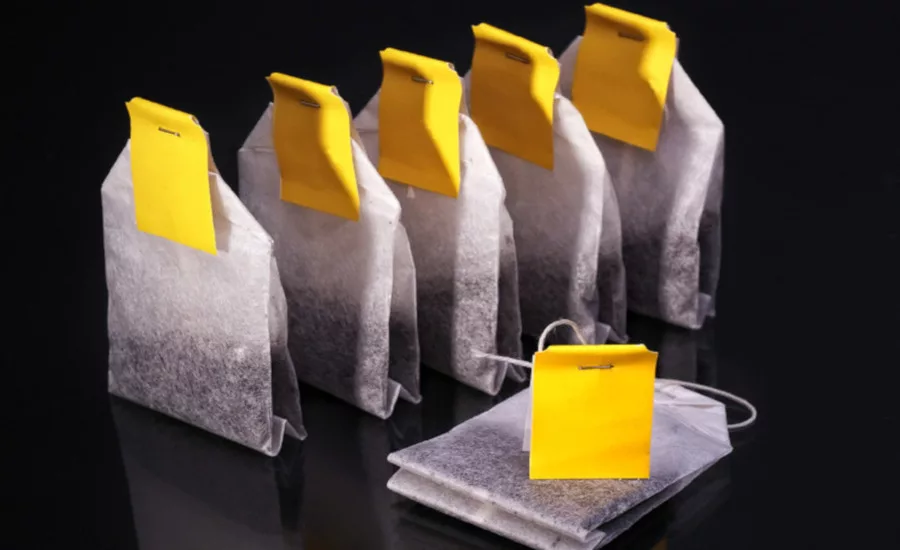
After water, tea is the second most consumed beverage in the world. It is estimated 281 billion liters were consumed in 2019 and this is a trend that is destined to continue to rise.
Around the world, teabags are becoming a staple in many markets. For example, in the UK, 96% of tea is purchased in bag form. Even in countries where leaf tea is still commonly consumed, the bag is now the primary method for launching new hot tea products onto the market. In 2017, these amounted to 87% of launches in the North America, 75% in Europe, and even 45% in Asia-Pacific. The key to its success is its convenience.
Teabags have a problem – roughly 25% of the teabag, excluding contents, is plastic. Global Plastic Action Plan (GPAP) estimates 8 million metric tonnes of plastic leak into our oceans every year and that by 2050 there will be more plastic than fish in our seas. Thanks to programs such as BBC ‘Blue Planet’ the issue of plastic is now being recognized by governments and consumers around the world. Currently, the focus is on more obvious sources of plastic – single-use straws, water bottles and other food contact products. Stakeholders need to be aware, however, that the focus could soon shift towards items such as teabags.
In the UK, around 60.2 billion cups of tea are estimated to be consumed every year, with most being from teabags. Roughly 96% of UK teabags use non-biodegradable polypropylene in their construction. This will be released into the environment if the teabags are not incinerated after disposal.
As a substance, polypropylene is already targeted in many markets to reduce its use. Under the EU’s ‘Single-Use Plastics Directive’, (EU) 2019/904, plastic use is already being addressed in food contact materials such as cutlery, plates, and straws. The ban will begin in 2021. No national ban exists in the US but several local jurisdictions have introduced bans. Even China has begun to introduce measures to restrict the use of single-use plastic, starting with straws.
Teabag manufacturers and brands should be aware of the way regulations are being used to reduce plastic use and stay alert to the possibility that it will affect them in the future. At the same time, they need to be aware that consumers are increasingly demanding more environmentally friendly products with less plastic.
The difficulty for manufacturers is that the meaning of ‘plastic-free’ is not always clear. Some brands are already claiming their teabags are ‘plastic free’ but this could refer to the use of polylactic acid (PLA), an alternative to polypropylene. PLA is a bio-plastic made from plant materials instead of oil. The problem is, many experts, and Directive (EU) 2019/904, consider bio-plastics to still be a form of single-use plastic.
True alternatives to plastic are, at the moment, rather limited. Obviously, there is the option to use leaf tea. Manufacturers can also stitch their bags together using cotton thread. Other attempts have so far proved to be problematic. One manufacturer is currently working with Sheffield University to design a teabag that will be classed as ‘industrially compostable’ but not ‘plastic-free’. This means it could go for food and garden waste recycling, but the heat generated in a domestic compost heap would not be high enough to break it down.
Creating a truly plastic-free teabag is proving to be difficult but that does not mean regulators and consumers will not begin to turn their attention to the amount of plastic in teabags in the future. There is already a clear advantage among consumers in being able to promote a product as ‘plastic-free’, even if this means free from oil-based plastics. Stakeholders are now advised to consider the way markets are likely to develop in the future in order to remain compliant with regulations and gain competitive advantage
SGS offers a comprehensive range of service to help food contact material manufacturers comply with market regulations and consumer expectations. Services include determination of polymer type, food safety tests, and tests on whether a material is bio-degradable/compostable. They provide expert advice on emerging regulations, compliance issues and documentation review.
For more information, visit www.sgs.com/hardlines
Looking for a reprint of this article?
From high-res PDFs to custom plaques, order your copy today!