
Looking for Inspiration - today’s consumers demand packaging that creates a distinct brand experience
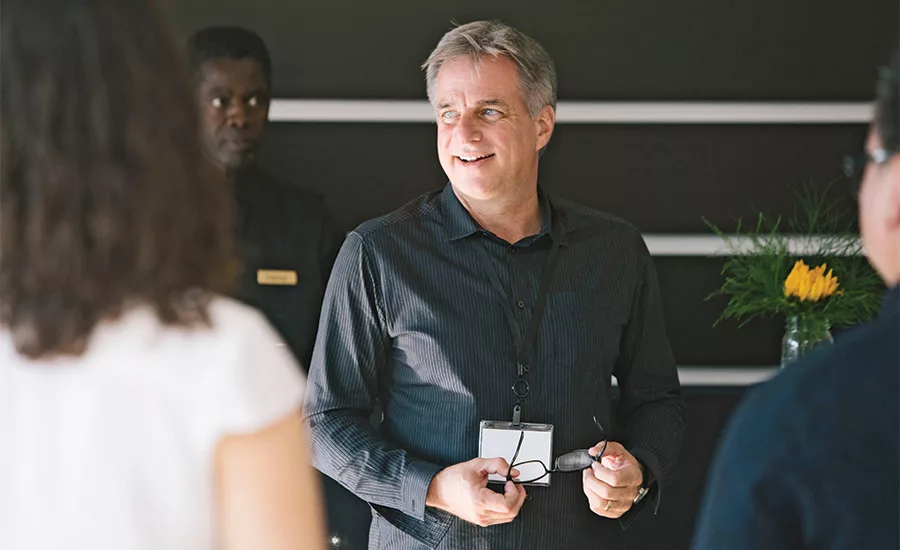
Good design is not good enough anymore, says Mark Dziersk, a recognized expert in industrial design and brand management. “Packaging really has to inspire people. A brand’s package is its product, and a brand is defined by the experience that people have with its packaging.”
Dziersk manages the Chicago office of LUNAR, now a part of McKinsey Design (mckinsey.com)—a full-service design consultancy that delivers products, services, customer experience and design-led innovation. He specializes in consumer products with a focus on beauty and retail, including such brands as Dove/Unilever, Bergdorf Goodman, Jergens, John Frieda, L’Oreal and Wrigley.
He will be presenting at the upcoming Packaging That Sells Conference, Oct. 8-10 in Chicago, Ill., where he will address issues in structural packaging design. He sat down with BRAND PACKAGING recently to discuss the future of packaging design.
BRAND Packaging: what factors should designers consider when choosing or recommending the container type and material for packaging?
Dziersk: Cost, functionality and price used to be the three-legged stool in packaging design for CPGs. We are coming into an age where there is a fourth leg that involves sustainability. But it is more than that; it is a type of altruism. Our children are being taught this fourth dimension in school, for example, and they will be the customers of the future. This fourth leg of the stool in packaging means that companies must engage in developing packaging that serves more than just self-interest.
Bp: when it comes to structural packaging design, who should be involved in the decision-making?
Dziersk: The key is in cross-functional development—it is best to have everyone in the room as much as possible. For example, take the operations team. They are often at the back of the line when it comes to package structure development. They should be part of the initial thinking. Often, they are being asked to make really difficult transitions happen. It helps if they can plan for them in advance and be part of the conversation early.
Bp: what is “design thinking?”
Dziersk: The world is demanding that companies be nimble. Companies need to learn to be agile in their responses, even when they have made substantial investments in packaging lines and processes. There must be ways companies can effectively respond to the rapidly changing demands of consumers. Design thinking is such a method. It is a problem-solving methodology that starts with human-centered concern resulting in making a better answer that is inspired by users. Contrary to some perceptions, design thinking is not a random conceptualization but kind of an algorithm of divergent and convergent thinking that is used to problem solve. In the middle, you prototype to learn and then iterate, rinse and repeat until you get to the right answer. More than ever before we see many successful companies using design thinking to disrupt and gain market leverage in the world today.
Bp: what does innovation mean in packaging and branding today?
Dziersk: Innovation means many different things to people individually. I borrow my definition from Walter Herbst who is at Northwestern University. Walter says that you can have creativity without innovation, but you can’t have innovation without creativity. That innovation is creativity reduced to practice. I like that definition a lot. Taking creative thinking and reducing it into the world, creating packages and designs that are useful and reduce the friction between what people need and how they get it.
Bp: how important is brand strategy to packaging design?
Dziersk: Brand strategy and packaging must be intimately aligned. When you separate brand and design is when you get into trouble. There are people who still believe brand is one thing and design is another thing. I don’t. Where CPGs get into trouble is when they start doing things they consider to be effective on the brand side that are off-message on what people expect the product or the package to do. The promise of the brand and reality of the packaging design—and its touch points with consumers for that matter—should be the same across the business.
Bp: what steps should a company take to ensure success in the launch of a new product or package?
Dziersk: The best bet is to get out of the building. Participate with your research and insight people—even if you’re a C-suite executive—to get a perspective on who your customer really is. Get them in a room and co-create with them to get close to them. Hear their needs and see with your own eyes what other unspoken needs they have that you can act on from a place of true empathy. There is no substitute for understanding not just the customer’s functional needs, but also their emotional drivers. If you can figure out why people love or hate something, then you really have something to work with.
Bp: do companies take enough risk in launching new products and packaging?
Dziersk: In general, companies are way too guarded in creating their designs. Companies who want to be assured of success often are launching what we call cruise ships or freighters. They do an enormous amount of work to ensure they have mitigated every risk before a launch. Then they do giant launches and look for, say, a 2 percent lift over a long time. It’s time to change that model. What CPGs need to learn is how to form smaller teams and work in agile ways to embrace risk. Never changing your production lines or never thinking “new” is just a recipe for mediocrity. Some startup companies go to $200 million in two years because they’re nimble and their decision-making processes are agile. You have to take calculated risks along with the best ideas. CPGs are great at asking “why?” but not at asking “why not?” For example, one of the world’s leading Internet companies wants to be seen as forward thinking, so it changes its logo every day to make an impression on customers who use their service every day. They’re hearing what their customers are demanding in terms of communication. To be successful going forward, CPGs have to figure out a way to act not just on what has worked in the past but rather to move toward where their customers are going.
Bp: do packaging designers consider the “machinability” of their designs once the packaging line starts up?
Dziersk: You are in deep trouble if you don’t consider the “machinability” of a packaging design and if you don’t consider it from the word “go.” I know that sounds antithetical to creativity, but it certainly isn’t. Designers need to create an expressive design that also needs to run on a packaging line at 320 bottles per minute. The two are equally important. To this end, all good designers have to understand the engineering, and everything you design must be able to be manufactured. The worst thing is to come up with a structure and hand it over to engineering, who are then forced to make changes because it’s not functional. I often hear designers lament that changes were required to make a package work. Designers must take responsibility for that.
Bp: do all of today’s tools (software, augmented reality, 3D printing, etc.) help in the structural design process?
Dziersk: Design tools today are extraordinarily helpful. We are excited to see them evolve. We are doing things now with tools like virtual grocery stores for virtual shopping experiments. We make prototypes in a day that used to take a month. We are able to render packaging and put it into environments that simulate retail, and of course we use design thinking in new ways like “innovation garages” to shrink development times significantly. I say bring on the new tools! We’ll make them work on behalf of customers and companies.
Looking for a reprint of this article?
From high-res PDFs to custom plaques, order your copy today!