Technology: Inks
Can Your Brand Pass the “First Moment of Truth” Test?
How color quality plays a significant role in consumer preference.
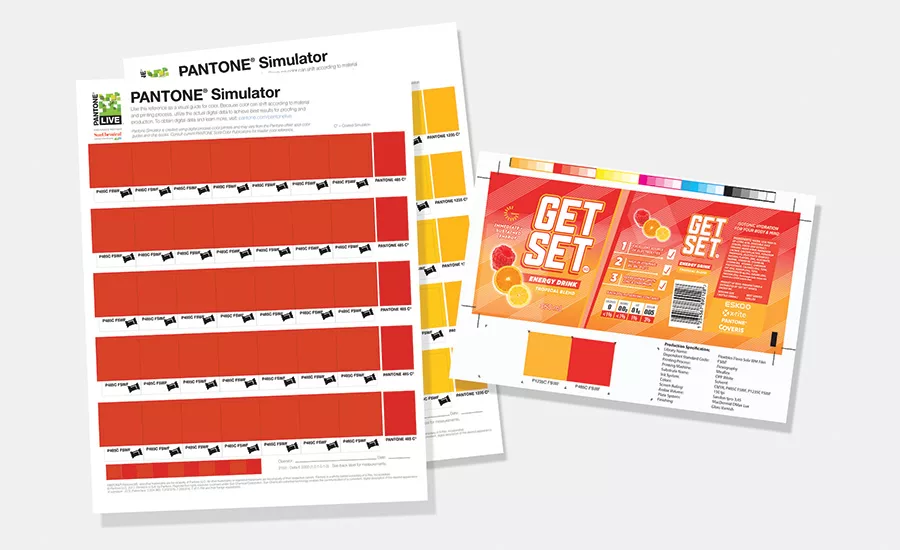
The “first moment of truth” is that 2 to 7 seconds it takes a consumer to make a decision about a product color is a significant factor in “first moment of truth” when you considered the reach it has to engage and communicate to consumers. This is what can make getting the right color and the color right, the first time, so important in that brand and consumer relationship.
Brand managers or packaging designers invest countless hours and creative energy to create the right face for your products. The packaging and unboxing of a product creates an experience for the consumer that adds to the product’s appeal. It’s important to make sure design intent is realized – every time and everywhere that product appears. This is a building block of creating consistency in the consumer experience each time they interact with the product.
Color control and consistency in printed packaging can seem elusive or difficult to achieve, especially when a large scale production of the packaging is necessary. The more you scale in size and across packaging types, the more variables that can impact print quality – processes, materials, ink types, etc. With print suppliers around the world, it can seem too complex to achieve higher quality packaging results.
Why Does Color Go Wrong?
…but you are still getting this?
Top three reasons a packaging color program can fall short:
1) Yesterday’s tools are no longer enough.
Many brands have invested in color tools like brand style guides, visual standards and assessments, but designers still struggle to specify the right color in artwork.
Visual references, like color proofs, ink drawdowns and color books are a start on a brand’s color journey. The challenges with a visual-only approach to color specification and verification are two-fold:
Consider the effect of different substrates, printing processes, and ink types. It becomes costly to produce samples in each of the variations. And, since the samples are physical samples that are produced, each sample has potential to be produced with slight variations.
Physical standards must be distributed and maintained. If you have one supplier, this is easier to do. At some point, the number of people and companies who need a “copy” of the sample will increase with a direct effect on increasing the work effort required to maintain that. Adding digital color specification to the mix can alleviate many of the communication and maintenance constraints and will complement the physical samples.
2) Time is wasted in the roundabout between design & production
It’s easy to get stuck in a cycle between design and production. Often designers assume there is an issue with color accuracy. There is an attitude that “this is the best I can do for the manufacturing process” when in reality the issue is color specification and alignment across packaging materials.
Notice the color misalignment between recycle board and aluminum? In many cases minor mistakes can snowball into the dreaded “error stack.” While one slight shift many not put you out of color tolerance, multiple shifts can add up and result in the final product not meeting color specifications.
3) Traditional print quality programs are expensive to scale.
While print quality programs vary, they usually have a common theme: send people onsite to monitor print production, sign-off on color on press, and ship proofs or samples around the globe. These manual processes are inefficient, expensive, and lead to long approval cycles.
More importantly, traditional print quality programs are not scalable. When the supplier pool is small and controlled, it’s easier for brands to micromanage quality through manual processes. Scaling requires a color strategy that is systematic, transparent, and embedded in the suppliers’ daily work stream.
Adding Digital is an Equalizer for Color Quality
To achieve packaging that sells, brands – especially those operating in global supply chains – need to shift from a hands-on service approach to a technology approach to keep costs in control and get consistent results.
Once the emphasis of color evaluation shifts from a physical reference to a known digital value, everyone can do a better job of achieving the original design intent color.
To get better color results on different packaging materials, you must start by defining and specifying the right colors to your suppliers. A digital ecosystem enables you to extend guidance to your suppliers so they can deliver achievable results in-line with your expectations. Digital color technology connects packaging tasks, and specifying digital color to suppliers returns big impact for relatively low effort.
Looking for a reprint of this article?
From high-res PDFs to custom plaques, order your copy today!