Packaging in Motion

The modern economy consumes vast quantities of packaging. Almost every product requires packaging at some point in its journey from manufacture to end-use. Along that journey, packaging performs multiple roles: protecting goods in transport or storage, simplifying handling and providing essential information to users. Worldwide, companies spend almost $900 billion on packaging every year.
While they can’t seem to get enough of the stuff, packaging creates many challenges for companies. In retail, for example, the spectacular growth of e-commerce has increased the volume of packaging consumed, the demands placed on that packaging, and the complexity of packaging management. Shipments travelling from manufacturers to e-commerce customers may have to endure 20 times as much manual handling as those destined for retail stores, for example. And e-commerce fulfilment centers have to cope with highly variable, unpredictable demand from customers who expect products to arrive fast and in perfect condition.
Then there’s the sustainability challenge. Consumers, governments and environmental groups are becoming increasingly concerned about the impact of packaging on the natural world. EU citizens each generate around 170 kg of plastic packaging waste every year, only a small fraction of which is currently recycled. Sent to landfill, plastic packaging can take hundreds of years to decompose, and if packaging waste isn’t properly managed, material can end up polluting the environment. Environmentalists predict that, at the current rate of accumulation, there will be more plastic than fish in the world’s oceans by 2050.
The packaging industry is responding to its economic, technical and social challenges with a wide range of initiatives. Companies are developing new materials, new technologies and new business models in efforts to reduce costs, increase flexibility and optimize the utilization of resources across the supply chain.
A New Wave of Automation
One area that is seeing significant innovation is in the application of advanced automation solutions. Automating previously manual packaging tasks helps companies to optimize the speed and productivity of their packaging operations, while adding new capabilities to already automated areas of the packaging value chain is unlocking improvements in efficiency, quality and flexibility. Overall, demand for packaging automation technologies is forecast to increase by 9.2% per year over the next five years, around three times faster than the packaging sector as a whole.
Packaging automation has seen some eye-catching developments in recent years, such as the introduction of robotics in warehouses and fulfilment centers, or the growing use of machine learning and artificial intelligence to technologies to optimize operations. Some of the most significant performance improvements, however, come from advances in the fundamental motion technologies that sit at the heart of modern packaging machines.
The Electromechanical Advantage
Companies are increasingly replacing the fluid power systems they have traditionally used to create linear motion with a new generation of electromechanical actuators. These devices replace hydraulic or pneumatic cylinders with a ball or roller screw mechanism, powered by an electric motor. They are available in a wide range of standard designs and in modular formats that allow power, speed and precision to be tailored for almost any conceivable application.
Electromechanical actuators provide many benefits in packaging applications. They are easy to integrate into machine designs, for example, and they don’t require pipes, pumps, accumulators and other complex infrastructure. Electromechanical actuators are also extremely energy efficient, with up to 80% of the input power turned into useful work.
Perhaps their most compelling advantage, however, is controllability. Electromechanical actuators have a direct mechanical link between the motor and the screw that provides precise control and high levels of repeatability — down to the micron level — across their full range of motion.
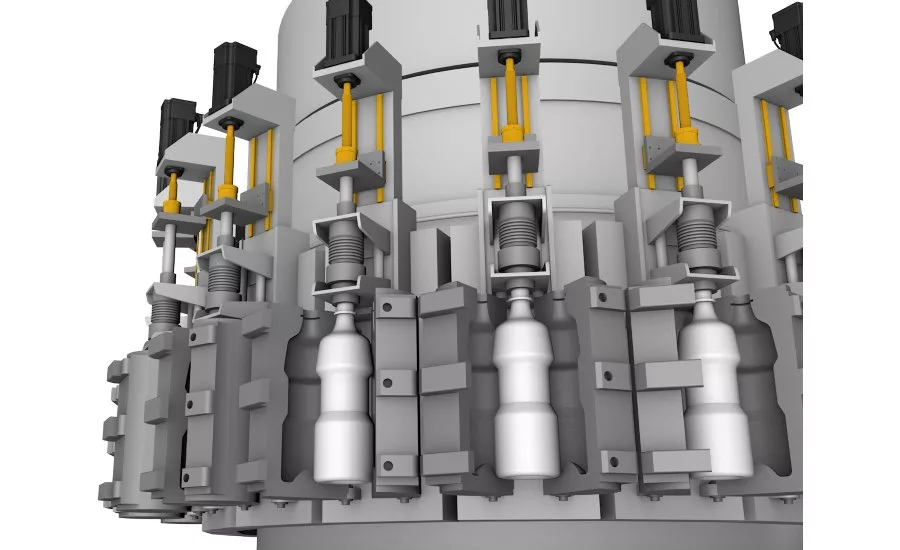
In the production of PET bottles, for example, mass reduction is a key performance goal as manufacturers seek to reduce product cost and resource usage. Handling thinner-walled bottles during the blow moulding process is extremely challenging, however, and production equipment must operate within a very precise performance envelope to minimize the risk of quality problems or product failures. Some manufacturers are now using Ewellix roller screws in this application to control the movement of the plastic preforms in the blow moulding process. The roller screw solution allows the motion of the preform to be optimally controlled throughout its cycle, while the high speed and acceleration offered by the actuators helps to maximize throughput.
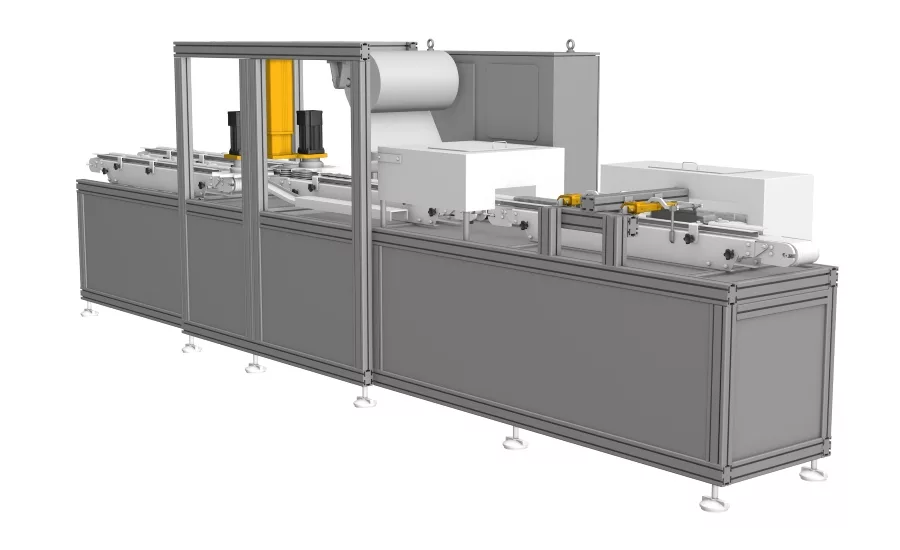
In food and drink packaging, filling and labelling, a major operational challenge is the need to work with an ever-wider range of packaging shapes, styles and sizes. Traditional packaging equipment requires manual re-setting every time the line is reconfigured for a different packaging type, a process which takes significant time, reducing productivity and limiting operational flexibility.
By incorporating electromechanical actuators and height adjustable pillars into their machines, manufacturers are now able to create designs that can be automatically and precisely re-set with a simple software signal. That change cuts downtime, reduces minimum economic batch sizes and eliminates the risk that re-setting errors will introduce quality problems or unplanned production stoppages.
Giving Robots Legs
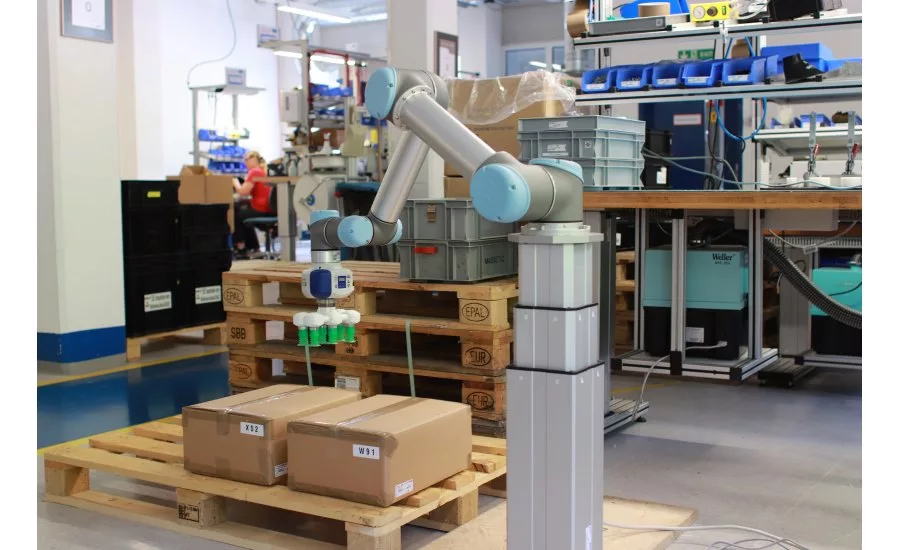
Electromechanical actuators are increasing the capability and versatility of cutting-edge robotic systems too. One of the key recent innovations in the automation of downstream packaging applications has been the development of co-bots. These are robots designed with built-in safety features that allow them to work alongside human colleagues in mixed environments such as warehouses and fulfilment centers. Co-bots are now taking on a wide range of packaging tasks, including box filling, labelling and pallet stacking.
Most co-bots operate from fixed base, which restricts the space over which they can operate. That limits their ability to take on certain tasks, such as transporting objects across longer distances, or handling at height. To overcome this, users are now installing their co-bots on moving platforms, powered by electromechanical actuators.
Vertical pillars using a telescopic design can be floor or ceiling mounted to allow a co-bot to work at any required height. That capability is particularly useful in pallet-stacking applications, which may require the robot to work anywhere from floor level to a height of 2 m (6.5 ft) or more. Horizontal linear modules, meanwhile, allow co-bots to move along a packaging line to work at different stations or to move automatically between machines. In either case, the precision inherent and rigidity of electromechanical actuators is a critical part of the system, ensuring the robot is stable and properly positioned for every task.
In addition to its range of general purpose and customized linear modules, Ewellix has worked with leading co-bot maker Universal Robotics (UR) to develop a set of plug-and-play solutions. The LIFTKIT telescopic vertical column and SLIDEKIT horizontal module are both supplied with a mechanical interface plate to allow quick secure mounting of a UR co-bot, along with a dedicated software interface that allows users to incorporate the new motion capabilities into their robot applications in as little as 30 minutes.
The global packaging industry is under pressure to control costs, improve productivity and reduce its environmental impact. Modern high-precision electromechanical actuators are a key ingredient in an emerging generation of smarter, more flexible automation solutions that are helping the industry to achieve its goals.
Ewellix is a global manufacturer of linear motion and actuation solutions used in industrial automation, automotive assembly, medical applications and mobile machinery. Formerly part of SKF Group, the Ewellix Group consists of 16 sales units and nine factories. External net sales are approximately 2.3 SEK billion and it employs around 1,200 people. Ewellix is headquartered in Gothenburg, Sweden and is owned by Triton.
Looking for a reprint of this article?
From high-res PDFs to custom plaques, order your copy today!