Industry Q & A: Tension Control
Proper Tension Control Helps Converters Complete Longer, Faster Runs

We recently caught up with Tim Roddy, Erhardt + Leimer’s technical sales manager, who discussed the most problematic of the three tension zones, the value proposition of tension control equipment and future industry trends
What’s new in tension control? Has your company released anything new lately?
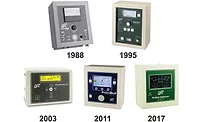
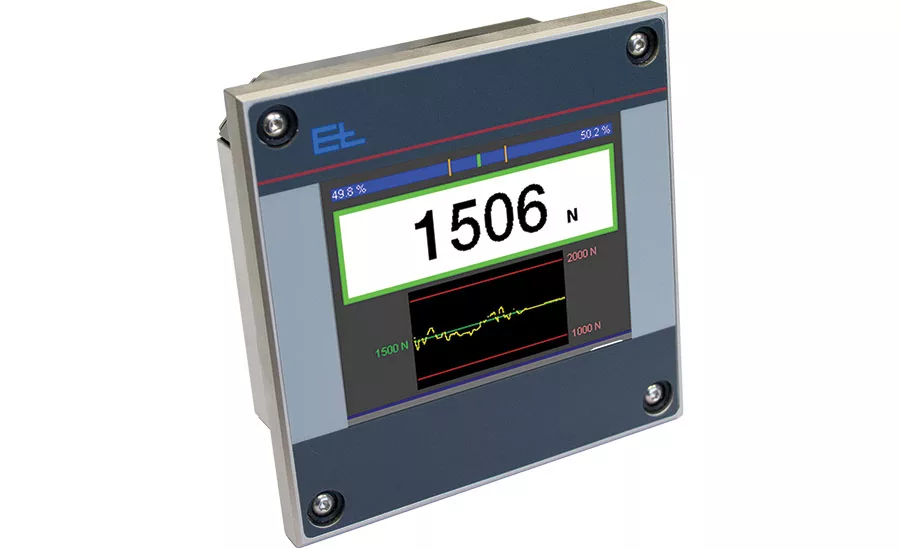
A: (We’ve) released several versions of the DC-62 tension controller. It is available in panel mount or in a standalone enclosure. It has the ability to monitor or control tension, and is unique in that it will work in many tension applications (unwind, rewind, transport). It will work with several styles of load cells, open loop sensors and dancer applications. The DC-62 interfaces with motor drives, brakes and clutches (electric or pneumatic). It offers 4-20ma and 0-10 VDC output. By using a 24 DC volt coil magnetic particle brake or clutch, there is no need for additional hardware. The constant current power supply is built in. This means fewer parts to keep track of and no additional mounting requirements, as well as a reduced cost. You are able to save the cost of an added power supply.
Having one controller that does it all allows the users to maintain one set of spare parts and train operators on only one system. This makes retrofit applications easy, and in the case of line down situations, a fast replacement is guaranteed. In all manufacturing, up time is critical to making a profit.
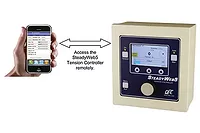
The latest release is the new Digital Load cell amplifier, the PA-62, an Industry 4.0 ready “web” enabled device with on-board web server for setup/configuration and also monitoring. All the user needs is a web browser and they can connect to the PA-62 to see the information in real time.
Which of the three tension zones (unwind, intermediate, rewind) tend to be the most problematic and why?
A: Unwinds. The quality of rolls has always been a cause of concern. Out of round or rolls that have been stored improperly causing flat spots reduce the options you have for tension control. Load cells are the best product, as they are measuring the web and providing direct feedback. The main issue with load cells is when the rolls are out of round the system cannot adjust or react to the surface velocity change and tension can become unstable. Monitoring sensors can help but add to complexity of system and provide another failure and adjustment point for the operator. Dancers are still the best product for unwinds, but many OEMs/end users do not want to use the expensive rolling diaphragm cylinders that are required. Also, the operator tends to make the mistake of seeing the dancer arm move and limit it with shock absorbers, springs and/or weights. They feel they are helping but are damping out the response of the system. Rewinds and point-to-point are easier, as load cells fit very well here and provide direct feedback. Control loops can be adjusted for proper response to wide variety of webs and conditions.
What are some of the key trends that you’re seeing in the industry that could impact the future of tension control product development?
A: Drives are becoming better in torque mode and are able to replace brakes and clutches in more and more applications. With load cells and drives, you are able to have more control over the tension, which is still the biggest area of concern for a moving web. Short or long spans can have different options for web guide, but tension is always the first area to address when looking at product quality. Many places you visit, when asked the question of what tension they are running, will slap the web or look at the air gauge and say X-PSI, most industries are running faster, larger and heavier rolls than ever before and far beyond the specifications of what the machines were designed for. This make upgrades to tension a high priority, in my opinion.
What are some of the key value propositions that you try to explain to your customers when it comes to tension control equipment?
A: The simplest way is to explain that out of all the upgrades and changes one can make, tension control, by far, gives you the most bang for your buck.
Tension is the back bone, and in many cases you chase other issues trying to cover up the main problem. Poorly finished rolls like telescoping and crushed cores get a lot of attention, but a web guide also cannot perform correctly with too high or low a tension. Too low and the web just slides on rollers, you need traction to guide. Too tight and the guide has to fight the web and can shorten the life of components. Many products cannot be stretched during process then relaxed at rewind. The product starts to show errors. These errors are usually seen at the final customer. This of course leads to reruns and scrap. Both are very costly business propositions. Most plants run 24/7 to meet demand and profit as margins have been eroded. Tension control helps the less experienced operators provide high quality product. As our industry continues to mature, the use of automated control will assure repeatable results across all three shifts.
Is there anything else you’d like to share about tension control?
A: Tension is the base line of moving web control. As with most things, you must start with a good base to have a good final result. Without good control of the web tension, all the other variables will make it very difficult to provide a high quality product without a lot of scrap. With so many variations in base product, tension control flexibility is a must. Today everyone needs to run faster and longer runs to stay competitive. With operator turnover, automated controls help with repeatable quality and shorter training time to have new operators being able to provide quality product quickly.
Looking for a reprint of this article?
From high-res PDFs to custom plaques, order your copy today!