Advances in Sustainability
Flexible Packaging Industry Pushes Sustainability Forward
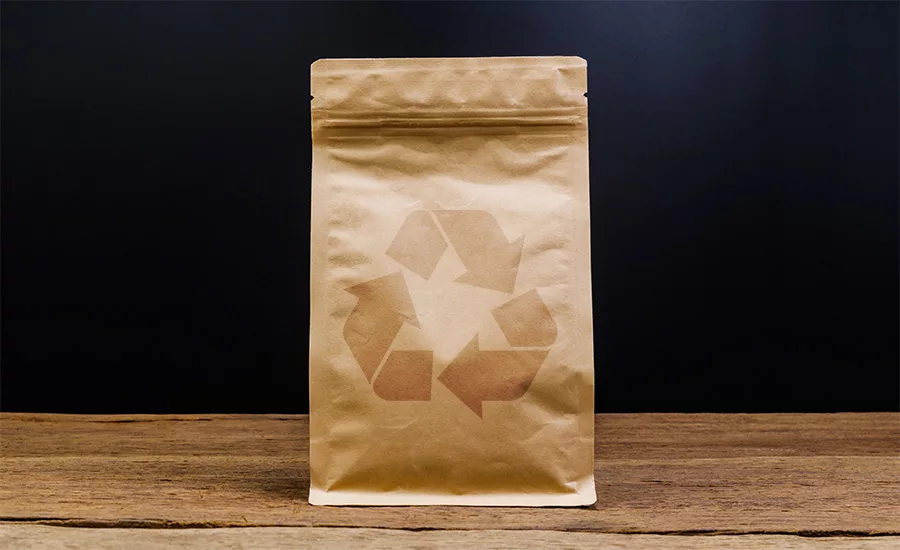
Consumer interest in sustainability is spurring CPG manufacturers to adjust to the need. This has led to changes in things like material sources and suppliers, branding and, of course, the packaging. But determining if something is “sustainable” isn’t necessarily a binary yes-or-no, black-or-white proposition. It in fact has varying shades of grey, which provides many opportunities for advances in sustainable packaging in a number of different areas. The following are some of the advances and examples of advances we believe will make a difference.
MATERIAL RECYCLING
Most of us know that the word “recycle” is one of the three Rs in “reduce, reuse, recycle.” While flexible packaging has helped make a difference in areas related to sustainability, namely in shipping, multi-layer material usage has made this third R elusive.

Flexible packaging typically reduces waste when compared to rigid packaging already, but Coperion GmbH introduced a concept to help reduce waste even more. It captures film waste created during the production of multi-layer film, reprocesses it and feeds it back into production, reportedly without any quality loss and with a high proportion of added recyclate.
While adding post-consumer recycled content (PCR) into packaging isn’t necessarily a new thing, the need to both incorporate it and show that on the packaging has grown, which is pushing the need for more sustainability forward. Mars partnered with SABIC to introduce recycled polypropylene into some of its major pet food brands.
Stepping away from the manufacturing process, facilities capable of recycling multi-layer materials aren’t as prevalent, especially in the U.S. That’s why products like the recyclable retort pouch Amcor developed with Nestle for a line of cat food could help recycling efforts.
Although the technology hasn’t yet moved out of the lab, Anellotech gave a demonstration of its Plas-TCat technology — which transforms mixed plastic waste directly into chemicals. The demonstration successfully converted a Lay’s Barbeque Potato Chip (PepsiCo) bag into paraxylene, the primary chemical used to make virgin PET for beverage bottles. Getting that out of the lab and into real-world use could yield significant results.
The relative difficulty with recycling facilities is what makes mono-material products attractive from an ease standpoint. The problem, though, has typically been with their capabilities as a barrier for food products, but a great deal of headway is being made with mono-materials. The C-P GreenStream line of products from C-P Flexible Packaging has a variety of options available, including ones that use CPR and layers made from the same material. Mondi partnered with Reckitt Benckiser Group (RB) to convert the packaging for RB’s Finish Quantum Ultimate dishwasher tablets from a multi-layer PET/PE laminate pouch to a mono-material plastic packaging portfolio. And these are but a few instances of such a change.
Mondi continued with its mono-material development by partnering with Hütthaler, an Austrian meat producer, to create a fully recyclable thermoforming film for the processor’s meat and sausage products. The “reinvented” packaging was designed to maintain functionality while still being recyclable. Near the end of 2020, Innovia Films announced the launch of Encore c45cn, which the company says is the first BOPP label film.
We mentioned PET bottles earlier, and we can’t mention them without mentioning shrink sleeves and the inks used in printing. Sun Chemical has developed suitable ink solutions for different films approved by the Association of Plastic Recyclers. The collaboration has resulted in removable flexo and gravure inks that allows ink to be removed from post-consumer printed PET packaging in typical existing recycling processes without staining the recovered PET flake or the process wash water. The washable ink allows for the increased recovery of high-quality, clean, recycled PET resin.
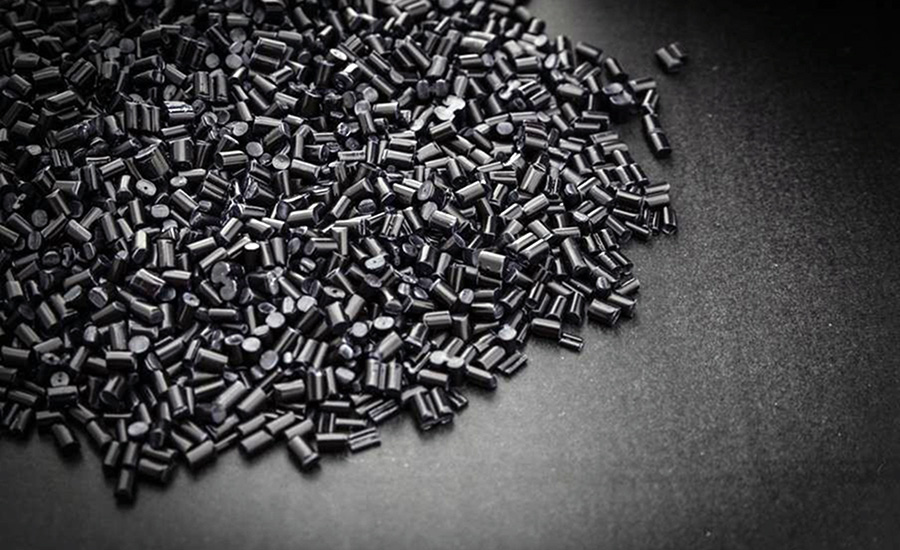
Sticking with ink, Toyo Ink Europe Specialty Chemicals S.A.S. (TIESC) has developed a whole new range of Lioplax black plastic masterbatch for near-infrared (NIR) sorting and subsequent material recovery, which supports the recyclability of black plastic waste.
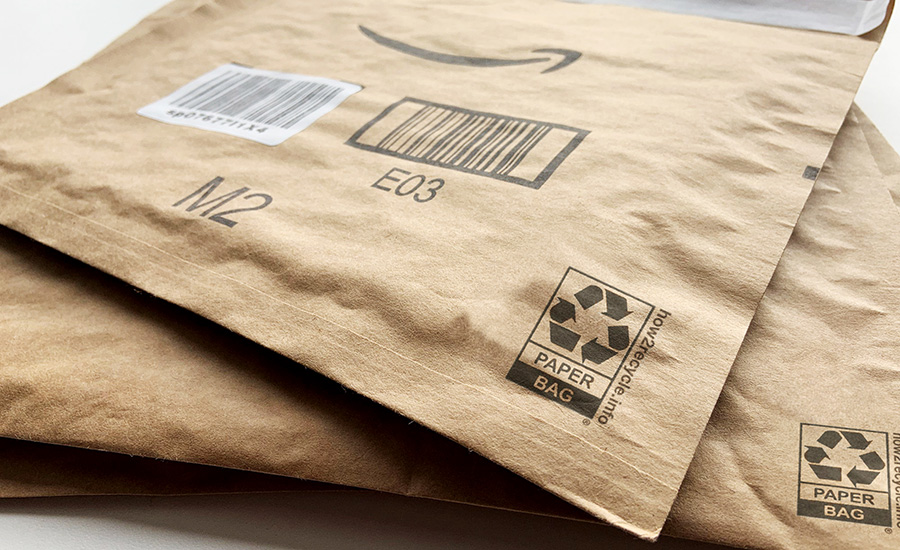
And, finally, we come to some paper-based solutions for recycling. Smurfit Kappa and KHS announced the rollout of the TopClip, and Atlantic Packaging, with its partner Fishbone Packaging, announced Fishbone. Both are paper-based can-carrying systems designed to replace plastics and improve recycling rates while reducing energy consumption during manufacture. Meanwhile, Georgia-Pacific Packaging expanded its manufacturing of curbside recyclable paper padded mailers for e-commerce. We saw quite a few of these during the recently passed holiday season.
BIODEGRADEABLE / BIOBASED
A study by Polaris Market Research predicts that the biodegradable packaging market will be worth $21.60 billion by 2026. The amount of sustainable advances we’ve seen sure makes that prediction seem a bit low.
Lawn and garden products are investing in more biobased packaging, such as Espoma Organic using Amcor’s polyethylene film that contains 25% biobased material derived from sugar cane.
There has been a sharp rise in the use of compostable packaging like Parkside’s high-barrier compostable pack, Turf Croft Herbs using TIPA’s compostable zipper bags and home compostable film packaging from Danimer Scientific and PSI. Then there’s EcoCortec’s water-soluble, biodegradable, polyvinylalcohol (PVOH) film EcoSol that can be used for either liquid or powder products.
For its launch in the U.S., Finnish mineral water purveyor, Vellamo, partnered with UPM Raflatac to feature UPM Raflatac Forest Film, a wood-based polypropylene plastic label material, on its bottles. And HSMG was given approval for the use of its proprietary plant-based additive and barrier coating solutions in microwave ovens and for baking purposes, opening doors for more sustainable paper-based products.

LEGISLATION
The next bit that we’re considering as advances might depend on your point of view regarding the role of government in the marketplace. That said, though, it’s hard to deny the negative impact single-use plastics are having on the environment, especially as consumers trend toward single-serve products for their convenience. At the start of 2020, a federal bill that would phase out single-use plastics was introduced. The last action taken was in February 2020 when it was referred to the Subcommittee on Water Resources and Environment.
Just before the start of the New Year, the Flexible Packaging Association (FPA) and the Product Stewardship Institute (PSI) announced an agreement on eight legislative elements of an extended producer responsibility (EPR) bill for packaging and paper products (PPP), including the types of packaging, entities from which packaging is collected and the definition of producers who are legally responsible. Essentially, the bill would help municipalities financially while expanding the reuse and recycling system.
Many advances have been made and the aforementioned items are only a small portion of them. Here’s looking forward to another year’s worth of progress.
Looking for a reprint of this article?
From high-res PDFs to custom plaques, order your copy today!