Sustainable Packaging
Rethinking Packaging Materials for a Sustainable Marketplace
Investments in science and a willingness to explore the non-traditional can put us on a path to an environment free of plastic waste.
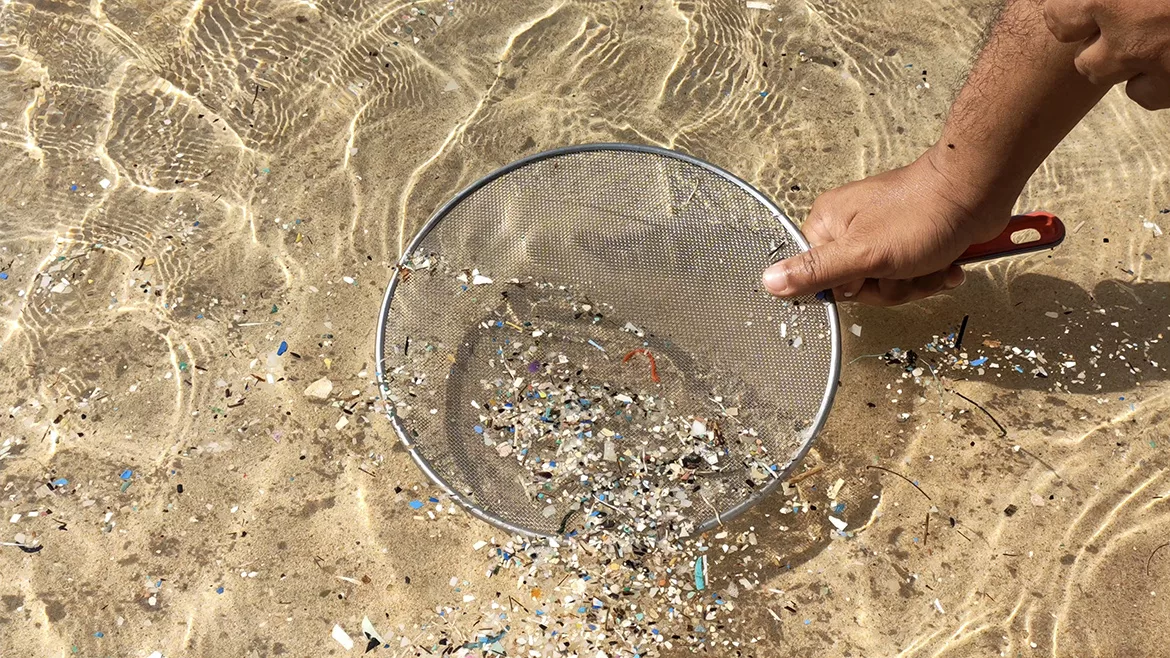
On a recent trip to a remote village in Indonesia, I witnessed something unfathomable: A young family was building their future — a new home — on top of a mountain of plastic waste. Without proper infrastructure to manage the tide of waste, children waded through floating plastic as they played in the river, and rain washed burned remnants of waste into the village water streams.
While this is a stark example of the ways waste can end up in our environment, it’s not altogether uncommon. Around two million tons of plastic debris leach into rivers each year in both developing countries and industrialized nations. As experts in flexible packaging, we have the tools and technology to help fix this challenge.
At Dow, we believe waste is too valuable a material to be lost to the landfill — or misplaced in our environment. That’s why we are investing in new products and innovations to ensure recyclability is at the heart of packaging we design. Through exciting advancements in technology and science, mono-materials, compatibilizers and biobased materials are surfacing as viable solutions for flexible packaging redesign with circularity and low-carbon performance at the core.
Simplifying with Mono-materials
Designing for recyclability is critical to meeting current market demand, while still operating within existing infrastructure. Demand for recyclable packaging has never been higher and sustainability is increasingly a top agenda item for executives. In fact, Dow’s whitepaper with Fortune, Path to a Plastics Circular Economy, found that 70% of C-level executives say they have been treating recycling as a higher priority since the beginning of the pandemic.
While all polyethylene can technically be recycled, the process of layering materials to create a finished product adds a complexity not suited for most traditional mechanical recycling systems. When you try to melt down the packaging to be remade into something new, it can’t be done; the polymers separate like oil on water.
By growing the market for high-barrier mono-materials, we can deliver packaging solutions that are fully recyclable from the time they are put in the bin.
In my home country of China, for instance, Dow partnered with Liby, a leading laundry brand, to re-invent its detergent pouches for circularity. Enabled by Dow’s INNATE TF Polyethylene Resins for Tenter Frame Biaxial Orientation (TF-BOPE), Liby’s recyclable packaging earned the first “Double E” (easy-to-collect and easy-to regenerate) label in China, which helps consumers distinguish recyclable packaging.
Compared to traditional polyethylene film, TF-BOPE film has higher mechanical properties and material rigidity, better optical and printing performance. Since both companies debuted this solution in 2020, TF-BOPE has been adopted for use in nine of Liby’s products.
Mono-materials are often disregarded in favor of what’s perceived to be added quality from multi-materials to accommodate everything from flexibility to branding applications. Yet, a recent study by Tsinghua University, China, found that if all plastic packaging consumed per year in the country were replaced with packaging made from other materials that provide the same function, overall lifecycle environmental impact would increase by 2.3 times.
The market is also witnessing a dramatic shift in consumer demand where sustainability is paramount. A 2022 survey by Innova Market Insights found 23% of consumers “strongly agree” and 42% “agree” they would be willing to switch their usual brand for a brand with more environmentally sustainable packaging.
We now have the tools and innovative approaches to leverage mono-materials to produce the same high-performance packaging benefits, now with greater recycling potential.
Innovating to Make Opposites Attract
Innovators in the materials space are also working to develop compatibilizers to allow for the reuse of blended materials.
Dow has developed a special additive called RETAIN that helps a plastic package break down evenly across layers and enables the packaging to be recycled and recreated into a new plastic material.
Working in partnership with Kashi’s Bear Naked brand at Pack Studios, Dow’s innovation lab designed a new sustainable product pouch using our RecycleReady and RETAIN polymer modifier technologies. A non-laminated standup pouch design provided recycling solutions that traditional lamination could not. When paired with a Dow high-performance sealant, the whole structure was able to accommodate high machine speeds and hermetic sealing. Most importantly, the polymer modifiers compatibilized the package’s EVOH barrier with polyethylene to create a film suitable for existing recycling streams.
Through material science, we can innovate outside the box, so to speak, evolving our understanding of how resources can work together for more sustainable solutions.
Downshifting Fossil Fuels
To avoid recycling systems altogether, biobased materials made from renewable feedstocks offer a biodegradable solution to circularity challenges. Biobased polyethylene (PE) resin performs with the same quality as fossil-fuel PE, but with a lower carbon footprint at both beginning-of-life and end-of-life for packaging.
Like other novel solutions to traditional circularity challenges, biobased feedstocks require a full lifecycle assessment to ensure bridging one divide doesn’t create another up or downstream. Creative thinking, even within the biobased category, is required to avoid competing with the human food system. However, food waste and non-edible renewable sources have proven valuable as sustainable feedstocks.
In a step toward viable biobased alternatives, Dow developed AFFINITY RE technology, which uses renewable feedstocks like bio-naphtha from tall oil, a byproduct of paper pulp production that’s sourced in sustainably managed forests. Exploring the ways in which renewable waste can take on new life will be a critical path to moving the needle on waste reduction overall.
Sustainability is not always intuitive, and there is no silver bullet for a green economy. However, investments in science and a willingness to explore the non-traditional can put us on a path to an environment free of plastic waste.
Looking for a reprint of this article?
From high-res PDFs to custom plaques, order your copy today!