Life cycle assessment shows BOBST oneBARRIER as superior packaging choice
(Courtesy of BOBST)
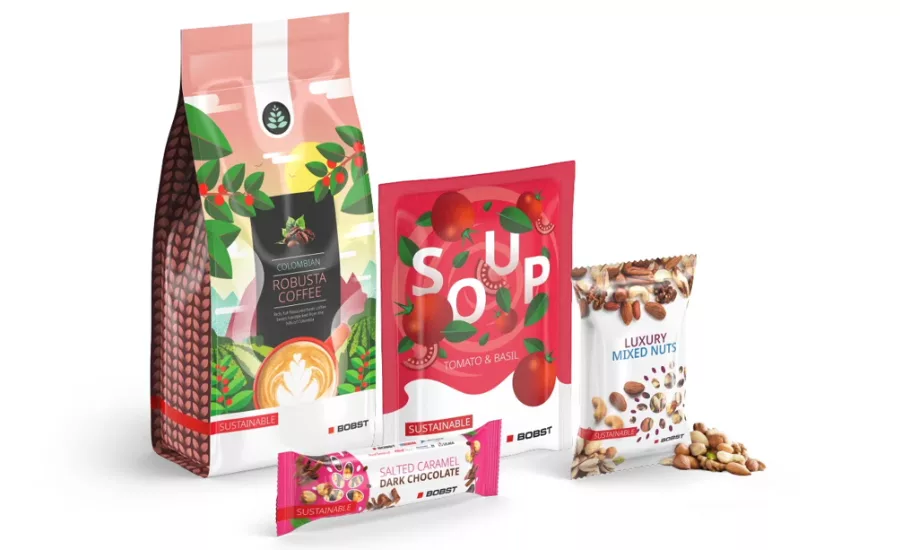
BOBST oneBARRIER technology enables printers and converters to deliver flexible packaging that aligns with brand owners’ sustainability goals and comply with regulatory demands.
As the need for recyclable flexible packaging intensifies, BOBST is leading the industry with the oneBARRIER family of high-barrier, mono-material solutions. Two innovative products, created in collaboration with industry expert partners, are available:
- oneBARRIER PrimeCycle is a polyethylene (PE)-based, mono-material solution that delivers exceptional performance and sustainability.
- oneBARRIER FibreCycle is 100% paper-based solution meeting the growing need for renewable packaging materials.
Through undertaking rigorous Life Cycle Assessments (LCAs), BOBST evaluates the environmental impacts of these oneBARRIER solutions from a cradle-to-gate methodology. This approach ensures that customers can confidently choose sustainable options backed by validated and accurate primary data.
Creating viable, sustainable packaging
When developing new flexible packaging solutions, BOBST considers five critical criteria in order to create materials that are not only sustainable but also financially and technically viable. Additionally, these materials are designed to meet international and regional regulatory requirements and guidelines.
1. Design for Recycling (D4R)
The material composition must follow industry guidelines, such as CEFLEX and APR for polymers and 4evergreen for paper-based packaging. It must also comply with regulations including the Packaging and Packaging Waste Regulation (PPWR).
2. Performance excellence
The packaging material must exhibit the necessary properties, including strong barrier performance, shelf life and adhesion, to effectively protect the contents. It must also be suitable for efficient processing on converting machinery and packaging lines.
3. Certified recyclability
All materials must be tested and certified to guarantee their recyclability in the waste stream using approved testing methods such as PTS (Institut für Fasern & Papier gGmbH), RecyClass, or Institut cyclos-HTP.
4. Cost-effectiveness
The total cost of the packaging material must be appropriately priced to make sure that it is either cost neutral or within an acceptable additional cost level.
5. Environmental assessment
A Life Cycle Assessment (LCA) should be conducted to determine the environmental impacts associated with the production of the packaging structure; it can highlight whether the material chosen is more environmentally friendly than existing alternatives. Ultimately LCA can eliminate greenwashing and help build a better reputation.
BOBST has carried out LCAs on both the oneBARRIER PrimeCycle and FibreCycle solutions to determine their environmental impacts from cradle-to-gate, more specifically the factory gate, in comparison to existing multi-material packaging structures.
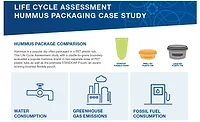
An LCA study can identify impacts across 16 categories, such as climate change. The LCA study by BOBST includes the categories determined to be the most sought after and relevant topics for the industry, namely carbon footprint, water use and energy consumption.
Harvesting the benefits of LCAs
In general, there are five main benefits of conducting an LCA. The first is a reduction in the environmental impact. An LCA can identify hotspots during the product lifecycle. This information can be used to implement improvements that reduce the carbon footprint.
Secondly, it can help preserve resources by pinpointing areas where they are used inefficiently. This allows for improvements to be made that optimize production and minimize waste of materials and energy.
Cost savings is a third benefit. An LCA can help make savings in production by improving efficiencies, ensuring affordability without compromising on quality. An LCA can also help with risk management. It can show the distribution of suppliers and the potential impact if a supplier in the value chain is replaced or eliminated.
Finally, conducting an LCA can improve stakeholder relationships throughout the value chain; it ultimately eliminates greenwashing and can result in a better brand reputation and a competitive advantage.
oneBARRIER: the sustainable choice
As mentioned, three impact categories are the focus of this comparative LCA study: climate change, freshwater consumption, and energy consumption. As a cradle-to-gate assessment, the LCA covers the journey from raw material extraction, through transportation to the manufacturing of the final packaging structure.
The study assesses oneBARRIER PrimeCycle and oneBARRIER FibreCycle from BOBST against two industry standard multi-material structures: a high-barrier, metalized PET containing structure and a multi-material, ultra-high-barrier structure incorporating aluminum foil.
The results in all three categories show that BOBST oneBARRIER PrimeCycle has the lowest impact of the four structures. This is closely followed by the oneBARRIER FibreCycle solution. In contrast, the non-BOBST ultra-high barrier aluminum foil structure has the highest impact across all categories.
Highlighting oneBARRIER PrimeCycle and FibreCycle as superior packaging choices, the study confirms that these solutions have a lower environmental impact than existing non-recyclable ones. oneBARRIER offers a complete and credible alternative based on the key criteria for sustainable, viable and regulatory compliant packaging.
Looking for a reprint of this article?
From high-res PDFs to custom plaques, order your copy today!