search
cart
facebook twitter linkedin youtube
  • Sign In
  • Create Account
  • Sign Out
  • My Account
  • HOME
  • NEWS
  • MARKETS
  • MATERIALS & SERVICES
  • EQUIPMENT
  • SUSTAINABILITY
  • DIRECTORY
  • MORE
    • GLOBAL POUCH FORUM
    • TOP 25 CONVERTERS
    • ENEWSLETTER
    • EMAGAZINE
    • FLEXIBLE PACKAGING STORE
  • PACKAGING STRATEGIES
Extended Producer Responsibility (EPR)Flexible Packaging Sustainable PackagingSustainable Flexible Packaging

U.S. Plastics Pact Releases EPR Position Paper as Guide for State Policies
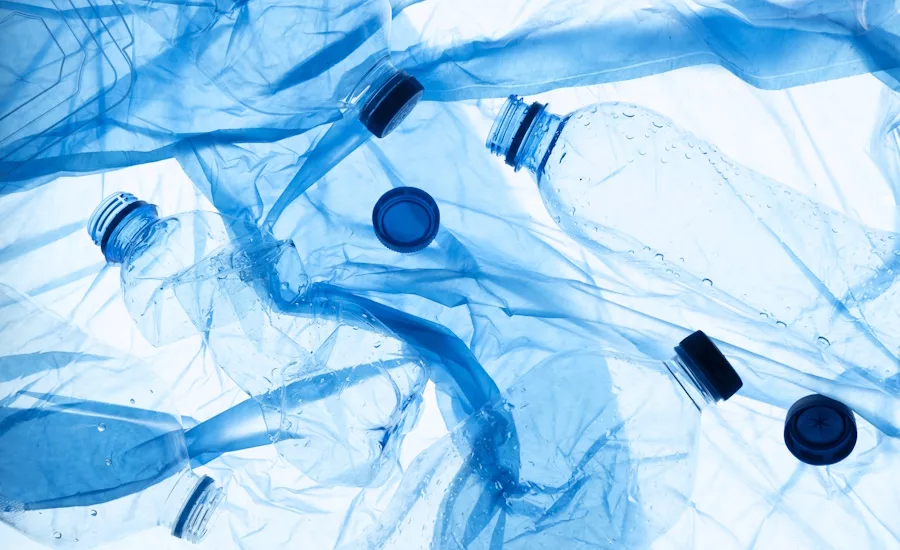
Arrangement of trashed plastic objects
Image provided by Freepik
December 12, 2025

The U.S. Plastics Pact (USPP) on Wednesday released its first-ever policy position paper on Extended Producer Responsibility (EPR), offering what it calls “a clear, consensus-built” framework to guide policymakers as states consider EPR legislation for plastic packaging. 

“Developed through extensive engagement across the entire packaging value chain, the paper outlines six key policy levers that support effective, equitable, and implementable EPR programs,” USPP said in a statement.

The paper reflects months of work by brands, retailers, manufacturers, recyclers, NGOs, government entities, and technical experts. It draws on a value-chain survey, a hybrid workshop on EPR fundamentals, and multiple rounds of review by U.S. Plastics Pact members (called “Activators”), whose feedback shaped the final guidance. 

“There is no shortage of EPR guidance in the marketplace — but what makes this one different is the process behind it,” said Megan O’Brien, program manager for reporting and special projects at the USPP. “This paper reflects genuine consensus across stakeholders who don’t always come to the table with the same priorities. Its value is that the Pact has already navigated the hard conversations, giving policymakers a credible, balanced foundation to build from.”

The position paper identifies six policy levers — Funding Model, Funding System Design, Fee-Setting & Eco-modulation, Performance Targets, Responsible End Markets, and Covered Materials — that states can use to build structured, harmonized EPR systems while retaining flexibility to address local infrastructure, data, and market realities. 

Drawing on USPP’s Roadmap 2.0 and widely recognized guidance from the Ellen MacArthur Foundation, the paper emphasizes clear definitions, transparent and responsible end-market criteria, achievable initial requirements, and mechanisms to increase ambition over time. 

“Developing the U.S. Plastics Pact’s EPR position paper was a collaborative process that brought in valuable perspectives from the public, private, and non-profit sectors on what representatives would like to see out of the future EPR programs,” said Preston Peck, Senior Sustainability Analyst with the City of Tacoma, Washington. “We hope that this document can provide legislators and advocates with guidance on best practices, lessons learned, and other policy considerations from Pact members’ experience with EPR policy development and implementation across the U.S.”

“As a global packaging company, we see firsthand how fragmented approaches can hold back progress,” said Robert Flores, Vice President of Sustainability Operations and Advocacy - Americas at Amcor. “EPR works best when every part of the value chain is engaged and contributing to balanced outcomes that are sustainable long-term.”

The position paper underscores the link between supply-side EPR obligations and demand-side policies needed to strengthen post-consumer recycled content (PCR) markets — a critical element of a functioning circular system. 

The full EPR policy position paper is available here.

KEYWORDS: circular economy packaging legislation PCR

Share This Story

Looking for a reprint of this article?
From high-res PDFs to custom plaques, order your copy today!
Recommended Content

JOIN TODAY
to unlock your recommendations.

Already have an account? Sign In

  • Golden award trophy in the shape of a star. Text: 2026 Top 100 Food and Beverage Companies

    Top 100 Food and Beverage Packaging Companies of 2026

    Celebrating 30 years as a B2B journalist, I’ve revisited...
    Top 100 Food and Beverage Packaging Companies
    By: Brad Addington
  • Women In Packaging 2025 homepage hero

    Women in Packaging: Seizing Opportunities, Pushing Boundaries

    Seven women share their personal journeys in the...
    Material Converting
    By: Brad Addington
  • Image of the Spyder Pick and Place Joint Robot sorting pre-rolls.

    Cannabis Packaging Goes High-Tech

    Packaging Strategies doesn't often cover cannabis...
    Machinery
    By: Brad Addington

Flexible Packaging Buyers Guide.png

Sustainable Flexible Packaging.png

Get Connected!

FACEBOOK twitter YOUTUBE LINKEDIN

Connect with us on Twitter, Facebook, YouTube, or LinkedIn to receive updates and to network with other industry professionals just like you!


Related Articles

  • Image regarding Circular Economy for Plastic Packaging

    U.S. Plastics Pact Releases Guides to Advance Circular Economy for Plastics

    See More
  • Image illustrating a circular economy for plastic packaging

    U.S. Plastics Pact Cites Progress on Circularity, Calls for Collective Action

    See More
  • L’Oreal Joins U.S. Plastics Pact for Push Toward a Circular Economy

    L’Oreal Joins U.S. Plastics Pact for Push Toward a Circular Economy

    See More

Related Products

See More Products
  • recycle.jpg

    Recycling of Flexible Plastic Packaging 1st Edition

  • sustainable food.jpg

    Sustainable Food Packaging Technology

  • Food Packaging and Shelf Life: A Practical Guide

See More Products

Events

View AllSubmit An Event
  • October 15, 2025

    Coatings and Heat Seal Technologies Enabling the Paperization of Packaging

    On Demand Explore how the packaging industry’s move toward fiber-based materials is being supported by new coatings and heat seal solutions that improve recyclability, functionality, and sustainability.
View AllSubmit An Event

Related Directories

  • American Chemistry Council

    The Packaging Team represents major U.S. resin manufacturers. We advocate for policies that recognize plastic packaging and products as a valuable resource. Our Circular Economy Commitments are for 100 percent recyclability or recoverability of plastic packaging by 2030 and 100 percent reusability, recyclability, or recoverability of plastic packaging by 2040.
  • Flexible Packaging Assn. (FPA)

    The FPA is the voice of the U.S. manufacturers of flexible packaging and their suppliers. Flexible packaging is produced from paper, plastic, film, aluminum foil, or any combination of those materials, and includes bags, pouches, labels, liners, wraps, rollstock, and other flexible products.
×

Keep the info flowing with our Newsletters!

Get the latest industry updates tailored your way.

JOIN TODAY!
  • RESOURCES
    • Advertise
    • Contact Us
    • Directories
    • Store
    • Want More
  • SIGN UP TODAY
    • Create Account
    • eMagazine
    • Newsletter
    • Customer Service
    • Manage Preferences
  • SERVICES
    • Marketing Services
    • Reprints
    • Market Research
    • List Rental
    • Survey/Respondent Access
  • STAY CONNECTED
    • LinkedIn
    • Facebook
    • YouTube
    • X (Twitter)
  • PRIVACY
    • PRIVACY POLICY
    • TERMS & CONDITIONS
    • DO NOT SELL MY PERSONAL INFORMATION
    • PRIVACY REQUEST
    • ACCESSIBILITY

Copyright ©2026. All Rights Reserved BNP Media, Inc. and BNP Media II, LLC.

Design, CMS, Hosting & Web Development :: ePublishing