Converting Trends: Flexible Packaging Readies for EPR
July 27, 2026
Converting Trends: Flexible Packaging Readies for EPR
July 27, 2026
Extended Producer Responsibility (EPR) was a key theme at this year’s Global Pouch Forum. Top minds in the industry shared their perspectives on how state-level EPR programs will influence the trajectory of flexible packaging in the United States.
Using Global Pouch Forum as a springboard, we invited three GPF luminaries to elaborate on how flexible packaging converters can successfully navigate their way through the maze of looming EPR mandates.

Image courtesy of Charter Next Generation
Kristin Edie
Director of Sustainability and Regulatory
Charter Next Generation
While EPR legislation—especially California's SB 54—sets ambitious targets, Edie says it also presents a genuine opportunity to build true circularity for flexible packaging at scale.
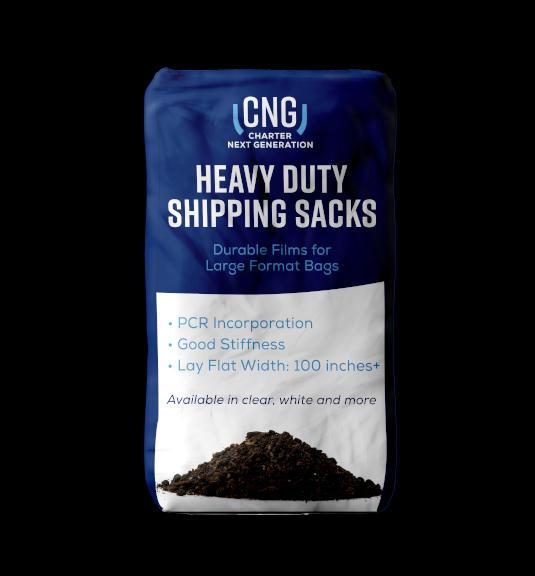
Charter Next Generation has incorporated post-consumer recycled (PCR) content in its packaging, including heavy duty shipping sacks for lawn and garden materials. Image courtesy of Charter Next Generation
"The most immediate challenge is recycling infrastructure," Edie told Packaging Strategies. "California's recycling rate targets for flexible films increase from an industry baseline of less than 5% today to targets of 30% by 2028 and 65% by 2032, as required by the SB 54 regulation. Meeting these targets requires coordinated investment across collection, sortation, and end markets for flexible films."
In response, flexible packaging producers and consumer brands are building partnerships, most notably the US Flexible Film Initiative (USFFI) and The Recycling Partnership’s CalFFlex Initiative to expand curbside film recycling and accelerate progress toward circularity. "These partnerships reflect a growing recognition across the value chain that the industry must demonstrate significant progress quickly," Edie notes.
SB 54 also establishes virgin plastic source reduction targets: 10% by 2027, growing to 25% by 2032. For flexible film manufacturers, replacing virgin resins with post-consumer recycled (PCR) content is emerging as a practical path to meet source reduction goals. PCR can be used along with strategies such as minimizing unnecessary plastic packaging materials and transitioning to refillable or reusable packaging solutions.
"At Charter Next Generation (CNG), we have expanded our use of PCR resin significantly, exceeding a 25% compound annual growth rate in the past three years in applications such as towel and tissue overwrap (TTO), shrink bundling, ecommerce packaging, and food contact applications," Edie notes. "Now, we are deepening our technical and manufacturing capabilities for PCR-containing films, including research and collaboration with industry partners to further validate the performance of food-grade PCR against global regulatory and food-safety standards."
Edie adds: "This work matters beyond our own product lines. Demonstrating that PCR can perform safely in flexible food-contact packaging helps build end-market demand, strengthen recycling economics, and make full circularity possible."
The Circular Action Alliance's (CAA) recent California source reduction guidance further reinforces this direction. CAA has incorporated financial incentives into California's framework for producers who use PCR, with particularly strong incentives for PCR used in flexible films.
"For converters and brands willing to invest in these capabilities now, it's also a catalyst for innovation, differentiation, and long-term growth, Edie says.
Looking for a reprint of this article?
From high-res PDFs to custom plaques, order your copy today!

Image courtesy of Emerald Packaging
Kevin Kelly
CEO
Emerald Packaging
Kevin Kelly of Emerald Packaging doesn’t hold back when it comes to venting his frustrations with the Circular Action Alliance, which up to now has been the go-to entity for states establishing a Producer Responsibility Organization (PRO).
"There remains mass confusion about who is a producer and who isn’t, not least including Circular Action Alliance, which admits it is so understaffed it can’t reply to messages as quickly as in the past," Kelly says. "That’s a big problem, especially since only Oregon is truly functioning. Companies that aren’t producers – like us in Oregon – are getting delinquency notices threatening fines if they don’t register, in our case even when CAA has already certified us as a non-producer."
Kelly adds: "As producers do begin to focus more on packaging issues, and demand alternatives to plastics like compostable or recyclable materials, the big issue that looms is the one that has bedeviled flexible packaging for decades. Who will pay for sustainable packaging? No one has answered this. The grocers and retailers have demanded better packaging for years but made it clear they won’t take cost increases, which has ground commercialization of innovative materials to a halt."
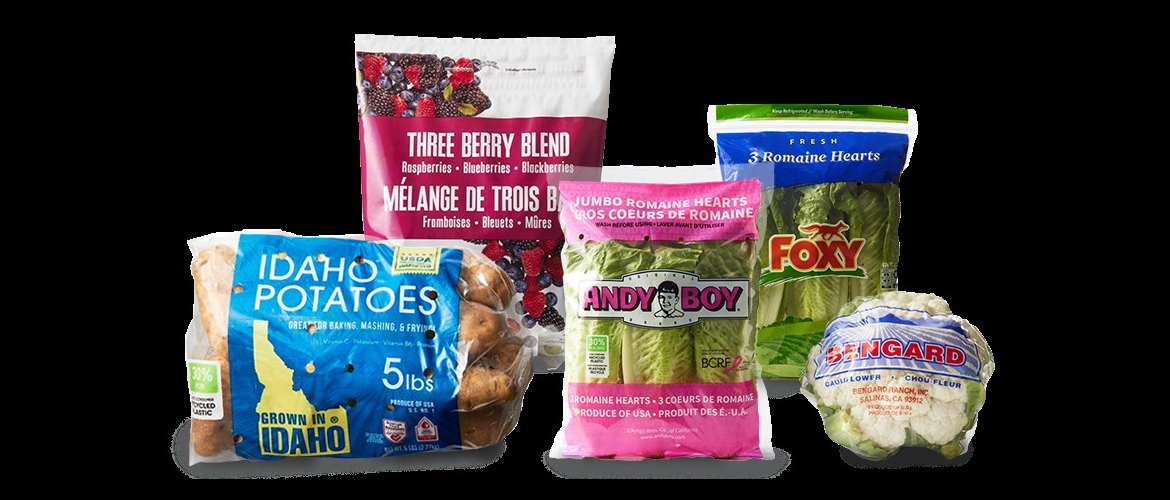
Emerald Packaging has worked with several brands to put produce packaging with post-consumer recycled (PCR) content on retail shelves. Image courtesy of Emerald Packaging
While Kelly is of the opinion that recycling systems won’t be ready to meet the rates required under SB 54, "it’s imperative the industry act to show good faith and demonstrate that recycling flexible packaging is possible."
How Flexible Packaging Producers are Responding to Regulatory Challenges
"Rather than focus entirely on new materials, flexibles companies are looking to see if there’s any low-hanging fruit that will help customers meet EPR goals, like source reduction," Kelly says. "So there’s a push to downgauge packages or redesign them all together to reduce the pounds of plastic in the waste stream."
Kelly notes that, along with CNG, Emerald Packaging has joined the US Flexible Film Initiative, which is attempting to show that recyclers and reclaimers will reprocess plastics if the proper incentives are in place.
"The focus right now is California, where the most stringent recycling mandates are in place," Kelly told Packaging Strategies. " I think it has shown early promise, and we’ve signed on for a second year as an associate member [of the US Flexible Film Initiative]. I hope other flexibles companies will do so as well, but so far even the largest (except CNG) have sat on the sidelines, like usual."

Image courtesy of Inteplast
Latricia Fry
Sustainability & Market Development Manager
Inteplast
"If you've been watching the flexible packaging space lately, you've probably noticed the industry isn't waiting around for EPR policy to fully shake out," Fry says. "Legislation like California's SB 54 has set aggressive recyclability and source reduction targets, and while the infrastructure to back those up is still catching up, manufacturers, converters, and industry groups are moving on multiple fronts — materials innovation, recycled content development, and active policy engagement — to make sure flexible packaging has a seat at the table when the rules get written."
Fry says the most visible response on the materials side has been a serious push toward mono-material film structures.
"Traditional flexible packaging leaned heavily on multi-material laminates, which are difficult to recycle," Fry notes. "Moving to single-polymer films — whether all-polypropylene or all-polyethylene— is a significant engineering achievement, and it's starting to directly influence how brand owners and converters make sourcing decisions."
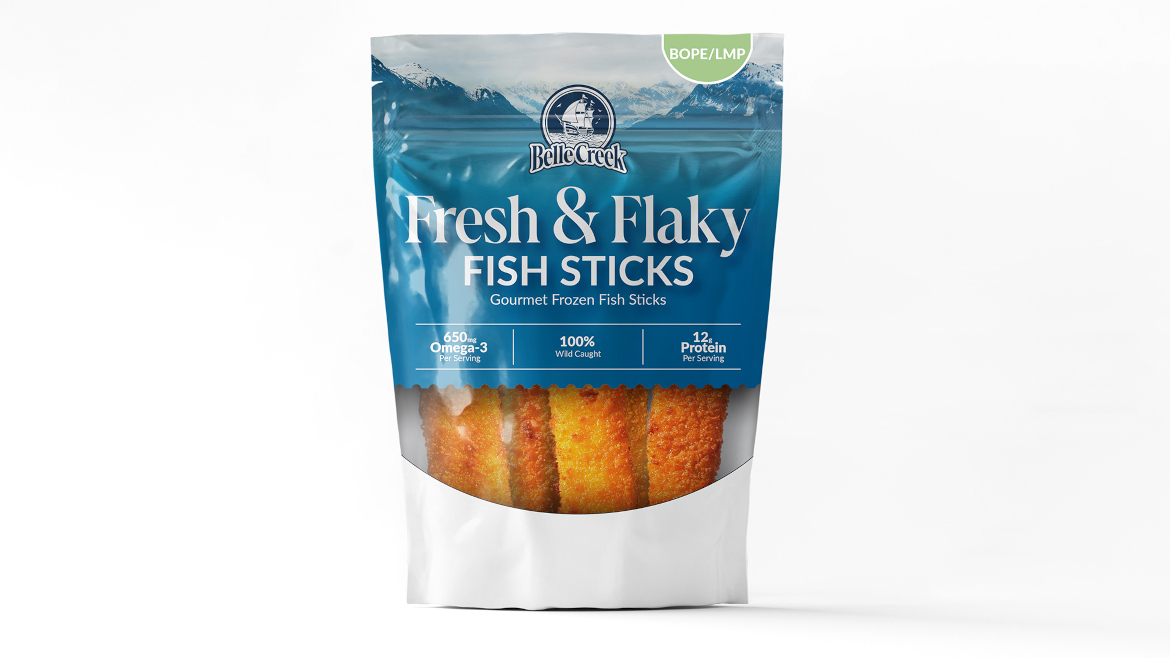
Fry notes that BOPE is an excellent alternative to PET for pouches with the potential to provide brands with a mono-material store-drop-off recyclable solution. Image courtesy of Inteplast
Fry says that, on the recycled content front, the industry is actively building supply chains that didn't exist just a few years ago.
"Investment in both mechanical and advanced recycling pathways is starting to create commercially viable PCR options for flexible films, even if volume is still constrained and cost parity remains a work in progress," Fry told Packaging Strategies. "The direction is clear, and the pace of development is accelerating."
Fry says that perhaps the least visible but most consequential response is happening at the policy and advocacy level.
"Industry coalitions are actively engaging with state EPR program administrators to ensure flexible film formats are treated fairly in program design while also pushing for inclusion in collection and drop-off infrastructure, challenging recyclability definitions that don't reflect material realities, and working alongside brand owners to develop compliance frameworks that don't inadvertently disadvantage flexible formats," Fry said.