Unilever boosts investment in packaging R&D to cut virgin plastic
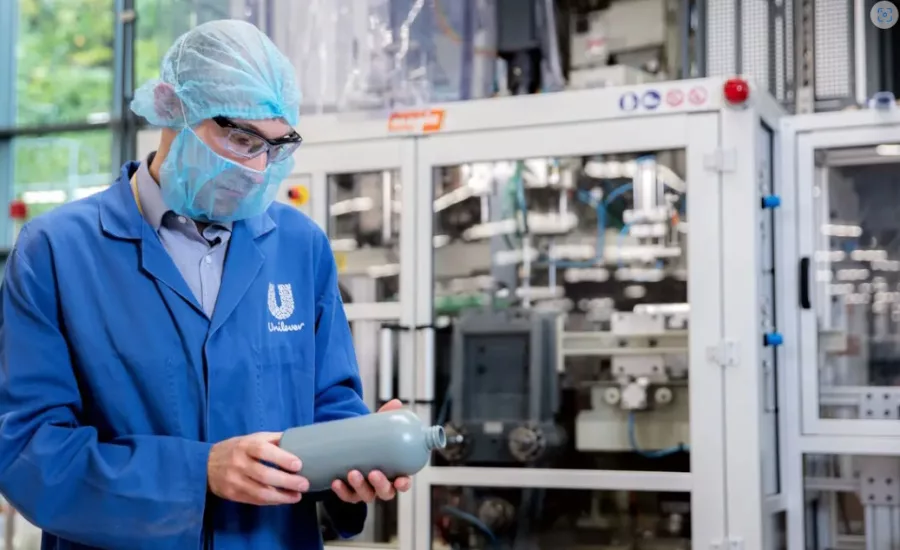
(Courtesy of Unilever)
Unilever today issued an update on its efforts to develop new sustainable packaging materials and technologies.
Unilever says its ambition is an end to plastic pollution through “reduction, circulation and collaboration,” and its Global Packaging R&D Centre is home to a specialist team of experts dedicated to making this vision a reality. Unilever has more than doubled its investment in materials science and technology in recent years.
“Our plastic progress is industry-leading, but we cannot be complacent,” says Pablo Costa, Unilever’s Global Head of Packaging. “That’s why we’re now taking materials science into our own hands. Our aim is to optimize what we can do in-house, while working end-to-end with our partners and peers to bring these solutions to market.”
Increasing use of recycled plastic content
Incorporating more post-consumer recycled (PCR) content into its packaging is key to reducing Unilever’s virgin plastic use, but it’s not simply a case of swapping one for the other. It’s a complex technical challenge.
“The recycled plastic we use undergoes rigorous testing and quality checks to ensure our packaging looks and performs like virgin plastic, for example, smelling fresh and with colors that are still bright and appealing to consumers,” the company notes.
This year, Unilever’s Packaging R&D team characterized 160 grades of recycled plastic content to create a digital tool that can predict packaging color, eliminating the need to create a physical prototype with recycled materials just to see what it will look like. This is saving a huge amount of time and resource, cutting development time by around 25%.
“We also use our Advanced Manufacturing Centre – our pilot-scale plant for in-house testing – to optimize our materials and designs virtually before we bring them to market. This further reduces the need for physical tests and factory trials and helps us ensure our packaging is then fit for wide-scale factory roll-out,” the company said.
Developing next-generation flexible materials
As part of the goal to make 100% of its flexible plastic packaging reusable, recyclable or compostable by 2035, Unilever is working on a range of solutions.
Unilever’s approach is to first eliminate non-essential packaging by scaling alternative product formats and business models. “We’re realistic that these will take more time and systemic change, which is why we’re also developing material alternatives to flexible plastic,” the company said.
Through its ‘Future Flexibles’ program, Unilever is developing materials – for things like pouches and sachets – that are both recyclable and compostable. This means designing materials that are compatible with recycling systems and naturally biodegradable.
Right now, paper is the only widely recyclable and compostable packaging material on the market. However, on its own, paper is insufficient as a packaging material. It has low barrier properties, rips easily in industrial production settings and doesn’t melt, which makes sealing the pack extra challenging. This is why many paper packaging solutions today often require a thin layer of plastic film – to provide barrier protection and to seal and protect the product inside.
“Packaging liquid products like laundry detergent and shampoo in paper is one of the most technically complex challenges we’re tackling in R&D,” Costa said. “They have higher barrier requirements compared to dry products. The solution lies in removing the plastic film layer by developing material alternatives that can still seal the packaging and provide barrier protection, without impacting its recyclability and natural biodegradability.”
Unilever’s Packaging R&D team constantly evaluates emerging materials and technologies. To date, the company has assessed over 3,000 technologies, including those from other industry sectors – like pharmaceuticals and electronics – that are not currently used in packaging.
“Switching to recyclable and compostable paper flexibles will require major industry transformation,” Costa says. “There are no quick fixes. But we’re already starting work to prepare our supply chain – and our consumers – for the transition.”
Unilever is on the current Packaging Strategies “Top 100 Food and Beverage Packaging Companies” list. Click here to view the current “Top 100” rankings.
Looking for a reprint of this article?
From high-res PDFs to custom plaques, order your copy today!