Machinery Technology: End of Line
Reach Full Production Faster on a New End-of-Line Machine
Vertical startup integration increases end-of-line ROI in less time by partnering with the right integrator.
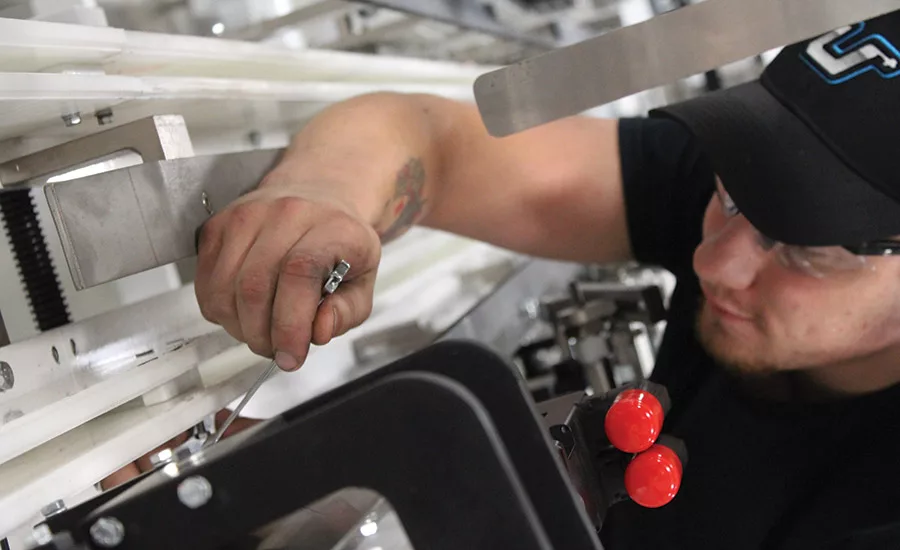
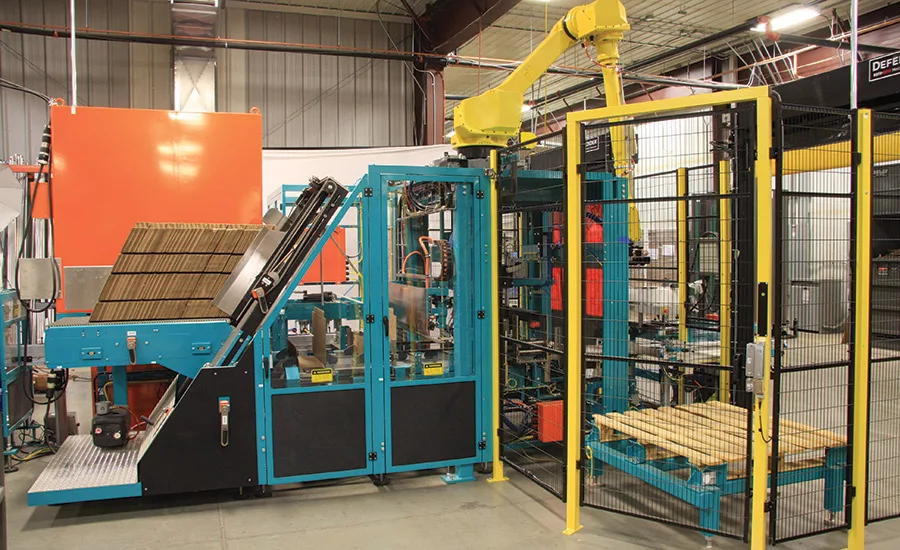
Vertical startup integration is a turnkey project where a new end-of-line, or multi-machine system, is integrated and Factory Acceptance Tested (FAT) offsite before being disassembled, transported and reassembled at the end-user location. On average, a vertical startup integration will speed up projects — the time between purchase order to full production — by one-third to one-half the normal development time. Additional benefits of vertical startup integration include less inventory to carry while the line is in transition, faster return on investment (ROI), better training and documentation, and an end-of-line system able to recover quickly from production interruptions.
How does vertical integration reduce the usual time to production for a new end-of-line system? The short answer is that in-the-field operations — installation, integration and testing that are located offsite from the manufacturer or integrator — require more time and investment than if the line was built and tested on the original equipment manufacturer (OEM) or integrator’s shop floor.
For example, simple mounting plates need to be manufactured to connect conveyors and equipment. At the OEM or integrator’s location, a technician simply walks over to the machine shop to manufacture that plate or to modify it. When that same part is required at the customer site, a potential delay of several days may occur while the part is ordered and shipped. Multiply the delay caused by the simplest part across an entire line, including hardware and software debugging, to understand why in-the-field integration extends a project both in time and cost. Travel time and expenses serve to compound these issues.
Vertical Startup Benefits Large and Small Companies
To manage project savings, many small and midsized companies traditionally act as their own integrators, managing savings with their own labor. Due to changing social and economic environments, vertical startup integration is more attractive to these former do-it-yourself companies. The workforce talent pool is shrinking, making it harder for small and midsized companies to maintain adequate staff to run the operation let alone assign workers to acquire and integrate new equipment. End-of-line systems are becoming more complex — especially those that require flexibility to accommodate a range of stock keeping units (SKUs).
It is harder for internal teams to stay current on these complex integration projects. Ensuring that new lines meet higher levels of safety is also more challenging. When the plant does its own line integration, support comes from each machine supplier. Having a single point of support from the vertical startup integrator saves time and leads to faster problem resolution with little or no finger pointing among manufacturers. Finally, the cost savings of starting production in almost half the time offsets the added expense of outside integration. All of these factors make it easier for small and midsized companies to justify handing off the project.
The Right Vertical Startup Integrator is Fundamental
The choice of a vertical startup integrator is generally between the manufacturer of the core machine and a system integration company. The core machine OEM understands the upstream and downstream conditions required for peak throughput, while the system integrator usually will emphasize project management and control integration expertise. Ask the integrator candidates about past successful vertical startup projects, examine documentation samples, and learn about the organization’s approach to training and technical support and its simulation capabilities. When considering a core machine OEM, ensure the company also specializes in system integration. Site visits to existing lines should also be part of the evaluation.
Ascertain whether the candidate employs Project Management Institute-certified Project Management Professionals (PMPs) and Packaging Machinery Manufacturers Institute-certified trainers. Project management and professional training expertise is essential for the project’s success. These certifications demonstrate the candidate is hiring and retaining the right people while valuing the correct skills sets.
Determine whether the candidate will evaluate every machine on the line for meantime between failures and how that may impact production rate. These risk assessments may lead to the inclusion of accumulation lanes to ensure the line keeps moving during short downtime periods. There may be other preventative steps necessary to ensure high overall equipment effectiveness (OEE) such as increasing human-machine interface (HMI) capabilities and installing vision systems at key points on a machine.
The candidate should also demonstrate that machines on the line are evaluated for safe operation risk assessment as defined by current industry standards. The integrator will take steps to bring the entire system up to those standards by adding guards, emergency shut-offs, hold-in-place actuators and more. Additionally, ask the candidate about the company’s approach to creating a common look and feel for the HMIs. In these operational areas, the OEM vertical startup integrator has an institutional knowledge edge over the system integrator because of manufacturing end-of-line equipment experience and working in the field supporting its machines.
Once the contract has been awarded and the system is built, the vertical startup house will stress test the line in as many ways as possible and be creative in simulating potential problems. For example, the vertical startup integrator may create a mini dust storm for a line going into a dusty environment or introduce potential package size and material imperfections. The integrator will also go through the changeover process looking for ways of making it easier and faster. The goal is to anticipate issues at the customer’s site so once installed, only minimal stress testing will be needed.
The vertical startup FAT gives the customer the chance to evaluate the performance of the entire line, train personnel on the new system and review documentation. Time at the FAT should be spent reviewing the fast tear-down/fast set-up project implementation plan — including the selection, roles and scheduling of local contractors. Fast line initiation relies on solid project management practices, pre-trained personnel and engineering for fast disconnect/reconnect.
Vertical startup is ultimately about faster time to production by eliminating as much field work as possible prior to the delivery of the system. Given today’s workforce and cost structures, small to large companies will discover that vertical startup integration saves time, lowers waste and speeds up ROI on new end-of-line systems.
Looking for a reprint of this article?
From high-res PDFs to custom plaques, order your copy today!