
MSU Researchers Develop Recyclable Solution for Multilayer Plastics
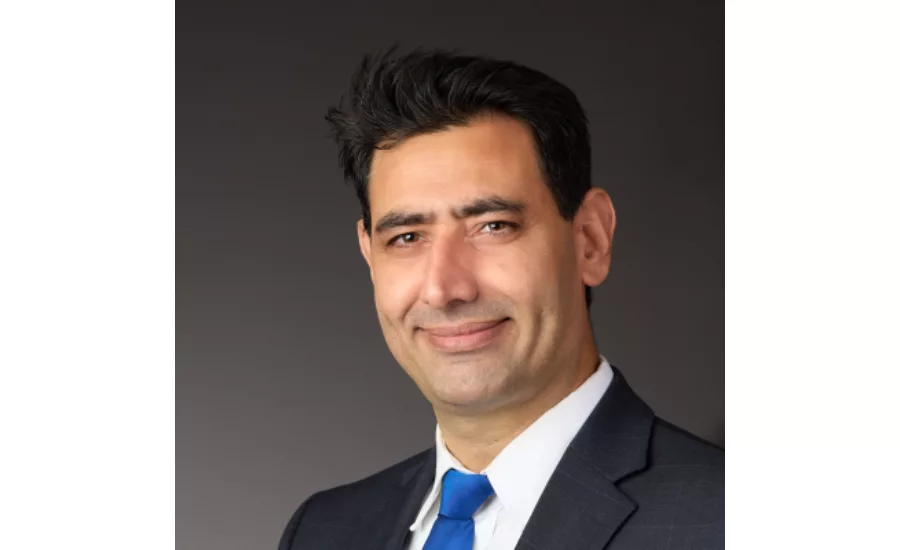
Muhammad Rabnawaz, a professor in MSU’s School of Packaging and director of NSF IUCRC Center for Plastic, Paper and Hybrid Packaging End-of-Life Solutions at MSU, and his team have created a scalable drop-in adhesive layer that enables two key recycling options for MLPs.
A Michigan State University research team has developed a breakthrough technology that could address one of the packaging industry’s most significant challenges: recycling multilayer plastics, or MLPs.
Widely used in food packaging and other applications for their strength, shelf life and affordability, MLPs make up roughly 30% of all packaging plastics. The issue is that they’re nearly impossible to recycle.
Strong adhesives, typically polyurethanes, bind these layers together, making it extremely difficult to separate layers or recycle them properly. As a result, most of the MLPs used annually in the U.S. end up in landfills or incinerators, contributing to plastic pollution and resource loss.
With support from the REMADE Institute and the U.S. Department of Energy, Muhammad Rabnawaz, a professor in MSU’s School of Packaging and director of NSF IUCRC Center for Plastic, Paper and Hybrid Packaging End-of-Life Solutions at MSU, and his team have created a scalable drop-in adhesive layer that enables two key recycling options for MLPs: mechanical recycling and water-based separation. It’s a single industry-compatible solution.
Two recycling paths, one powerful solution
The innovation works by adding a specially engineered adhesive layer between plastics. This layer enables two viable recycling pathways:
- Mechanical recycling, a widely used method that shreds, melts and remolds plastic waste into new products.
- Water-based separation, which allows individual plastic layers to be cleanly separated and recovered by simply soaking the material in water.
While mechanical recycling is cost-effective, it often produces lower-quality output due to contamination from mixed materials, especially in multilayer plastics. This can cause MLPs worth $5 to $6 per kilogram to lose most of their value, potentially dropping to just $1 to $2 per kilogram. In contrast, water-based separation preserves material integrity and enables recovery of high-value resins, worth up to $6 to $7 per kilogram, for reuse.
“As a global leader in packaging, the MSU School of Packaging has a responsibility to drive meaningful innovation,” said Rabnawaz. “Our adhesive tackles one of the industry’s toughest challenges — recycling multilayer plastics — by enabling both mechanical recycling and clean separation of layers using only water. That means we can recover high-value materials for reuse without sacrificing performance or economic value. It’s a game changer for sustainable packaging.”
Designed for industry, built for scale
Some sustainability technologies require costly changes to manufacturing processes, but MSU’s adhesive was designed with easy adoption in mind. It can be adopted without any changes to existing production lines, including standard blown and cast film systems.
“It’s a drop-in solution,” said Rabnawaz. “No equipment changes are needed for the current manufacturing processes. That’s critical for industry adoption.”
The adhesive is made from readily available materials, modified through proprietary chemistry to achieve optimal performance. The team has developed two generations of the technology: an initial version to prove the concept and a second, more cost-effective formula called MSU MLP-2, now positioned for scale-up and industry adoption.
“Our goal was to strike the right balance — an adhesive that’s affordable, sustainable and high-performing,” said Rabnawaz. “Without that balance, it simply won’t succeed in the real world.”
Environmental and economic impact
While the adhesive offers clear advantages for industry, its potential to reduce plastic waste and emissions is even more far-reaching. MSU researchers estimate that widespread adoption of the technology could:
- divert 1.14 billion kilograms of polyethylene and barrier resins from landfills annually;
- save 55 billion megajoules of energy, equivalent to 457 million gallons of gasoline;
- prevent 4 billion pounds of carbon dioxide emissions each year.
These reductions support climate resilience and waste reduction while preserving valuable materials that current recycling systems often discard.
“The U.S. uses about 5 billion kilograms of multilayer plastics each year, most of which end up in landfills because there’s no good way to recycle them,” said Rabnawaz. “That means we’re losing valuable materials and expensive barrier resins that could be reused.”
By enabling the reuse of these materials and reducing the need for new plastic production, the technology helps curb pollution throughout the entire plastic lifecycle, from fossil fuel extraction to waste disposal.
It also supports domestic manufacturing and national security. With applications in high-value sectors such as meat, dairy, nuts and snack foods, the innovation could help build stronger U.S. supply chains, create American jobs and reduce reliance on imported materials.
A public health and policy imperative
In addition to its environmental and economic advantages, the innovation addresses a growing and urgent public health concern: micro- and nanoplastic contamination.
Microplastic particles are generated when plastics degrade, particularly nonrecyclable ones and non-biodegradable ones like MLPs, and have been found in drinking water, soil, air and, increasingly, in human bodies, raising alarms about long-term health risks. As awareness of these risks grows, so does the demand for solutions that reduce plastic exposure at the source.
By enabling recycling of MLPs,MSU’s innovation helps mitigate microplastics stemming from MLPs and enables closed-loop reuse of clean, food-grade materials.
“When we make these plastics recyclable, we’re not just reducing waste,” said Rabnawaz. “We’re mitigating a health risk that is still being fully understood but is already showing up in our bodies.”
As policymakers, regulators and industries confront the human health impacts of plastic pollution, this technology offers a science-backed, scalable pathway to reduce risk while improving sustainability across the packaging value chain.
What’s next
With proof of concept complete and a scalable formulation in hand, the team is moving quickly toward real-world application. A patent has been filed, and the adhesive is already being produced through a continuous lab-scale process. It’s now advancing to a 200 kilogram pilot trial with an industry partner to test sealing strength, barrier performance and recyclability under commercial conditions.
The team is also in active discussions with potential licensees, an encouraging step toward broader industry adoption. If successful, this technology could transform how MLPs are recycled, supporting circular economy goals while helping companies meet emerging sustainability and public health standards.
“This innovation helps keep supply chains strong and positions U.S. companies to meet growing sustainability targets,” said Rabnawaz. “It’s a practical solution with real impact — scientifically, economically and ethically.”
Looking for a reprint of this article?
From high-res PDFs to custom plaques, order your copy today!