
Creating a data-based, sustainability strategy you can take to the bank
Steps packaging companies are using to improve sustainability and profits.

In an effort to make better decisions, consumers are checking labels before buying, investigating the manufacturing practices of suppliers and researching brands.
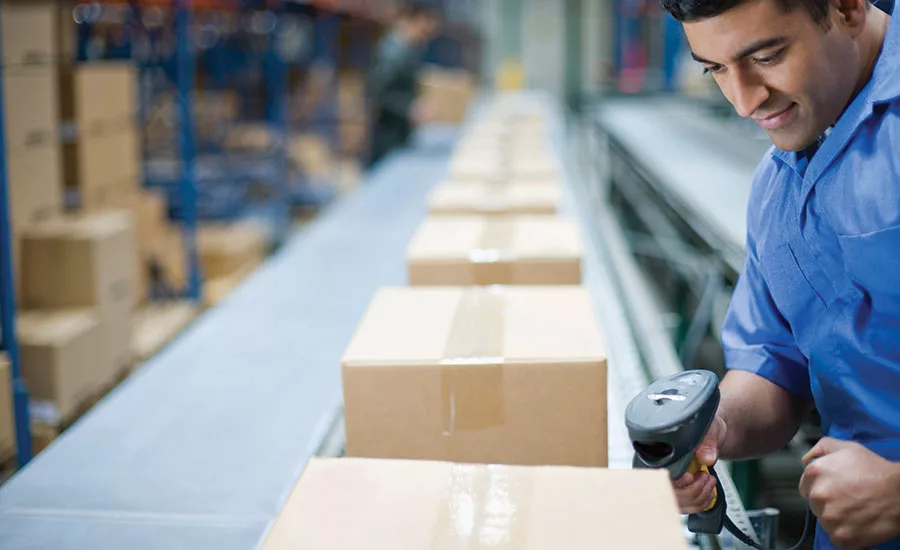
Today, companies can capture, store and provide information to buyers on everything from the source of trees, to the wood chips and pulp processing.
Nine out of 10 consumers say they will pay more for products manufactured by companies that are addressing social and environmental issues. Moreover, 84% of global consumers say they specifically look to purchase responsible products.
Consumers are making a positive impact on the environment through their purchasing patterns and behaviors. In an effort to make better decisions, they are checking labels before buying, investigating the manufacturing practices of suppliers and researching brands. Retailers are focusing on sustainability as well. In October 2016, Walmart renewed its commitment to push suppliers to use more sustainable packaging, concentrating on packaging optimization, increased recycling and sustainable sourcing. While this increased demand for sustainability may initially cause some manufacturers headaches, it ultimately could lead to increased profitability. A recent study by Nielsen (nielsen.com) found that 2015’s sales of consumer goods from companies committed to sustainability rose by 4%. Even more compelling, 66% of consumers say they are willing to pay more for sustainable brands – up from 55% in 2014 and 50% in 2013.
In additional to increasing revenue, sustainable manufacturing processes can improve profitability by lowering costs. One way this is achieved is by reusing as many materials as possible throughout the industrial chain, thereby eliminating waste. There are many ways to reuse products or their components and restore more of their precious material, energy and labor inputs. Some companies are actually “designing out” waste in the product concept phase, proving it’s possible to eliminate waste with innovative selections of materials, products, systems, etc. The idea of replacing the “end-of-life” concept with restoration is rooted in the circular economy concept, which focuses on fostering prosperity and sustainability in a world of finite resources.
The packaging industry plays a significant role in the sustainability of today’s products. However, staying on top of constantly changing regulations and adapting to variable market forces to deliver innovative solutions can be a challenge. To succeed in this complex environment, packaging companies must find new ways to manage an increasingly intricate global supply chain and provide detailed product transparency at a moment’s notice.
A five-step process for utilizing data to deliver sustainability
Packaging suppliers are required to meet extensive global government regulations such as European Market Infrastructure Regulation (EMIR), the Dodd-Frank Act, and the Clean Water and Air Acts. Some of these regulations monitor the financial aspects of forestry transactions, while others focus on the environmental aspects of processes or emissions management. To comply with industry regulations, companies need a solid sustainability strategy that includes processes for collecting, monitoring, analyzing and applying relevant information.
Fortunately, today’s data-rich business environment makes it easier to comply with regulations while also innovating new products. The following five-step process can help ensure the efforts put forth in data collection and management will lead to process and product improvements.
Step 1: Identify all the requirements that must be met including permits, testing and documentation. Know the acceptable upper and lower limits, as well as how the information will be stored and retrieved.
Step 2: Determine how the data will be collected. This could be detailed instructions on how and where samples are collected.
Step 3: Create a repeatable process for collecting and calculating the data. Designate a specific time period for data collection. For example, will it be on a minute, hourly, daily or monthly basis? Also, know which formulas will be used in the calculations.
Step 4: Carefully monitor the data. Create automatic alerts to quickly identify deviation such as if emissions limits have been exceeded in an exhaust line. Additionally, outline the action to be taken should problems occur during operations.
Step 5: Provide workers with an easy, intuitive tool for analyzing data in context so that action can be taken based on the resulting real-time insights.
Following these steps, packaging manufactures will be able to apply data to improve overall operations and deliver end-products with proven sustainability.
Real-world examples of data-enabled processes that improve sustainability
Meeting industry regulations and certifications requires precise information on the materials used in product packaging. Today, companies can capture, store and provide information to buyers on everything from the source of trees, to the wood chips and pulp processing. In this way, consumers looking for environmentally friendly products can now see exactly what percentage is, and is not, made from certified forests, for example.
From a research and development perspective, packaging companies are using data to design and engineer new types of packaging. These include taking lessons learned from European suppliers on packaging innovations – such as thinner liner boards and corrugated options – while maintaining strength, and bringing them to North America. Also product manufacturers are looking at new ways to package existing products. For example, Keurig Green Mountain is developing recyclable containers and some companies are investigating biodegradable, edible packaging.
Production of paper and packaging is a very energy consuming process. To maintain profitability, manufacturers must keep energy consumption low while producing high-quality products. Using real-time data streaming directly from the machines, assets can be adjusted during operations to maximize equipment usage and produce products in the greenest possible way.
Connecting and analyzing supply chain data allows decision makers to make fulfillment and transportation decisions that are better for the environment. Using data from connected vehicles as well as driver behavior, companies can optimize loads, determine the most economical routes and even analyze environmental conditions to maximize fuel consumption.
Technology is being used to reduce environmental impact by delivering data in an easy-to-use format on any device, so that action can be taken when its needed most. Some packaging companies utilize sustainability performance management tools to ensure their operations and/or products are in compliance at all times. Real-time reporting can also combine internal and external data to find patterns and track trends. One example is sentiment tracking in which companies follow changing customer perceptions about the corporate brand.
A final example of sustainable business practices are companies operating in the circular economy by eliminating waste and reusing materials as much as possible. Based on customer behavioral data, U-Haul revamped its manufacturing process to produce and sell packing boxes made from 90% post-consumer waste. U-Haul also offers customers a full refund for any unused boxes and provides drop-off locations for used boxes at all company stores and some independent U-Haul dealerships. In addition to an environmentally friendly box program, U-Haul sells biodegradable packing peanuts and furniture pads made from pre-consumer fabric waste2.
The Internet of Things (IoT) has made it easier for packaging companies to capture, track and deliver the detailed information necessary to meet industry regulations and buyer scrutiny. But it hasn’t stopped there. Newly available data is being used in research to invent new packaging solutions, and on the shop floor to drive efficiencies within operations. Companies willing to embrace all the insights made possible with data will benefit from increased revenue, lower costs and overall success.
1 http://www.conecomm.com/research-blog/2015-cone-communications-ebiquity-global-csr-study
2 https://blogs.sap.com/2016/06/24/u-haul-digitally-engaging-customers-to-go-green-in-packaging/
Looking for a reprint of this article?
From high-res PDFs to custom plaques, order your copy today!