Materials
Considerations for Cartonboard Lightweighting
Boost sustainability while slashing cost and weight of bulky board
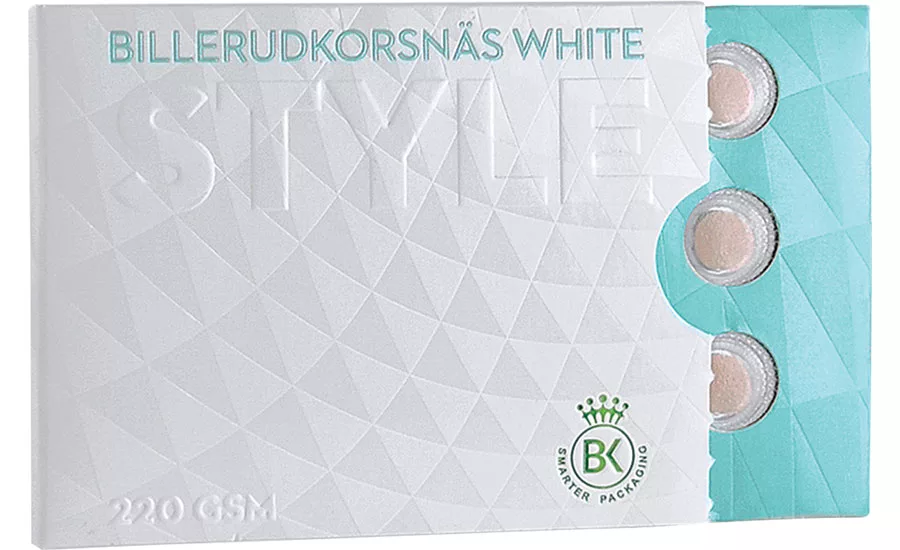

Cartonboard converters are challenged to balance cost with creating a high-quality package that offers visual appeal while protecting its contents. For carton converters, lightweighting material is a simple solution to maximize sustainability while minimizing costs. In fact, lowering package weight can save costs all along the value chain, from sourcing and production to transport and waste handling. However, switching to a lighter-weight board should be predicated by some considerations.
For example, how could material reduction affect the structural integrity and performance of the package along the supply chain? How should the material switch be implemented, and what impact could a lighter-weight material have on the speed and efficiency of equipment on the packaging line? Will the switch impact the recyclability of the packaging? And, importantly, are there any resulting costs?
These questions point to a key consideration in material lightweighting: quality matters. Responding to the stresses of today’s supply chain, the next generation of new, high-quality cartonboard is engineered to better endure machine processing, protect contents, tolerate stacking and handling, and retain shelf appeal — all at a lighter weight.
Consumers Demand Sustainability
Packaging materials and design comprise a significant portion of a company’s or brand’s environmental footprint. In a 2017 panel of consumers in megacities around the globe conducted by BillerudKorsnäs, 72 percent of consumers expressed that they were willing to pay more for a product if it was packaged in a way that provides substantial sustainability benefits. Additionally, consumers reported that they believe brand owners who care about fostering sustainable communities have the power to make a difference through product packaging choices.
When asked about their “dream results” for packaging development, respondents’ top answer was that they desire packaging that is fun and easy to recycle.1 The panel also ranked recyclability as one of the top areas in which packaging can improve. By choosing to purchase from responsible brands, these consumers, in turn, feel their choices impact environmental challenges.
Benefits of Lightweighting Cartonboard
Cartonboard is well established as an environmentally friendly material. Wood fiber is biodegradable, and forests used by the paper and board industry are sustainable. More than 68 million tons of paper and paperboard products are recovered annually in the U.S., achieving a recycling rate of 64.7 percent.2 In addition, wood fibers can be recycled several times before an input of virgin fiber is needed to maintain board strength.3
Though eco-friendly products are often misconstrued as costly, switching to a lighter weight cartonboard is cost-effective in the long run. Cartonboard at a lighter weight means more sheets per pallet and fewer pallets per shipment. For example, switching a 28-ton order from 290 gsm / 16.5 pt to 255 gsm / 13.6 pt reduces raw material by 3.4 tons, resulting in a shipment with 26 fewer pallets.4
Besides weight reduction, higher quality packaging material can endure more machine processing, is tougher and more shapeable, and maintains appearance through the handling chain all the way to the shelf.
As folding cartons are used for a variety of different applications and a vast array of products — both food (62 percent) and non-food (38 percent), like premium beverages, cosmetics and personal care products — it is important to make sure a package’s material is tough enough to handle the weight of its contents while also ensuring products are packaged responsibly and safely. This is especially important for goods purchased online since e-commerce packages are often handled roughly in warehouses and in transit.
Making the Switch
Lightweighting works best when the material’s foundation is strong and built to endure material reduction. However, traditional solid-bleached sulphate cartonboard (SBS), which is made from a single layer of bleached pulp coated on one side, weakens when its thickness is reduced. Advances in cartonboard engineering have opened the door for SBS alternatives specially created for lightweighting.
The difference in strength between single-ply SBS and such a uniquely designed four-ply cartonboard is in the structure. SBS is weaker and less elastic than four-ply board. Recent developments in production techniques have furthered the strength of lightweighted board. For example, the I-Beam principle, which optimizes the stiffness of cartonboard, enables use of lighter weights/lower calipers without any sacrifice in stiffness or strength. Plant managers need not worry about costs associated with switching from SBS to a stronger board because, for technical purposes, lighterweight cartonboard and SBS are interchangeable.
With climate and conservation top of mind, sustainable manufacturing is increasingly important. Some suppliers do offer lightweight carton and paperboard. BillerudKorsnäs has a range of lightweight-friendly cartonboard products to fit the needs of converters and brands of all types. The board is produced with 97.2 percent bioenergy fuel. Because strong virgin fibers are used, it can be recycled five to seven times.
- https://www.billerudkorsnas.com/globalassets/billerudkorsnas/media/news/consumer-panel/billerudkorsnas-consumer-panel-2017.pdf
- https://www.thebalancesmb.com/paper-recycling-facts-figures-and-information-sources-2877868
- http://www.procarton.com/files/file_manager/press_0609_sust/sust_folder_en.pdf
- https://info.billerudkorsnas.com/cartonboard-lightweighting-guide
BillerudKorsnäs provides packaging materials and solutions that challenge conventional packaging for a sustainable future. The company is a world-leading provider of primary fiber-based packaging materials. It has eight production units in Sweden, Finland and the U.K. and about 4,300 employees in more than 13 countries. To learn more, visit billerudkorsnas.com.
|
Paperboard Packaging for Foods & Pharmaceuticals by Mike Kerr, executive vice president and COO for NorkolPaperboard packaging is a brand staple because it’s easily sourced and cost effective — but there’s more to paperboard than convenience. With the popularity of over-the-counter (OTC) pharmaceuticals and shelf-stable packaged food products, paperboard packaging in both substance and design is an asset for both corporations and consumers. Competition in PharmaceuticalsOTC pharmaceuticals and their sister solutions, nutraceuticals and cosmeceuticals, answer consumer demand for OTC medicine, nutritional supplements and cosmetics of near-prescription strength by incorporating high-powered, drug-like active ingredients. A casual look at store shelves demonstrates that competition in these markets is steep. There is often little to differentiate competing formulas other than a product description touting clinical trials or natural ingredients printed on a paperboard carton. Competitive paperboard packaging provides ample space for brands to market their products and adhere to FDA regulations with product warnings, usage instructions and age restrictions. Not only does the FDA regulate the information displayed on OTC pharmaceutical packaging, it regulates the substance of paperboard packaging used in pharmaceuticals to prevent consumers from ingesting or absorbing toxic dyes, adhesives or materials. Paperboard’s diversity and wide range of options allows brands to navigate stringent regulations on pharmaceutical packaging with relative ease. Inexpensive and Accessible FoodsToday, quickly prepared, shelf-stable food products are more popular than ever among busy consumers juggling professional and personal demands. Paperboard packaging is a part of what helps these popular foods stay relevant and adds to their broad appeal. As with pharmaceuticals, the FDA requires packaging to adhere to specific regulations whenever it comes in direct contact with food. Food product manufacturers are responsible for choosing nontoxic paperboard packaging that prevents food adulteration and is free of any unsanctioned dyes or substrates. The options available are not only plentiful; many of them are sourced from companies committed to using recycled materials known for their excellent printability, brightness and density. Paperboard can be printed and converted quickly and accessed easily by food manufactures without holding up supply chains and delaying distribution. Getting products to the shelf is heavily impacted by packaging logistics, and high-quality paperboard’s accessibility makes it a brand favorite for that reason. This is why paperboard packaging makes navigating regulatory standards and shifting consumer demand an opportunity — by remaining a consistent, quality packaging solution across product categories. Norkol is an independently owned converter and distributor of commercial printing paper, providing flexible packaging products, nonwoven materials, industrial packaging products and more. For more information, visit norkol.com. |
Looking for a reprint of this article?
From high-res PDFs to custom plaques, order your copy today!