This innovative solution addresses the challenge of producing materials that are designed for recyclability while delivering enhanced mechanical properties and enabling significant downgauging potential to improve operational efficiency across the value chain.
Supported by a $1.7 million grant from the U.S. Department of Energy, the team designed polyester-based multilayer films that perform comparably to commercial packaging while offering potential for both mechanical and chemical recycling.
Studies by one.five show that the Glassleaf packaging generates approximately 15–20% fewer emissions compared to conventional OPP packaging (30 µm thickness).
During the year, Amcor continued to bring new innovations to market that minimize waste and maximize resource efficiency in line with its belief that all packaging can be circular.
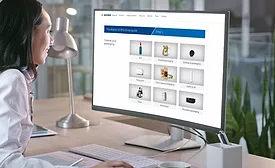
Whether it’s PET bottles, flexible or fiber-based packaging, glass, aluminium or specific reusable containers, the digital GreenGuide on the HERMA self-adhesive materials website provides a solid basis for decision-making with just three or four simple inputs.
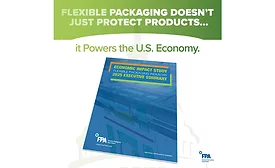
According to the report, the flexible packaging industry drives $151.4 billion in total economic output and supports nearly 400,000 American jobs across all 528 sectors of the U.S. economy.
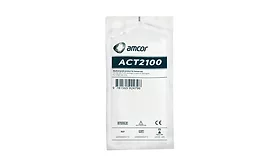
The Air Peel Technology delivers 25% stronger seals and 50% greater breathability than comparable products, supporting faster, more reliable sterilization cycles and ensuring packaging integrity in demanding conditions.
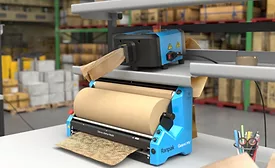
While making this small footprint converter, Ranpak’s engineering team has prioritized maximum reliability and performance across FillPak® Mini’s internal mechanisms.
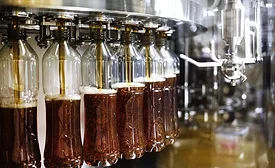
The new line, featuring Sidel’s Aseptic Combi Predis™, EvoFilm Stretch, PalKombi machines, and digital solutions, delivers substantial water, energy, chemical, and plastic savings, reinforcing Sibeg’s commitment to sustainable and efficient operations.