Dennis has held senior roles at Garlock Printing and Converting, Interflex Group, and Alcan, and he has significant experience in VOID’s core markets of packaging and material sciences.
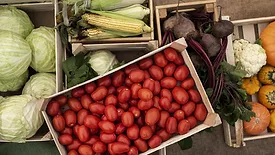
The USDA's Foreign Agricultural Service has awarded 21 research grants for produce packaging with the aim of helping U.S. farmers meet foreign requirements and maintain market access for U.S. exports.
In its mission to create a fully regenerative food packaging system, SIG is steadily increasing the paper content of its aseptic cartons, to enhance renewability, and further reduce carbon footprints and the use of fossil-based materials.
Powered by a breakthrough new sensor technology, Scorpion, it delivers the entire viscoelastic picture of thermoplastics in real time, relating directly to MFI, IV, and molecular weight.
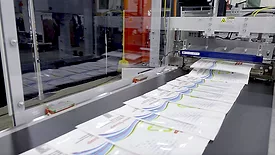
Across North America, pouch converters are navigating a convergence of market demands: shorter runs, sustainability goals, labor shortages, and rapid SKU proliferation, as these forces reshape how machinery is specified, run, and upgraded.
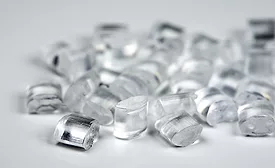
State-of-the-art system incorporates dedicated silos that feed multiple production lines to enable precise PCR blending, giving customers the ability to choose their optimal PCR percentage.
We recently spoke to Vicki Strull of Vicki Strull Design about how premium paper packaging affects people’s perceptions of quality—and how converters and brand owners can benefit from understanding these perceptions.
Switching from traditional multi-material flexible packaging to recyclable mono-material packaging supports sustainability but brings unique printing challenges. The right coding technology can render packaging both eco-friendly and high-performing.
Under this agreement, Hordijk has secured volumes of Avantium’s 100% plant-based and recyclable polymer PEF (polyethylene furanoate) from future license plants for use in trays and injection-molded packaging across a range of applications, including food, cosmetics, and other consumer goods.
 RSS
RSS