
Packaging Strategies logo
search
cart
facebook twitter linkedin youtube
  • Sign In
  • Create Account
  • Sign Out
  • My Account
Packaging Strategies logo
  • FEATURED
    • Brand Packaging
    • Extended Producer Responsibility
    • New Products & Materials
      • Featured Products
    • Packaging News
    • Packaging Perspectives Podcasts
    • Steve Fairfield Innovation Award
    • Supply Side
    • Top 100 Food & Beverage Packaging Companies
      • Submit Your Company
  • FLEXIBLE PACKAGING
  • VERTICAL MARKETS
    • Beer / Wine / Spirits Packaging
    • Beverage Packaging
    • Candy / Confectionery
    • Dairy Food Packaging
    • FoodService Packaging
    • Household Packaging
    • Meat / Seafood Packaging
    • Personal Care Packaging
    • Pet Food Packaging
    • Pharma / Medical Packaging
    • Produce Packaging
    • Snack Food Packaging
  • MATERIALS
    • Adhesives / Sealants
    • Beverage Multipacks
    • Blister Packaging
    • Cans & Bottles
    • Closures/Lids
    • Films & Coatings
    • Labels
    • Material Converting
    • Paperboard / Corrugated / Cartons
    • Rigid Containers
    • Sustainable Packaging
  • MACHINERY
    • Automation / Controls
    • Case Forming / Packing / Sealing
    • Cartoning
    • Coding / Marking / Printing
    • Conveyors
    • Form-Fill-Seal / Filling & Closing
    • Inspection / Detection / Vision
    • Labeling
    • Unitizing / Palletizing
    • Robotics
    • Track & Trace / Serialization
  • DIRECTORIES
    • Packaging Strategies Resource Guide
    • Flexible Packaging Buyer's Guide
  • EVENTS
    • Converters Expo
    • Converters Expo South
    • Global Pouch Forum
    • Industry Events
    • Webinars
  • MORE
    • Videos
    • Book Store
    • Classifieds
    • Custom Content & Marketing Services
    • eXTRA Newsletter
    • Market Research
    • PACKSTRAT Wordplay
    • PS Resource Guide
    • Sponsor Insights
  • EMAG
    • eMagazines
    • Archived Issues
    • Contact Us
    • Advertise
  • SIGN UP!
Automation/ControlsCoding/Marking/Printing

Expert Article: The ‘Smart Factory’ and Package Printing Automation
By Doug Schardt
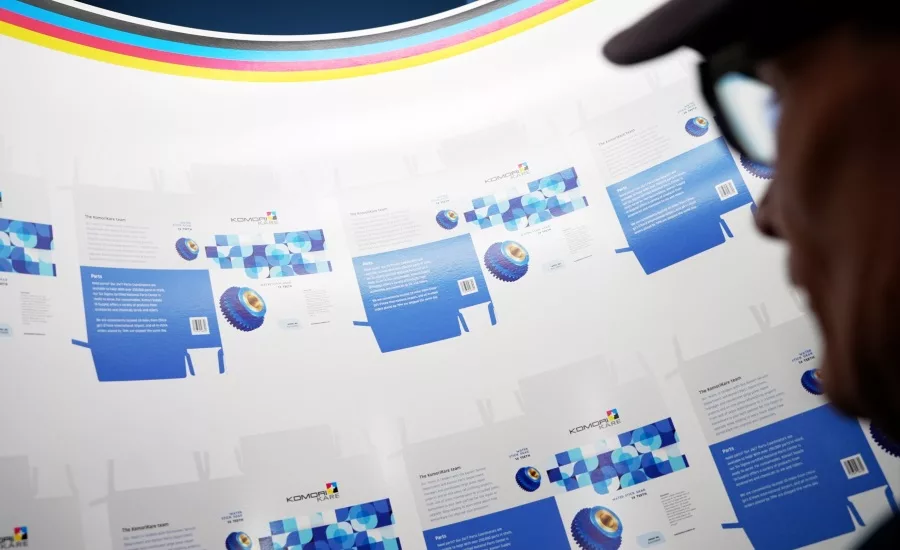
Smart Factory and Printing Automation

(Courtesy of Komori America)

May 10, 2023

Packaging printers are continually in search of productive processes that use less labor to meet the needs of their customers. The hands-on methods required by package printing press operators in the past have become troublesome in this growing business environment. Removing the operator’s tweaking of the controls and allowing the machines to optimize process control and automation technology in the way they were intended improves efficiency.  

Press automation is comprehensive enough to allow the entire print process, from makeready to run to washup, to move automatically through all the scheduled jobs with limited human interaction. This has proven so beneficial that it is natural to imagine the benefits of automation extending to all machines in the package print production process. This is the concept of a “Smart Factory”— which can be described as machines talking to machines and moving job information automatically between them as the print job progresses through the shop.  

The idea of a Smart Factory is still being refined, but it’s the natural direction of automation growth. The intent is to automate the entire production plant, rather than just the printing press or any other single machine working within the shop. This concept requires electronic tracking and communication between machines and management. As machines do their part in production, management can electronically monitor job performance compared to expectations.

Implementation of a Smart Factory can range from fully automated to partially automated, with both scenarios offering significant benefits. Any time the number of touch points of a print job are reduced, the quality, productivity and efficiency tend to rise, which also cuts costs and allows package printers to meet increasingly aggressive delivery timelines.

A Smart Factory can also compensate for the decline in the number of skilled workers by reducing or eliminating the need for in-depth knowledge of machine operation, since information is communicated to the equipment electronically. This type of automation delivers complete transparency of a plant’s operation to management with real-time visibility into overall workflow, as well as individual jobs. If a problem does occur anywhere in the process, it can quickly be detected and remedial action can be taken to minimize the impact on further production.  

How a Smart Factory works

The idea of machines talking to machines is somewhat reminiscent of JDF (Job Definition Format) that was popular a few years ago; however, Smart Factory is a little different. JDF used very simple job specifications so that even primitive machines could communicate. As a result, more complex job specifications had to be manually entered into more sophisticated equipment. In contrast, Smart Factory will likely employ the same specific instructions, simple or complex, that would normally be used to set up a machine without Smart Factory.

Presently, machines are already communicating with each other, but on a limited basis. For example, prepress may receive information from a print management information system (MIS) and pass electronic information to the press, which in turn generates its own information about production and quality. On the other hand, in a true Smart Factory, the press would convey the necessary information to the equipment used for the next step of processing, as well as generating its own production/quality report. Any errors or delays could be viewed in real time by management with the use of automatic alerts.

To switch from the Smart Factory concept to a practical application, consider the following example.  Let’s say a press completes a run and information flows, in this case, to a paper cutter. The paper cutter would then implement the correct cutting program and be ready for automated operation.

Here is where a speed bump is likely to occur when older equipment is involved: The paper cutter must be able to receive and react to electronic data. There are a lot of existing paper cutters that don’t have that ability and, until they are replaced, a workaround must occur. This could take the form of a computer monitor mounted next to the cutter (or other equipment in the process) that will tell the cutter operator what is required for the cutting program. The operator will then program the cutter and begin the job.  This would be considered a partially automated version of Smart Factory.

There is no doubt that the concept of Smart Factory has the potential to convert what is typically a customized workflow into a reliable manufacturing process driven by data. Combining Smart Factory with logistics to automatically move the physical product from machine to machine, along with the electronic data, promises to truly automate the entire plant. This will positively impact overall profitability while simultaneously reducing the impact of hard-to-find skilled labor.

While the rewards of a Smart Factory can be great, a company must be willing either to replace older, non-compliant equipment when compliant equipment becomes available or to accept a suitable workaround in the interim. Smart Factory is a strong concept for the future of automation and is something for printers to consider and plan for as they look toward upcoming equipment purchases and upgrades.


KEYWORDS: automation automation equipment solutions package printing smart factory

Share This Story

Looking for a reprint of this article?
From high-res PDFs to custom plaques, order your copy today!

Doug Schardt is director of Product Management for Komori America, a premier manufacturer of offset and digital printing presses. Schardt’s experience with a wide variety of print applications and his constant involvement in the industry’s newest technologies supports Komori’s dedication to helping its customers navigate the changing market landscape. Visit komori-america.us.

Recommended Content

JOIN TODAY
to unlock your recommendations.

Already have an account? Sign In

  • Golden award trophy in the shape of a star. Text: 2026 Top 100 Food and Beverage Companies

    Top 100 Food and Beverage Packaging Companies of 2026

    Celebrating 30 years as a B2B journalist, I’ve revisited...
    Special Reports
    By: Brad Addington
  • Women In Packaging 2025 homepage hero

    Women in Packaging: Seizing Opportunities, Pushing Boundaries

    Seven women share their personal journeys in the...
    Material Converting
    By: Brad Addington
  • Image of the Spyder Pick and Place Joint Robot sorting pre-rolls.

    Cannabis Packaging Goes High-Tech

    Packaging Strategies doesn't often cover cannabis...
    Unitizing/ Palletizing
    By: Brad Addington
Subscription Center
  • eMagazine Subscription
  • Manage My Preferences
  • Newsletters
  • Subscription Customer Service
  • Online Registration

More Videos

Sponsored Content

Sponsored Content is a special paid section where industry companies provide high quality, objective, non-commercial content around topics of interest to the Packaging Strategies audience. All Sponsored Content is supplied by the advertising company and any opinions expressed in this article are those of the author and not necessarily reflect the views of Packaging Strategies or its parent company, BNP Media. Interested in participating in our Sponsored Content section? Contact your local rep!

close
  • Hand Holding Various Semaglutide and Insulin Injection Pens for different stages of the treatment.
    Sponsored byInline Plastics

    How GLP-1 Is Reshaping Food Packaging, and Why It Matters More Than You Think

  • A stack of clear plastic containers, the bottom full of mixed fruit
    Sponsored byInline Plastics

    Packaging Trends Shaping 2026: Where Trust Is Won

Popular Stories

Podcast | Packaging EPR’s 2026 Reality Check” with guest Anna Kendall headshot and title. Also pictured Cardboard boxes on conveyor belt.

PODCAST | Packaging EPR’s 2026 Reality Check

Main image for podcast with Kevin Kelly regarding Flexible Packaging for Produce. Main image includes Kevin Kelly’s headshot and an image of potatoes in a bag incorporating 30% PCR content.

Looking Forward to Global Pouch Forum

Logo for New Earth Ventures

Atlantic Packaging Launches New Earth Ventures to Accelerate Packaging Technology

See the Top 100 Food and Beverage Packaging Companies of 2026

Products

Advances in Sustainable Food Packaging Technology

Advances in Sustainable Food Packaging Technology

See More Products

Packaging Perspectives Podcast

Play Packaging Strategies' captivating WordPlay game, PackStrat! There's a new word every Tuesday.

Related Articles

  • Shop employee inspects print job

    The ‘Smart Factory’ and Package Printing Automation

    See More
  • Premier Press used Komori’s Impremia IS29 press

    Innovations in Package Printing Automation

    See More
  • Building Blocks to the Smart Factory

    Building Blocks to the Smart Factory

    See More
×

Keep the info flowing with our Newsletters!

Get the latest industry updates tailored your way.

JOIN TODAY!
  • RESOURCES
    • Advertise
    • Contact Us
    • Directories
    • Store
    • Want More
  • SIGN UP TODAY
    • Create Account
    • eMagazine
    • Newsletter
    • Customer Service
    • Manage Preferences
  • SERVICES
    • Marketing Services
    • Reprints
    • Market Research
    • List Rental
    • Survey/Respondent Access
  • STAY CONNECTED
    • LinkedIn
    • Facebook
    • YouTube
    • X (Twitter)
  • PRIVACY
    • PRIVACY POLICY
    • TERMS & CONDITIONS
    • DO NOT SELL MY PERSONAL INFORMATION
    • PRIVACY REQUEST
    • ACCESSIBILITY

Copyright ©2026. All Rights Reserved BNP Media, Inc. and BNP Media II, LLC.

Design, CMS, Hosting & Web Development :: ePublishing