
Guest Column
To Reduce Waste, It’s Vital to Close the Gap in Sustainable Packaging Closures
(Courtesy of TIPA)
As we strive for a more sustainable future in the packaging industry, one critical challenge lies in making complex products eco-friendly, including those with zippers, closures, and lids. To streamline disposal processes and reduce contamination in recycling and composting facilities, entire packages need to be compatible with a single waste stream. This will make it easier for consumers to correctly dispose of packaging and for municipal waste collectors to handle these items, enhancing the overall efficiency of global waste management systems.
The Complexity of Multi-Material Packaging
Mixed-material packaging is prevalent across many industries due to its ability to provide effective product protection, functionality, and durability. This widespread use, however, presents significant challenges for recycling and composting processes within most existing waste management systems.
In the food and beverage industry, for instance, coffee pouches might feature compostable laminated paper bags with plastic zippers made from non-compostable materials like polyethylene or polypropylene. In the cosmetics industry, products like facial creams and serums are often packaged in containers that combine recyclable materials like glass or metal with plastic lids or pumps that are not recyclable. In the electronics industry, products may be packaged in recycled cardboard that contains protective foam inserts made from non-recyclable polyurethane foam or expanded polystyrene (EPS). Pharmaceuticals are often distributed in blister packs with a recyclable aluminum base, but non-recyclable plastic coverings.
All of these combinations, while beneficial for product protection, complicate recycling or composting processes because the different materials need to be separated – a step that many consumers skip and that most waste management facilities are not equipped to handle efficiently. This often results in higher contamination rates and more waste ending up in landfills.
Innovations in Sustainable Closures and Lids
Advances in compostable packaging technology now offer innovative packaging solutions made of plant-based and other compostable plastics to create compostable zippers and closures that offer the same durability and functionality as conventional plastic closures. This technology can be used in tandem with existing compostable packaging options to create entire packages that are compatible with a single waste stream.
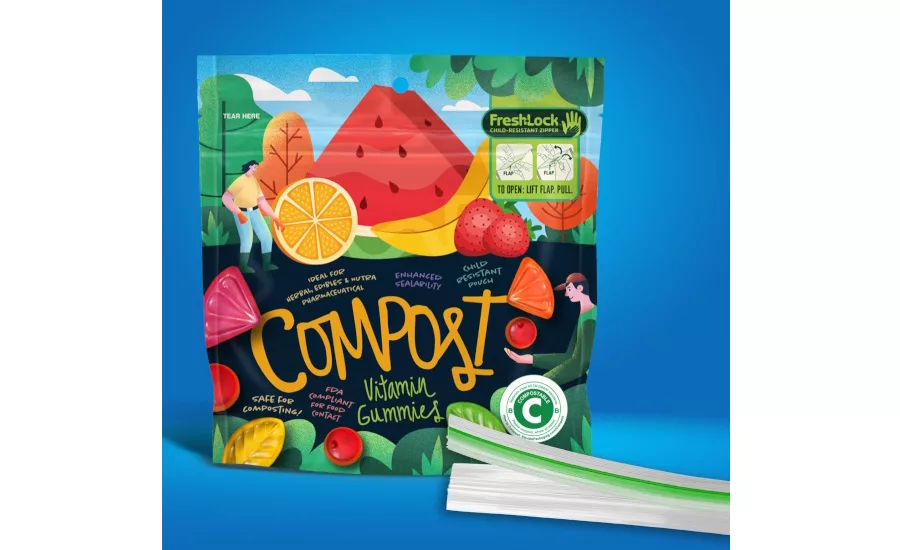
For example, Fresh-Lock recently launched a new line of compostable solutions that include reclosable and child-resistant zippers. These eco-friendly closures disintegrate and biodegrade into nutrient-rich soil when placed in the right composting conditions with other organic waste.
By focusing on products with components that are all suitable for disposal in the same waste stream, the packaging industry can simplify waste management processes to be more efficient and less prone to contamination. This approach not only helps reduce the amount of waste going to landfills, but also meets increasing consumer demand for fully sustainable packaging solutions.
The Importance of Consumer Education and Engagement
A significant component for the success of sustainable packaging is consumer behavior. Educating consumers on how to properly dispose of packaging, especially when dealing with compostable and recyclable materials, is crucial. Clear labeling and public awareness campaigns can play a vital role in ensuring that eco-friendly packaging ends up in the right waste streams. This was highlighted in a recent consumer behavior trial by the UK Compostable Coalition, which reported that contamination levels in food and garden waste bins fell from 9% to 3% following educational efforts with 120 households focused on proper disposal practices and sustainability.
The study clearly revealed that when consumers understand the importance of separating and disposing of materials correctly, their behavior – and the efficiency of waste management systems – improves. Companies and governments must therefore work together to develop comprehensive education programs that inform the public about the environmental impact of their choices and the proper methods for disposing of different types of packaging.
Policy and Industry Collaboration for a Unified Waste Stream
Creating a cohesive approach to waste management requires collaboration between policymakers, industry leaders, and waste management entities. Policies that support the development and adoption of products and materials suitable for single-stream waste systems can significantly impact the effectiveness of recycling and composting programs. Industry collaboration is essential to standardize packaging materials and design practices, and to ensure that new innovations are compatible with existing waste management infrastructure.
For example, legislation that mandates the transition to only recyclable or compostable packaging materials can drive industry-wide change. As of 2023, six U.S. states have established Extended Producer Responsibility (EPR) laws that require producers of packaging materials to take increased responsibility for the entire lifecycle of their products, including end-of-life disposal. California and Minnesota have passed landmark laws to make all single-use packaging and plastic food ware recyclable or compostable by 2032. Maine, Oregon, and Colorado have enacted requirements for producers to fund or improve statewide recycling systems. Washington and New Jersey mandate that producers track and report the recycled content in their packaging, which must meet minimum recycled content standards. These legislative efforts are crucial steps toward a unified approach to sustainable packaging.
In addition to legislative reform, partnerships between packaging companies and waste management providers can help develop technologies and systems that streamline the processing of compostable and recyclable materials. By working together, stakeholders can create a more sustainable packaging ecosystem that benefits both the environment and the economy.
Building a Sustainable Future Together
Of the 46 million tons of plastic waste generated annually in the U.S., only 5% to 6% gets recycled – a drop from 9% just a few years ago. This makes the adoption of more innovative, eco-friendly materials in packaging – from closures to outer containers, fillers and stickers – essential for reducing the industry's long term environmental footprint. By creating more fully sustainable packaging solutions that are compatible with a single waste stream and fostering greater consumer awareness and understanding of proper disposal practices, we can significantly reduce the amount of plastic waste entering landfills. The more packaging we can keep out of landfills by ensuring it goes to recycling or composting, the better it is for the planet and human health. It will require a combination of innovation, education, and collaboration to achieve transformative change – but we have the recipe for success, and the time to start building a sustainable future together is now.
Looking for a reprint of this article?
From high-res PDFs to custom plaques, order your copy today!