
Editor's Note | Brad Addington
Packaging Innovation Hits Close to Home
One of my favorite brands has responded to one of my biggest packaging pet peeves.

In a column recently contributed to Packaging Strategies, Luke Vaccaro of ColdTrack makes a compelling case against Styrofoam coolers. One of the most salient sections of the column for me personally was one titled “Foam Coolers are a Customer Experience Problem.”
“Your customer is excited to receive their package, opens the box, and is greeted with a bulky cooler they didn’t ask for, a disposal problem they now own, and a material most municipalities won’t recycle,” Vaccaro observes. “That’s not a premium unboxing experience; that’s friction.”
We here in the Addington household routinely order items online that require a proper cold chain for delivery. My wife engages in this more than I do, but I enjoy the fruits of her labors (namely, the delicious food that she arranges to show up at our door).
Vaccaro’s article not only reminded me of the hassle of disposing of Styrofoam coolers but also got me to thinking about one of our favorite food companies—D’Artagnan, from whom we order deliveries of meat and game several times a year. The rabbit-pork-ginger sausage and the lamb merguez sausage are among my favorites.
Recalling prior vexation with Styrofoam coolers piling up in our garage, I went and checked our most recent D’Artagnan shipment. To my pleasant surprise, the shipment did not involve Styrofoam but rather TemperPack’s Green Cell Foam.
As D’Artagnan points out on its website, Green Cell Foam is made with 100% non-GMO corn grown in the United States, and the foam is backyard compostable, biodegradable, and water-soluble.
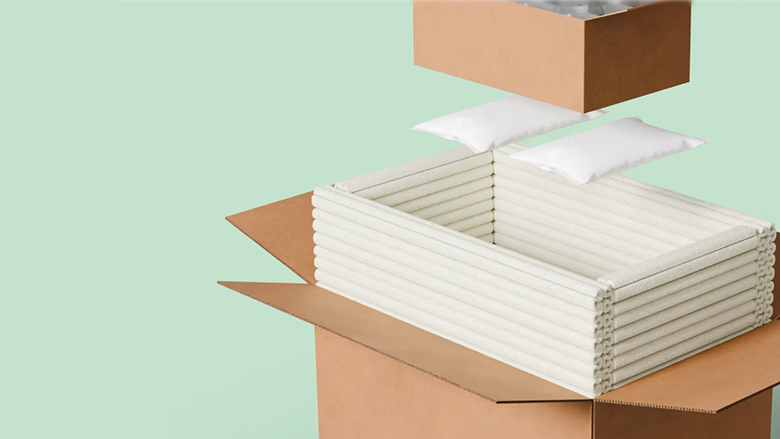
TemperPack’s Green Cell Foam is backyard compostable, biodegradable, and water-soluble. Image courtesy of TemperPack
“Green Cell Foam dissolves in water—in the sink or in the sea,” D’Artagnan notes. “Soak larger pieces overnight in a bucket and pour the mixture on plants as food! The insulation is 100% compostable, and will biodegrade in 60 days or less in a moist soil environment.”
Not being much into composting or gardening, I opted for dissolving the foam in the sink. It was fun watching the foam disappear before my eyes. I think I’ll show this to my grandkids the next time they’re in town.
Anyway, it’s great to see one of my favorite brands striving for sustainability—and helping me to keep my garage free of clutter.
Brad Addington
Chief Editor, Packaging Strategies
(248) 227-4727
addingtonb@bnpmedia.com
Looking for a reprint of this article?
From high-res PDFs to custom plaques, order your copy today!