Special report: Global Pouch Forum preview
Understanding traceability in the food supply chain
A guidance document on the best practices in food traceability
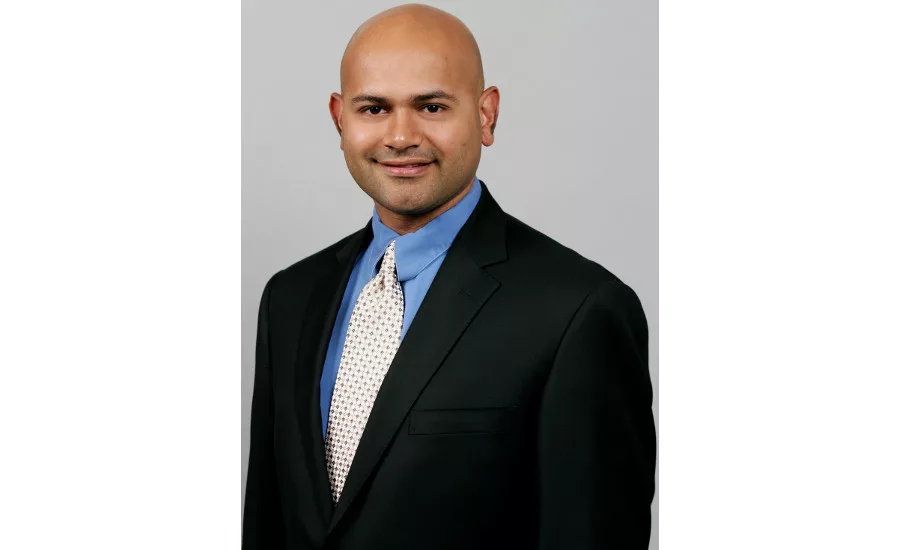
Tejas Bhatt: “The reason why some of the shrimp in Thailand using slave labor ended up with reputable companies in the U.S. is because they didn’t have adequate traceability.”
Tejas Bhatt is the director of the Global Food Traceability Center at the Institute of Food Technologists (IFT). He directs IFT’s science and policy initiatives related to food traceability. He was the IFT lead on the food product tracing pilots conducted for the U.S. Food and Drug Administration as mandated by the by Food Safety Modernization Act (FSMA). Prior to joining IFT, he was a research associate at the Purdue Homeland Security Institute. Bhatt has bachelor’s and master’s degrees in computer science and food science from Purdue University and is a certified food scientist. He has written widely in industry publications and lectured at numerous conferences on food safety. He is scheduled to speak June 17 at the Global Pouch Forum.
A major project for the center has been a guidance document on best practices in food traceability for bakery, dairy, meat and poultry, processed foods, produce, and seafood. It appeared in the September 2014 issue of Comprehensive Reviews in Food Sciences and Food Safety and may be accessed here.
What has the center been working on since it was established in 2013?
The IFT has been working in the area of food traceability since 2008, when we conducted some pilots for the FDA. At that time we realized a lot of gaps in how traceability is implemented in the food industry. Stakeholders pushed to have the IFT the authoritative voice on traceability; all our projects are stakeholder-driven. Some examples of work since 2013 include development of a best practices guidance document intended for stakeholders and the food industry—whoever wants to know the state-of-the art in traceability and how to implement it in the supply chain.
[The guidance] identified key data elements that need to be captured to maintain the chain of custody—where products flow to and from. It can be used by industry, but we also target regulatory agencies, a lot of which are coming up with new traceability requirements. The FDA and EU used this document in some of the development of their requirements. One of the key roadblocks facing us is how to develop a traceability system for all foods, when not all are produced at the same rate. But for participants in the supply chain, the same principals apply across the board.
Another project of interest to the packaging industry is [our] study of seafood traceability and how it’s handled across 48 supply chains around the world, from harvest to retailer. Several things came out of it—how to extract value from traceability, moving from the mindset from cost of compliance to how traceability can make money for my business. So often traceability is used as a stick—you can be fined for inadequate recordkeeping. [This focuses on] solving problems for the greater good. [More information is available here.]
Seafood has been in the news because of slave labor practices in the shrimp industry in Thailand. Does your work address that?
I was in Thailand last year to tackle the issue of slave labor and what companies can do to modify their practices. It was very fascinating. One of the key things I learned was the fact that a lot of people think traceability is the end all and be all; that’s not the case. It’s just a tool to attempt to solve some of the problems. In many ways they don’t know they have a problem because they don’t have adequate traceability—the reason why some of the shrimp in Thailand using slave labor ended up with reputable companies in the U.S. is because they didn’t have adequate traceability. We are talking with processors from Russia, Thailand, and China who are talking to us.
But the responsibility does not just rest on the shoulder of the Thai processors. It starts with the U.S. and EU consumers getting more vocal about demanding safer labor practices and better corporate stewardship. The more the retailers respond to those needs it will propagate into the supply chain. I don’t believe any company in the U.S. knowingly bought shrimp from a Thai supplier engaging in human trafficking. But they inadvertently ended up [doing so] because they did not know.
If a large retailer has hundreds of thousands of suppliers, it can be a daunting challenge to endorse and validate all suppliers. They have systems in place to ensure food is safe; food traceability is an extension of food safety. We’re telling them if you don’t know where your shrimp is coming from, under what conditions it’s harvested, packaged, you don’t know how safe it is. At the end of the day, it’s your brand name that consumers are going to connect with unsafe food products. That hit home with a lot of folks skeptical about the value of traceability.
What is traceability and why is it important?
The most commonly understood definition is identification in labeling—some kind of barcodes. In reality, certain barcodes and labels are important, but access to the information about the product to make meaningful decisions is key. Often data for traceability exist, but it’s put into storage.
The benefits are around risk mitigation. Regulators cannot do without traceability records to identify outbreaks. Another one is market access, which is commonly overlooked. If you have a specialty product that you want to export, without traceability you cannot ensure you get the highest value if your product is mislabeled. A third is around operational efficiencies: You can reduce waste and water use, for example. If you are processing tomatoes you can track how much water is being used, at what point you need to clean out the holding tank. You can measure those things.
What kind of food needs to be traced and when?
One of the sections of the FMSA requires new regulations around traceability, but the FDA asks only for additional recordkeeping for high-risk foods. There is a lot of debate about how to define high-risk, what should be traced and not traced. In my opinion, all foods should be traced.
We continue to see new kinds of outbreaks in foods, such as e coli in lettuce. If we are always in a reactive position, we’ll always be behind the curve. If some are high-risk and some aren’t, how do you deal with that in a multi-ingredient product? From a pragmatic standpoint, it makes sense to have all food.
Supply chains can be complicated. I saw one for milk that has many steps. Are you advocating that there be some sort of check at each of these? Wouldn’t that slow down the process considerably and add expense?
The short answer is maybe. What we’re advocating is that any time the food is transformed or transported, that’s a pretty good tracking event. At each, certain key data elements need to be captured. We are advocating a more cohesive approach to data collection and analysis. It doesn’t add significant cost if you do it more systematically, more efficiently.
The data in the work order or shipment order needs to be linked to the data collected during processing. Any company that handles food is required to record who the suppliers and the customers are. We say one forward and one back. [So that the] companies know what incoming product is used in what outgoing product. Linking is at the crux.
What kinds of traceability devices are you talking about? Paper? Code scanners?
There are some amazing technologies and I’m really excited about the future of how to implement traceability. Depending on the size of the company, some are using paper invoices, some barcodes, scanners, inline printers. Some companies are using innovative ways, such as infusing inert gases into packaging to measure along the supply chain. Some are doing genetic labeling, fingerprinting, putting synthetic DNA on the packaging to make sure it’s not been tampered with. I’ve seen some prototypes of consumer-friendly consumer smartphone scannable labels.
We generally advocate electronic capability because that’s so much easier to access. We do not endorse any particular technology because we feel every industry and company have unique challenges. We help companies ask the questions and let them decide which technology is best.
Looking for a reprint of this article?
From high-res PDFs to custom plaques, order your copy today!