Market Trends: Consumer Behavior
Shopping trends: A transformation of purchasing power
Multi-culturals have bigger impact on shopping trends.
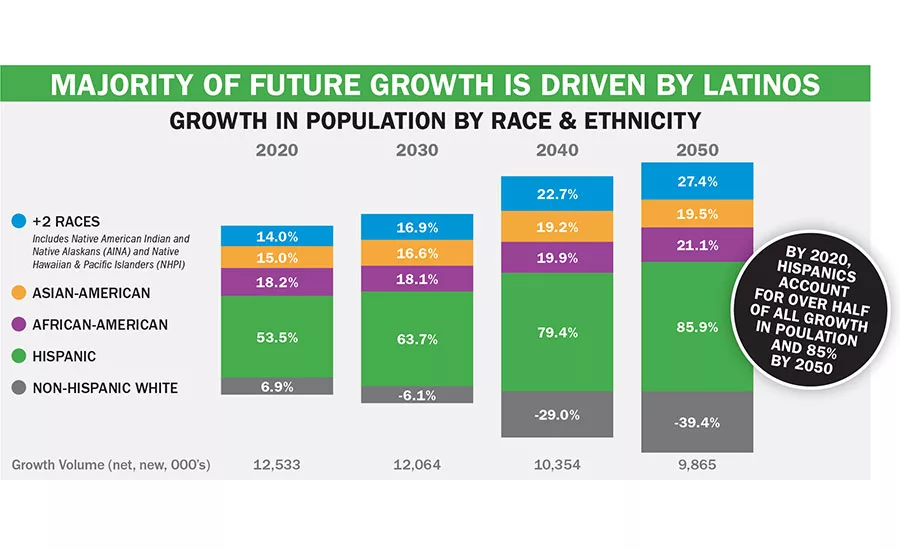
Source: U.S. Census Bureau, Population Projections, December 2012. Chart courtesy of The Nielsen Company.
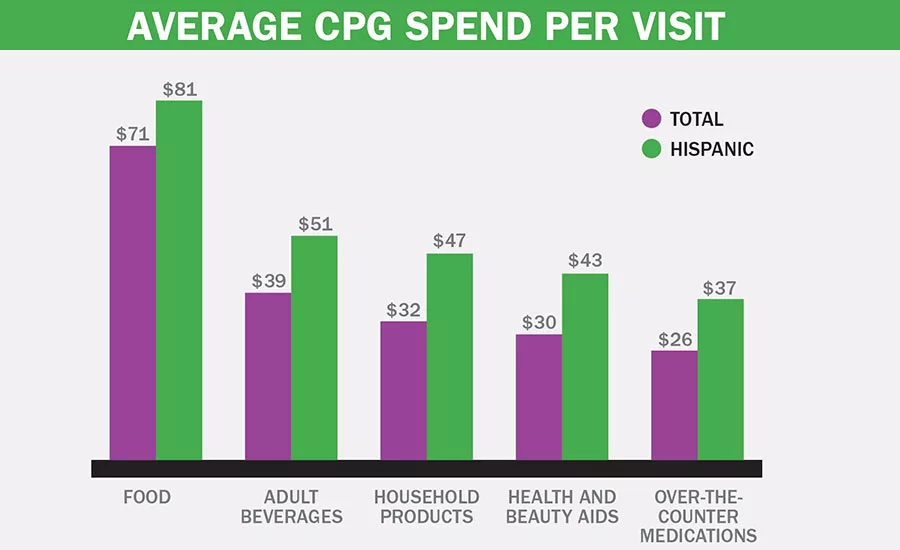
Source: Nielsen Share of Wallet Study, US, 18+, November 2014. ©2015 The Nielsen Company.
In the Two of a Kind song “All Over This World,” the singers open with: “All over this world, all over this world; People are alike, but not the same; All over this world.” As more consumers embrace a more globalized world, the U.S. is seeing an increasing influence from other cultures. These multi-cultural consumers are impacting not only how consumer packaged goods (CPG) companies bring new products to market, but how they market, manage and merchandise existing brands.
“Multi-cultural consumers are transforming the U.S. mainstream,” says Eva Gonzalez, executive director of diverse consumer insights for New York-based Nielsen. “Propelled by the twin engines of population growth and expanding buying power, they are at the leading edge of converging demographic and social trends that are reshaping how marketers and advertisers use culture to connect with increasingly diverse customers.”
Classifying a multi-cultural consumer with more than one culture or ethnic heritage or background (Asian Americans, African Americans, Hispanics, etc.), Gonzalez explains that these shoppers have taken on ambicultural identity, which allows them to function competently in both cultures by maintaining their heritage but seeing themselves as Americans.
“Multi-cultural consumers are expressive and inclusive, which very often allows multi-cultural consumers to simultaneously maintain their cultural heritage and see themselves as part of the new mainstream, allowing them to mix and match endless choices and products to suit their effortless duality in lifestyles and tastes,” she says.
Strength in numbers
Their increasing share of the population has contributed to the influence multicultural consumers have had as they enter the consumer marketplace. Citing Nielsen’s study The Multicultural Edge: Rising Super Consumers, Gonzalez says that multi-cultural consumers are rapidly becoming the core of the U.S. population.
“Today, African American, Asian American and Hispanic consumers account for more than 120 million people combined (38% of the total population),” she says. “These groups are projected to increase by 2.3 million each year before becoming a numeric majority of the population by 2044, according to the U.S. Census. With expansive buying power and unique consumption habits, multi-cultural consumers are an emerging consumer force in the country.”
Chicago-based Information Resources Inc. (IRI) also notes the contribution that multi-cultural consumers will have on the population growth, particularly Hispanic consumers.
In its July 9, 2015, presentation Connecting to the Hispanic Consumer, IRI notes that Hispanics will outpace other ethnic groups in its contribution to population growth percentages. Over the next five years, Hispanic consumers are forecasted to account for 53% of that growth. African American ranked second at 16% and Asian was 15%.
Sourcing the U.S. Census Bureau’s Population Projections from December 2012, Nielsen echoes similar numbers for 2020 – with African American slightly higher at 18.2% – and anticipates even more growth in the coming decades.
Points of differentiation
What helps set multi-cultural consumers apart from non-multi-cultural consumers is their embracement of technology, research indicates.
“Connected and mobile savvy, multi-cultural consumers use their smartphones and other devices at much higher rates and more intensely than their non-multi-cultural counterparts,” Nielsen’s Gonzalez says.
In IRI’s presentation, it reports that 50% of Hispanics have said they purchased grocery items online at least once in a calendar year. This outperforms the general population where 40% indicated as much.
Smartphone usage for shopping also showed a higher incidence for millennials who are bilingual or Spanish language preferred versus English language preferred or non-Hispanics. IRI reports that of millennials that spend three or more hours on the Internet on their smartphone, bilinguals were the highest at 64%. Spanish language preferred came in No. 2 at 59% compared with 53% of English language preferred and 31% of non-Hispanics.
Beyond multi-cultural consumers’ affinity for online and mobile conveniences, this diverse group is comprised of empowered, culture-driven shoppers, who are over-indexing the general population across numerous products and services, Nielsen’s Gonzalez explains.
Channeling multi-culturals
Taking into account ambicultural consumers’ tendency to over-index various products and services, these consumers are having a growing influence on the CPG market across various retail channels.
Gonzalez explains that Nielsen has defined Multi-cultural Super Consumers as those who comprise the top 10% of households that drive at least 30% of sales, 40% of growth and 50% of profits of a consumer product category.
“Multi-cultural consumers comprise a disproportionate share of many categories, such as dairy, baby food and diapers, laundry supplies and detergents, school supplies and other family goods,” she notes. “Of 126 grocery store categories reviewed, 45 categories (36%) over-index in total rate of spending for all multi-cultural consumers compared to non-multi-cultural consumers. These attitudes and behaviors demonstrate cultural and behavioral traits unique to the various ethnicities.”
Hispanic consumers will spend at least $10 more on each visit in comparison to the total market across the board of consumable and non-consumable CPG products, Gonzalez highlights.
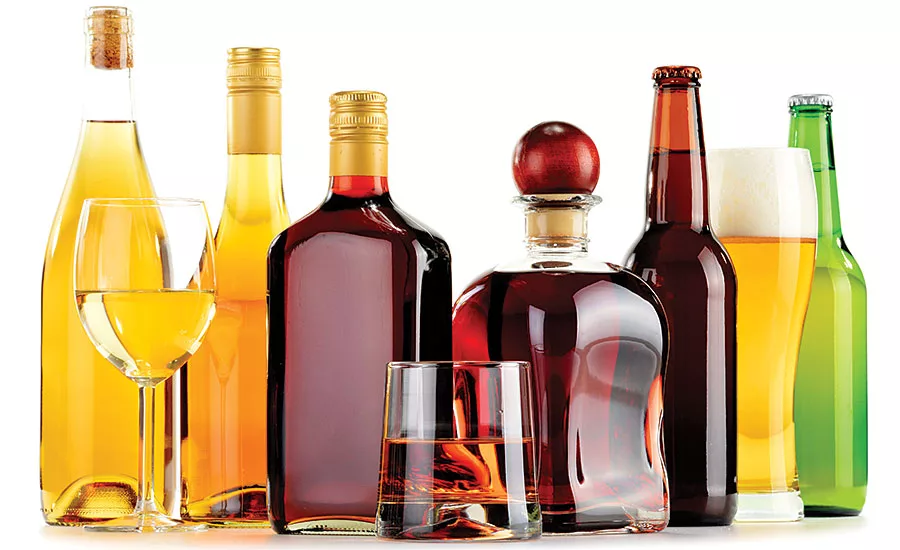
For example, when it comes to adult beverages (beer, wine and spirits), Hispanics spend on average $51 during a shopping trip vs. $39 for the total market. And across the top 15 CPG categories – which include carbonated soft drinks, beer and malt-based beverages, wine and coffee – these consumers led the growth for all, according to Gonzalez. “Depending on the category, Hispanic volume helped to grow or at least stem some of the declines,” she adds.
However, when it comes to alcohol beverages, Hispanics are more engaged with the beer category. In Nielsen’s What’s Your Drink? | Alcoholic Beverages’ Multicultural Motor, the market research firm identified that 44% of Hispanic adults stated they have consumed a beer within the past 30 days, slightly higher than the U.S. average. Among the beer segments they consumed were domestic light beer and imported beer, it reported.
The demographic wasn’t exclusive to beer, however, as wine and liquor experienced growth worth tens of millions of dollars from the Hispanics as well, according to Nielsen.
Hispanics are not the only multi-cultural segment having a positive effect on the beverage alcohol market. African American consumers are 14% more likely than the total market to have consumed vodka in the past month, while more than 40% of Asian-American shoppers consumed or bought a bottle of wine, liquor or beer in that same timeframe.
Yet, identifying what product factors resonate with multi-cultural consumers also should be considered when forecasting the path to purchase. In Chicago-based Mintel’s December 2015 report titled Hispanics and Brand Loyalty – US, the market research firm reports that Hispanic value functional aspects in brands.
The market research firm also noted the importance of quality and brand loyalty for African American consumers. In “Black Consumers and Brand Loyalty,” which also was published in December 2015, the market research firm highlights that with more than 44 million consumers across 16 million households, African American consumers offer great opportunity for CPG brands.
To help tap into the more than $1 trillion in buying power that this demographic maintains, Mintel segmented African American consumers into three categories: Ambassadors, the most loyal to brands of the three; Savvy Brand Seekers, a loyal group that looks for high quality but will trade brands for bargains; and Devoted Penny Pinchers, which are driven by low cost and aren’t conscious of brand name.
Ambassadors account for 38% of the African American community (12.1 million people) followed by Devoted Penny Pinchers at 35% (11 million). Savvy Brand Seekers represent the remaining 27% (8.3 million people).
“Black consumers are very brand name conscious and brand loyal – the majority know which brands they’re planning to buy before they actually go shopping,” the report states. “Many are buying some of the same brands they grew up on, which speaks to the level of influence their parents have on shaping their shopping behaviors, even as adults. Quality, dependability, trust and longevity play an important role in driving loyalty, but those are the table stakes to enter the game.”
Citing data from a July 2014 report titled Black Consumers’ Attitudes toward Advertising – US, Mintel notes that 46% of African Americans represent the Cultural Activist segment, a sub-demographic that could be identified as being more Afro-centric and has a strong cultural connection to the African American community. A large portion of the three loyalty groups, particularly Ambassadors and Savvy Brand Seekers, make up the Cultural Activist segment, it adds.
“To gain their loyalty, Blacks want brands to go out of their way to get to know and communicate with them in a way that they can relate to on a personal and cultural level,” Mintel’s report states.
Nielsen’s Gonzalez echoes similar sentiments. “Multi-cultural consumers gravitate to brands, products and activities that reinforce their cultural roots,” she says. “And these behaviors are affecting the purchase behavior of non-multi-cultural consumers, too.”
Given multi-cultural consumers’ estimated growth in the years to come, Gonzalez says marketers and advertisers’ ability to understand the cultural essence that drives these consumers will give them a glimpse into the future market trends as well as an opportunity to build long-lasting consumer-brand relationships.
Looking for a reprint of this article?
From high-res PDFs to custom plaques, order your copy today!