
Creating a Framework to Win In The Aisle
Draw the customer’s eye to the product by delivering at three critical stages of the shopper’s journey.
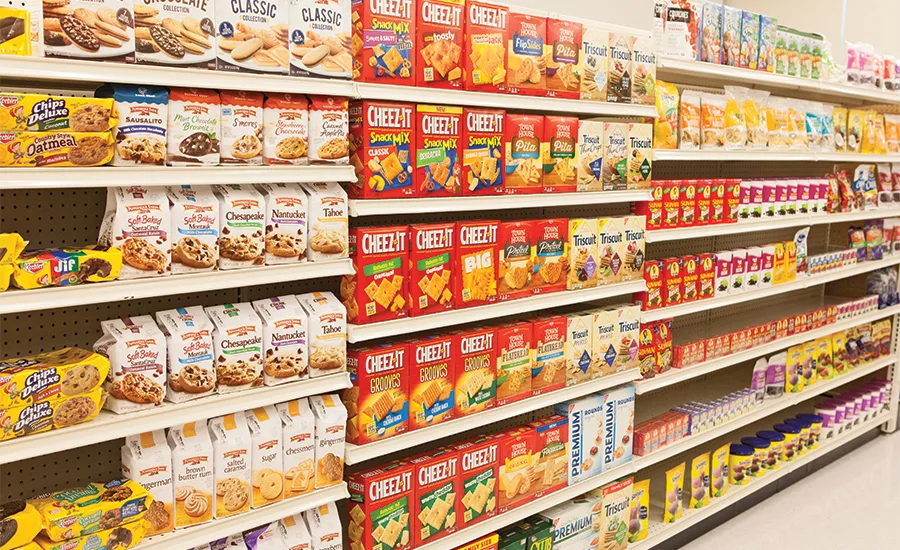
At six feet and beyond, shoppers are orienting themselves in the aisle and relying on visual cues to find their favorite brand or an acceptable choice.
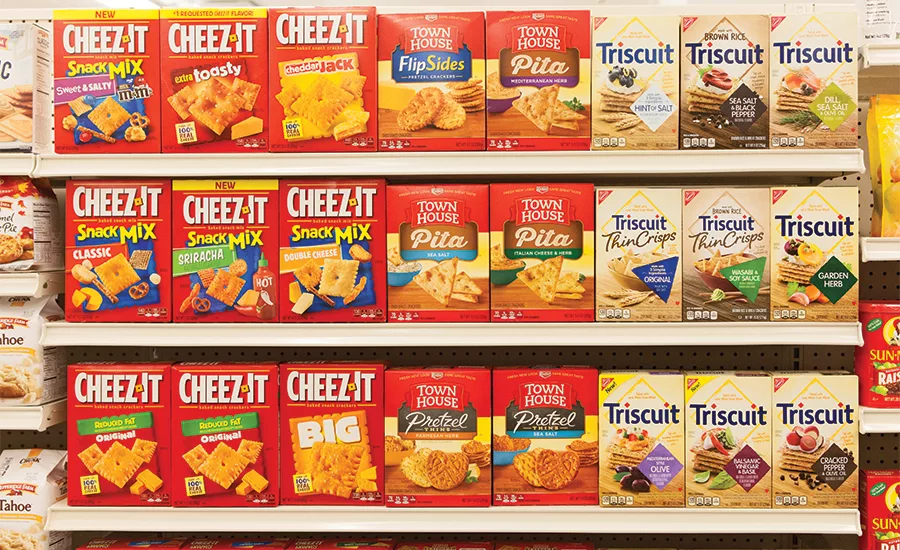
At three feet away, shoppers have begun to actively engage with a brand block or subsection of a category, and they are looking to find a specific product.
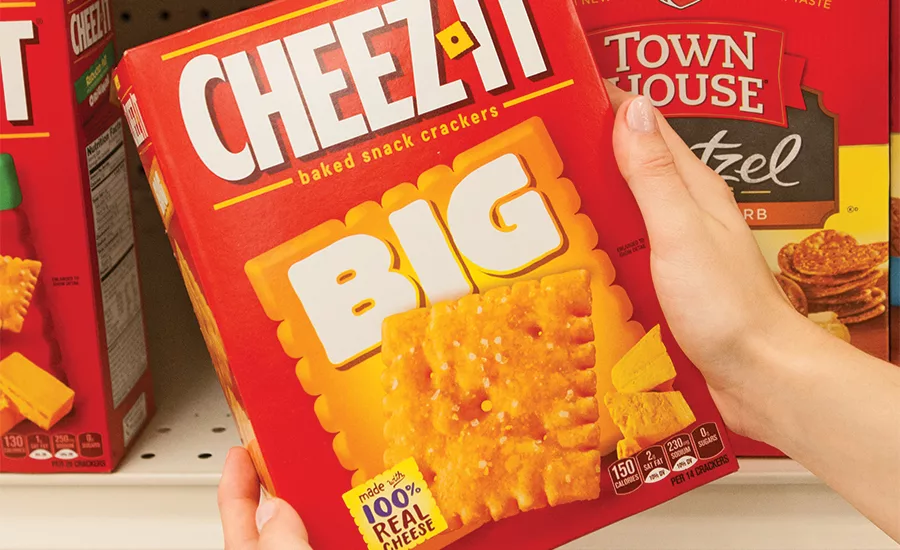
At one foot away, shoppers are deciding whether or not a package goes into the cart, and they are looking for confirmation of their decision on both an emotional and a rational level.
All marketers recognize the importance of winning at the “First Moment of Truth” and influencing purchase decisions at the shelf. And to drive success (across brands, categories and retail channels), it is valuable to begin with a consistent thought process rooted in an understanding of how people actually shop. There’s a deceptively simple framework that’s helped PRS IN VIVO clients to ground their teams in the shopper’s mindset — and to develop more effective packaging, shopper marketing (point-of-sale marketing) and category management efforts.
THE REALITY OF OVERWHELMING CHOICE
Clearly, the shopper journey varies widely among individuals, along with the retail channel, the trip mission and the product category. The growing interaction between physical and digital shopping only adds to that complexity by blurring the lines and introducing a wider range of paths-to-purchase.
However, in the midst of a changing world, we can be certain of one underlying and intensifying reality: There is an overabundance of choice. In aisle-upon-aisle, shoppers face a plethora of options that continues to expand. We know from studies and a growing body of academic literature that time-pressed shoppers struggle to quickly sort through these options. In fact, this rapid sorting process, - which often happens at a “System 1” level (visceral/emotional, subconscious, etc.) rather than a “System 2” (rational, deliberate, etc.) level — is a key to understanding and influencing shopping. It is also the foundation for our “6-3-1” framework:
- At 6+ feet: category and brand orientation (See It)
- At 3 feet: variant navigation (Shop It)
- At 1 foot: confirmation and selection (Buy It)
To win in the aisle, each brand’s packaging, shelving and shopper marketing must work together to deliver at these three critical stages of the shopper’s journey.
VISIBILITY AND BRAND RECOGNITION
At the initial stage of 6 feet, shoppers are orienting themselves within store aisles that are often overwhelming. And typically, they are looking for shortcuts to help them find their favorite brand – or an acceptable alternative – quickly and easily.
Here, the primary marketing objectives and challenges are visibility and brand recognition. In fact, the importance of retail visibility cannot be overstated, as we’ve seen and proven through eye-tracking studies that demonstrate:
- Shoppers typically view only one-third of the brands in a given product category.
- Many shoppers purchase the first brand they see and actively consider.
- Increasing a brand’s visibility is the most direct way to increase its sales.
However, visibility is definitely most powerful when linked to brand familiarity and recognition. For example, a familiar red brand block in the toothpaste aisle signals Colgate. This helps shoppers to quickly de-select (within a 40-foot aisle) and focus on the Colgate section, which is 6-10 feet wide.
So how can brands promote visibility and recognition? Of course, there is no single answer to this question, as we’ve seen a variety of effective strategies, which leverage colors (such as Fructis green), graphic elements/icons (Tide bulls-eye) and/or unique shapes (the POM juice bottle) to create contrast at the shelf. But if there’s one guiding principle, it is to recognize and leverage the value of visual equities. These are the visual cues that shoppers use to quickly identify and recognize their brands:
Large, familiar brands should leverage their familiar colors or icons to visually pre-empt competition (via brand blocks). New or smaller brands should be searching to create “ownable” equities by finding unclaimed visual territory (via a unique color, shape or icon). While equities can evolve over time to remain relevant, marketers should be wary of walking away from familiar cues, as this can lead directly to hesitation, confusion and sales declines. While breakthrough packaging is critical to new product success, we’ve seen that in-store support, such as displays and signage, is often necessary to drive sufficient awareness.
ENSURING SHOP-ABILITY
From 3 feet away, shoppers have begun to actively engage with a brand block or section of a category. Now, they are looking to find a specific product or compare alternatives. The primary objective and challenge is to ensure shop-ability. Often, this involves two interrelated, but distinct, challenges:
- Findability: Helping people quickly find a specific SKU if they know exactly what they want.
- Versioning: Helping people find the right product for their needs if they aren’t sure.
Certainly, expediting product findability is important, because confusion will lead shoppers to select safer competitive alternatives. Purchasing the wrong product can ultimately lead to anger and alienation. However, it is a mistake to focus solely on findability, because effective versioning (or product differentiation) is often critical to convincing people to trade up to more premium products. Versioning also can drive incremental purchases that help grow brands and product categories.
So how can large brands with many sub-lines, varieties and SKUs promote shop-ability? Across categories, we’ve found many successful tactics for helping shoppers quickly sort through complex product lines:
- Utilizing different pack structures to intuitively convey different quality levels or product forms;
- Using meaningful and descriptive product and sub-brand names.
- Using color coding with consistent flags or violators to speak to flavor or scent;
- Applying consistent layout and information delivery across the package, to facilitate quick comparisons.
Just as importantly, we’d also emphasize the value of positioning products to different users and usage occasions. Indeed, the great disconnect at the shelf often comes between marketers who emphasize product features and shoppers who focus on how and when they will use the product.
While in-store signage can be very effective in driving visibility at 6 feet and sending a visceral message, it’s repeatedly been found to be less effective in facilitating shopping. Typically, when displays become too complex in trying to explain product differences, they are simply ignored.
CLOSING THE SALE UP CLOSE
At 1 foot away, shoppers now have a package in hand, and they are deciding whether or not it goes into the cart. At this point, they are looking for confirmation of their decision. The obvious challenge is to close the sale. To do so, products must provide reassurance at the visceral, emotional level (Does it feel right?), and at the rational level (Does it offer the right bundle of features, benefits and value?).
Certainly, it is challenging to connect with shoppers on both levels — and marketers often focus almost exclusively on one dimension or the other. For example, many beauty and liquor packages are all about aesthetics and imagery, without any message or reason-to-believe. Conversely, many packs in over-the-counter medicinal categories rely exclusively on an abundance of claims, without any attempt to speak with shoppers on a more emotional level.
Of course, finding the right balance between visceral and rational requires both art and science. There is no single formula. However, experience tells us:
- Less is more in on-pack communication, as highlighting one key message (“the reason to believe”) is usually more effective than overloading a pack with four to five claims.
- Unique shapes, structures and finishes can be powerful at the visceral level in conveying personality, implying a premium product, suggesting efficacy, fun and indulgence.
And perhaps most importantly, it is critical to speak to personal relevance. Typically, the shopper’s underlying question — before committing to purchase — is whether a product is right for them. At this final stage, people also tend to be risk-averse, particularly when buying for others, such as family members, friends or pets — they don’t want to make a mistake. Thus, references to users and usage (for children ages 7-10, allergen-free, etc.) can be valuable in providing reassurance and ultimately closing the sale.
INTERPRETING 6-3-1
As we share the 6-3-1 framework with clients, we’re often asked which step is most important. Others ask that we provide a formula to reduce this framework to a single metric (six feet is worth 30 percent). While these requests are well-intentioned, we feel that they are misguided for two primary reasons.
First, brands face very different challenges at the shelf. For new products and smaller brands with low incoming awareness and relatively few shelf facings, the primary challenge is even being seen and considered. Thus, the six-foot level takes on greater importance.
For larger brands with many loyal buyers and varieties, retail visibility and brand recognition are usually not the dominant barriers to purchase. Instead, the primary challenge is often facilitating shopping and perhaps driving trade-up or incremental purchases. Thus, the three-foot level is especially critical for these fortunate brands.
Second, brands are only as strong as their weakest link. To close the sale, brands and packages need to perform at the six-foot, three-foot and one-foot levels. The reality is that a beautiful or compelling pack at one foot will never even reach the shopper’s hand, if it is unseen from six feet away — or confusing and unshoppable from three feet. For this reason, clients should apply a hurdling metaphor: To win the race, a brand needs to clear each hurdle, even if some are more challenging or critical than others.
So rather than searching for formulas, marketers should instead answer three questions, and focus their design and shopper marketing efforts accordingly:
- Which dimensions are most critical to success in my product category?
- Which dimensions are most critical to my brand’s situation?
- Where does my brand “break down” at the shelf?
6-3-1 ACROSS THE ORGANIZATION
While the 6-3-1 framework is straightforward, this simplicity helps serve as a common language across large organizations. This can result in a range of successful applications, including:
1) a guide or “checklist” for store visits
The 6-3-1 framework provides a consistent way for different sales, marketing and insights teams to review current efforts as opposed to more judgmental and disparate observations from different individuals.
2) an input for design briefs and internal reviews
Without question, design briefs and reviews provide two of the strongest opportunities to influence an organization’s thinking and to promote a consistent mindset. For this reason, several clients have built 6-3-1 within their design briefs and they’ve applied it as a framework for reviewing design options within a shelf context. Without question, reviewing proposed designs on shelf and applying a structured framework for gathering feedback is an important organizational best practice to drive success.
3) an organizing framework for research studies
Finally, 6-3-1 has been valuable across many aspects of our shopper and packaging studies, including confirming methodology, developing action standards, and analyzing and presenting results at each step. Perhaps most importantly, the framework has diagnostic value, as it helps clients to clearly understand the brand’s current strengths and limitations and to identify where to focus their efforts.
While all organizations want and need to win in the aisle, relatively few have consistent processes in place for making this happen. Instead, most package design and shopper marketing projects are approached individually, without a consistent mindset to tie them together and facilitate coordination and learning across initiatives. Therefore, marketers who do adopt shopper-driven frameworks such as 6-3-1 are sure to be rewarded with more effective packaging and shopper marketing — and with greater success in store.
Looking for a reprint of this article?
From high-res PDFs to custom plaques, order your copy today!