
Going Glocal With Branding
Consumers around the world are eager for new products, but brands must balance the desire for global consistency with the need for local relevance.


Packaging sleeves are a great way to add relevance for a brand, but only if they properly account for local customs.
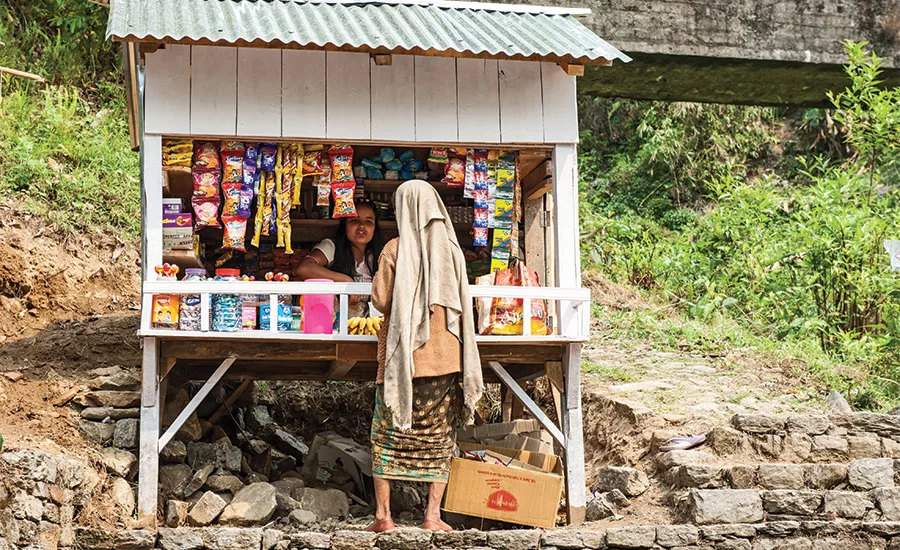
The concept of GloCal packaging requires products and their packaging to fit the needs of the shop as well as the shopper.
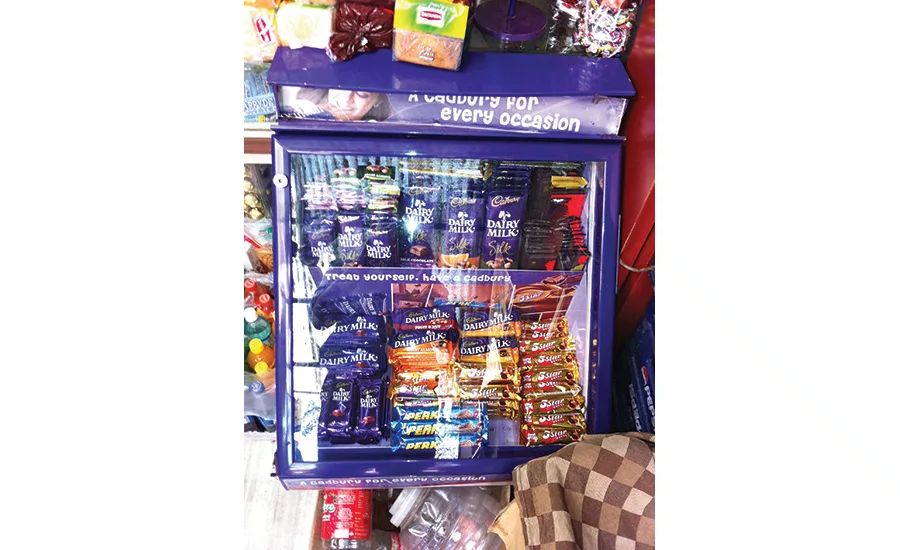
The concept of GloCal packaging requires products and their packaging to fit the needs of the shop as well as the shopper.
The phrase “Think global, act local” was first coined in the context of environmental challenges, but has taken on a much wider meaning in recent years. The desire by multi-national corporations and their marketing teams to drive a consistent brand, packaging and design across markets and geographies is clear. This strategy enables companies to quickly roll-out from one market to another, providing speed to market, manufacturing scale and marketing efficiencies.
However, in-market experience has shown that while having a “one look” global design is effective, it can be quite difficult to execute in practice. This approach falls short many times in local market context where the retail environment is different and consumers might have different traditions, behaviors and preferences.
Packaging, like so many global marketing decisions, is ultimately a balancing act between global continuity, local customization and, in some cases, between long-term brand strategy and day-to-day execution. This is why a GloCal (Global-Local) mindset should be an essential component in any global design and packaging plan, requiring proper due diligence, to carefully understand the local market context and consumer needs. Marketers and designers that respect this balance—and acknowledge the many local challenges facing global packaging—are far more likely to arrive at effective solutions.
There are three key considerations and actions marketers and designers should follow in order to have a successful GloCal packaging and design strategy.
Defining Distinctive Assets
Any design and packaging project requires thinking upfront about what the “core” and “flex” aspects are of the brand and design.
The core aspects are those that need to stay consistent globally across markets. It is key to understand what your consumers already associate with your brand. This is what will help you protect it. Byron Sharp from the Ehrenberg-Bass Institute calls this “distinctive assets,” and describes these attributes as non-brand name elements that uniquely trigger the brand name for the vast majority of category buyers. It could be specific colors, shapes, characters, packaging, tag-lines and even country of origin.
The “flex” are all the brand and design aspects that can be adapted as needed. It is important to give local teams freedom to use their local knowledge to customize appropriately and to make final decisions on all aspects that were defined early on in the process as flex.
Toblerone is a great example of a brand that has distinctive assets that are core to the proposition and are consistent globally. It has a unique triangle chocolate and pack shape, it uses specific gold shades, and has Switzerland and its mountains proudly labeled as place of origin.
That being said, Toblerone stays locally relevant by having seasonal pack sleeves designed for important local occasions that vary by market, such as Christmas, Chinese New Year, Father’s Day, Diwali etc. Toblerone also offers different city-themed designs for major cities in which it is sold in, such as Zurich and Barcelona. The designs of these seasonal and local design sleeves consistently use the core distinctive assets of Toblerone.
Local Customs and Taboos
Marketers and designers need to cultivate a sound understanding of local customs and taboos to learn what is considered acceptable and what is not. This may involve modifying claims or using a more visual-based design to speak in a more relevant way to local behaviors or sensitivities. For example, our global chocolate innovation team in Mondelēz International was developing the launch of the Milka chocolate brand into the Chinese market.
For the Milka premium gift packaging, we were planning to use the color gold in a prominent way, as we knew that in most markets—including China—gold is commonly used to communicate that a product is premium. However, as part of pre-launch consumer research and a workshop with our local sales team, we learned that in the Chinese culture, a pale, yellowish-gold shade actually has a negative cultural perception related to death. So, we ended up using a unique shade of gold just for China that is different from what is utilized in other markets.
In many other emerging markets consumers desire a secondary usage for packs, such as coin storage or for children to play with. On the other hand, in most developed markets, retailers and consumers expect brands to use as little packaging material as possible and to become more and more environmentally friendly. Hence, different local consumer preferences that impact pack requirements should be evaluated early on in a GloCal project.
Price-Pack-Architecture
Each market has a different retail reality whether it is modern supermarkets in the U.S. and Europe or small kiosks that are still very dominant in regions like Asia and Latin America. On top of that there are emerging retail channels, such as e-commerce and dollar stores.
These different retail channels will have very different requirements for brands. Consequently, any GloCal project requires a deep understanding of the local shelf and display environment. It is important to ensure that the proposition is available in the proper Price-Pack-Architecture (PPA): price point, pack format and size to fit the local retail requirements and shopper behaviors.
Locally-owned kiosks and bodegas are a primary shopping venue in many markets like Mexico, India and Brazil. These stores are usually small and dimly lit with multitudes of tightly shelved products. At times, products are even displayed hanging—making for a cluttered and challenging shopping experience. Shoppers in these stores visit nearly every day due to irregular income and the need to make small purchases. As such, price considerations are top-of-mind, which means there’s an overriding need for brands to offer smaller pack sizes in accessible price points. The design elements also must clearly convey value and product benefit so any consumer can understand those visually.
The Cadbury chocolate brand, for example, offers emerging markets like India, Egypt and South Africa a variety of smaller-sized, affordable chocolate packs and bags that are specifically designed to fit into cluttered traditional stores and into their small cooling units to keep the chocolate chilled and avoid any melting. These Cadbury offerings and pack formats are not sold in modern trade channels in markets like the U.K., Canada and Australia, which offer larger sizes and higher-priced offerings.
The key point is that any global design system must be tailored to work across a wide range of retail formats. Mandating a global packaging template, without appropriate local retail adaptation, is very likely to result in packaging that doesn’t fit on shelf or, even worse, in consumers’ lives.
To summarize, it is important that marketers don’t try to solve the challenge of GloCal packaging and design by focusing on the lowest-common denominator and ending up with global mediocrity. GloCal packaging should be viewed as a balancing act between global distinctive assets and local customization. It’s about making sure that global packaging works effectively on a large scale as well as within each local market.
Looking for a reprint of this article?
From high-res PDFs to custom plaques, order your copy today!