
It pays to know your way around these parts
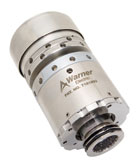
Some components, like clutch headsets for high-speed cappers, are regularly supplied to end users directly from the manufacturer.
by Pan Demetrakakes, Executive Editor
When it comes to machinery, what part should parts play?
Like most complex machinery, packaging equipment is a collaborative effort, assembled with parts and components from many sources. These range from relatively simple mechanical components like bearings to entire control systems and accompanying software.
Original equipment manufacturers (OEMs) bear most of the responsibility for specifying and assembling such components in their machines. But what degree of involvement, if any, should the machinery end user have in this process? Under what circumstances should the end user interface, directly or through another party, with a components manufacturer? And how does the situation differ at different stages of machine ownership: initial purchase, maintenance and retrofitting?
Not surprisingly, the answers vary according to a lot of factors, including the sophistication of the individual end user and the complexity of the components in question. But components suppliers say they’re able to discern some broad trends.
The first is one that has been going on for a while: Food and beverage packagers in general are depending more on OEMs for technical expertise of all kinds, including component specification. It’s easier and more economical to do that than to keep a full engineering staff in-house.
“With so many cutbacks these days, [end users] have come to rely on a combination of the vendors themselves and their expertise, as well as trusted integrators, to complete their designs,” says Mark Traxler, senior marketing communications specialist for Omron Electronics.
That’s one reason end users, even big ones, tend to frame specifications more in terms of what they want the machine to do rather than how it’s supposed to do it, says Pat Helm, business development manager for packaging and automated assembly at Balluff Inc.
“The fellow I’m meeting with on Friday at [a major food manufacturer] told me that [his employer] is starting to go away from specifying specific components on equipment,” Helm says. “They’re getting more specific on functional capability. So they’d rather make sure the machine does what they want, rather than what they’re using it to do it with.”
Who’s responsible?
In most cases, OEMs take on the greatest responsibility for specifying parts, since they bear the greatest responsibility for machine performance as a whole. In fact, one of the biggest arguments against end users becoming too involved in specifying components is that the more they do so, the more responsibility they take for the machine’s performance.
Helm describes a scenario where an end user asks an OEM to use major components, like controls or motors, from a supplier other than the one the OEM is used to. The OEM often finds that using the new components forces him to redesign the machine, sometimes with significantly lower functionality.
“So what happens is that the end user starts taking on part of the OEM’s responsibility for that machine’s performance,” Helm says. “The OEM’s serviceman can’t service it because they don’t know [the new components], they only know [the old ones]. All these things start to multiply, and it gets to the point where the end user says, ‘Well, I’m not going to buy a machine from you, I’ll go to someone using [my preferred component supplier].’ Or [else] they’ll get so uncomfortable about how much of that machine’s performance they own that they decide to go with the vendor standard. That’s why they’re starting to define functionality more in terms of what we want to accomplish than how we’re going to accomplish it.”
What sometimes happens is that component vendors act as go-betweens in the relationship between end users and OEMs, Helm says: “We educate end users on what the technologies are that we have, and then what they can do is encourage their OEMs to use that technology to meet their functional requirements.”
Sometimes, that role involves talking the end user out of requesting a component other than the one the OEM usually uses. Helm gave a theoretical example of a conveyor supplier who usually uses Balluff photoelectric sensors, but whose customer has requested another brand.
“So what [the conveyor OEM] will do is come to us and say, ‘You go talk to this guy and get him to change his spec,’ because they don’t want to lose [the end user’s] business,” Helm says. “So that’s how we get involved with the end user from the OEM perspective.”
On the other hand, early input from the end user can be useful for more big-picture considerations, such as control architecture. This is especially important for bigger plants with more interconnectivity issues, says Dan Throne, sales and marketing manager for electric drives and controls at Bosch Rexroth Corp. He says a three-way relationship, among end users, OEMs and component suppliers, can be fruitful.
“When we sit down at the table in the engineering [phase], we’re working to design the line and work with whichever OEMs are being selected,” Throne says. “We play a really important role in laying out the architecture, the commonality of parts, and that the end user’s goal is being achieved across multiple OEMs.” Typical issues in this context would include what would be the best network interface and communications protocol, and what kind of data the end user wants to transfer from his lines to higher-level software.
Keeping it running
Buying a machine, of course, is just the first step. Keeping it running-and at top efficiency-is the next imperative.
Again, component suppliers are not the primary source when it comes to maintenance, even on their own products. Many OEMs handle the complex aspects of maintenance as a side business, either directly or through distributors. Simpler or more routine maintenance tasks are often handled in-house.
The latter is the most common situation with the products sold by Altra Industrial Motion, a supplier of motors and mechanical components whose divisions include Warner Electric and Boston Gear. Maintenance of such items is most often done at the plant level, says Angela Leng, Altra’s strategic marketing manager for food processing and packaging machinery. Altra has tried to interest end users in corporate-level maintenance agreements for items like speed reducers or couplings, but with limited success.
“A lot of our products that we manufacture are not high-emotion items, not something that maintenance guys or engineering or purchasing are taking a high-level look at,” Leng says.
There is an exception in Altra’s case: the magnetic capping clutch headsets it sells for beverage cappers through its Warner Electric division. Customers include high-volume beverage bottlers like Coca-Cola and Pepsi, who use them on cappers that handle upwards of 1,000 bottles a minute.
“In that case, it’s a mission-critical item,” Leng says. “In most cases, they want to have those products approved by somebody at the corporate level. It’s more about mitigating risk at the corporate level.” A typical contract for these headsets would be for a minimum of two years and would cover a given number of replacements, ensuring that Altra has an adequate stock of spare headsets.
Even if a component manufacturer does not become involved in maintenance directly, it can design those components to make maintenance easier, Throne says.
“We have the ability inside a beverage cartoner, for example, for the electronics of the controls and drives and motors to monitor the machine mechanically,” Throne says. “So it monitors friction, load, belt tension, temperature-it monitors all these aspects. It’s as if the motor is reaching into the machine mechanically and deriving a model of how it ran when it was new and then monitoring how it runs as it ages.” The system can then set windows based on those models and predict a failure, and be programmed to flash warnings or even e-mail personnel suggesting that a part be replaced.
Movin’ on up
Another possibility for interaction between end users and components vendors occurs with upgrades. End users who find themselves with machinery that’s too slow, too hard to change over or otherwise lacking, can use upgrades as an alternative to buying entirely new equipment.
There are upsides and downsides to rebuilding equipment, warns John Kowal, global marketing manager for the ELAU division of Schneider Electric.
“Sometimes I think people are better off with a new machine and new warranty than saving a few bucks of capital costs,” Kowal says. Of the ones who do try to rebuild, few have the in-house expertise to do so. Again, OEMs often have a side business doing such rebuilds. In cases where the OEM is not available, “we would not try to do the engineering ourselves, but there are systems integrators that we can recommend for somebody who wants to overhaul or retrofit machines,” Kowal says.
One of the major motivations for a retrofit is obsolescence of certain components, like motors, drives and controllers. Some plants keep packaging machinery running 20 years or longer, ensuring that some of their components will become outdated, if not die entirely.
In such cases, “We work with [end users] to find a drop-in replacement for that system, or a system that is even more improved,” Throne says.
As an example of a “more improved” system, Throne cites motor drives that are integrated into or near the motors they operate. A legacy system might have a dozen or more motor drives packed into an electrical cabinet, wired to the motors they control, which may be dozens of yards (or more) distant. A retrofit could integrate the drives with the motors and daisy-chain them, cutting the size of the cabinet by 75% or more, while reducing wiring and removing the danger of overheating.
Awareness of components and the role they play in packaging machinery is essential, with or without direct contact with the component vendors. Knowing how components work and how they can be improved is one of the best ways to get the most out of your packaging machinery investment.
For more information
The following companies contributed to the research of this article:
Altra Industrial Motion
617-328-3300; www.altramotion.com
Balluff Inc.
800-543-8390; www.balluff.com
Bosch Rexroth Corp.
800-739-7684; www.boschrexroth-us.com
ELAU, Div. of Schneider Electric
847-490-4270; www.elau.com
Omron Electronics LLC
866-88-OMRON; www.omron.com
Looking for a reprint of this article?
From high-res PDFs to custom plaques, order your copy today!