
Protective Transit Packaging Market to Rise Due in Part to eCommerce Growth
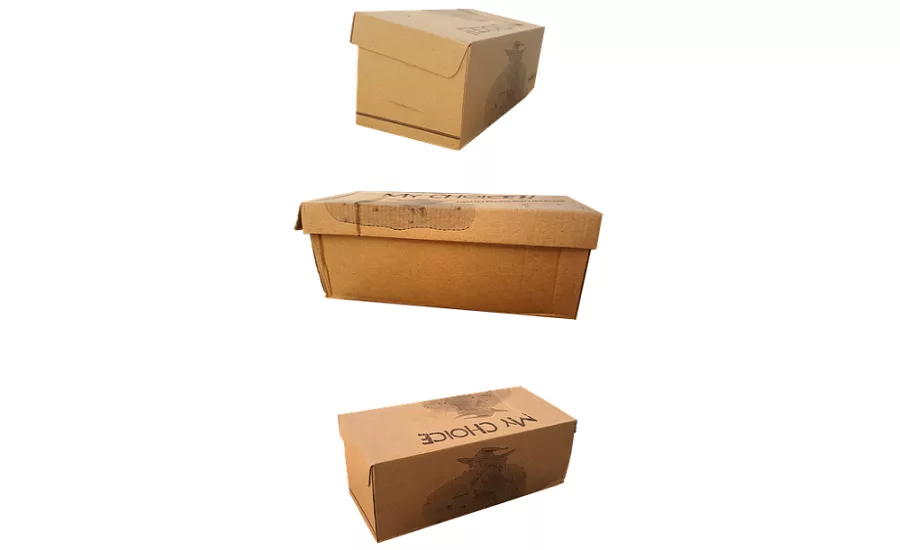
Three industry trends are providing incentives for innovation and are creating new opportunities and threats for players in the global protective transit packaging business. Protective transit packaging is integral to the safe and efficient transport of goods from the factory to the retail floor, the commercial worksite or the e-commerce customer’s doorstep. Protective transit packaging products and systems are vital components in the global $32.2 trillion (2016) commerce in manufactured goods.
According to new research by Smithers Pira (smitherspira.com), the global value of protective transit packaging products and systems totaled $112.3 billion in 2016, and is forecast to grow to $139.4 billion in 2022.
Despite the positive future for this marketplace, the protective transit packaging marketplace faces some significant issues and challenges. Industry participants are responding aggressively to many of these challenges, while others present significant opportunities for developing new protective transit packaging products and systems.
The Rise of e-Commerce
The rapid growth of e-commerce sales and distribution channels during the early 2010s is revolutionizing the retail marketplace. Among the 28 EU countries, around 8 percent of consumer purchases in 2016 were via e-commerce channels. In the U.K., over 15 percent of sales to consumers utilized e-commerce channels. This sales channel is rapidly transforming the landscape all levels of the supply chain.
While continued rapid growth of e-commerce will be driven by the convenience it represents to buyers, concerns such as these will impact protective transit packaging markets in at least four important ways:
1.Increasing demand for secondary and transit packaging
The pick–and-pack e-commerce methodology employs an additional cycle of secondary packaging and load unitisation, consuming an additional cycle of secondary and protective transit packaging materials. Suppliers of corrugated cartons, bubble wrap and small inflatable air pillows, and loose-fill packing peanuts, will continue to benefit in increased sales from this trend.
2. Additional distribution channel costs
In return for the convenience of online ordering and home delivery, consumers and their e-commerce suppliers incur substantial extra shipping, handling, and delivery costs. While many of these additional cost elements are intrinsic to the longer and more complex e-commerce distribution channels, minimising these logistics-related costs is a major goal of e-commerce participants.
3. Distribution channel inefficiencies
Reducing the amount of operator time spent in consolidating and packing the unique set of items that constitute each order is a priority of e-commerce order fulfillment centers. Orders are commonly packed in larger-than-necessary cartons and stuffed with bubble wrap or loose-fill packing. This non-optimum secondary packaging leads to non-optimum unitised loads. As a result, shippers and consumers sustain extra costs in the transportation and logistics system.
4. Recovery of packaging materials
An important consequence of this increasing demand for secondary and protective transit packaging materials is the large increase in the amount of packaging materials that must be disposed of at the end user’s location. This problem is abundantly clear to consumers who regularly purchase through e-commerce channels.
It appears that this packaging waste disposal problem has not yet generally risen above the level of annoyance to individual consumers. However, it represents both a threat and an opportunity, especially to suppliers of materials that are rarely used outside of e-commerce channels, particularly bubble wrap and packing peanuts.
The continuing growth of e-commerce presents moderate threats to incumbent packaging materials and systems, along with big opportunities to suppliers who can successfully address the materials consumption and disposal and systems inefficiency issues.
Minimizing Environmental Impacts
Environmental issues have been important drivers of the protective transit packaging materials selection, product design and business practices for some time.
Large retailers have led demands for more efficient, less wasteful packaging, aimed especially at secondary packaging waste generated at their retail sites. In the U.S., Walmart for example has actively collaborated in the development of packaging systems that require less secondary and transit packaging material. These and similar efforts across North America and Europe have led to the adoption of systems to recover and recycle discarded packing materials.
The retailers’ motivation for adopting “greener” packaging materials and systems mirrors the environmental sensitivities of participants across the protective transit packaging marketplace.
Some of the environment-related trends and concerns that will impact the suppliers and users of protective transit packaging materials over the next five years include:
- Innovative “greener” protective transit packaging products and systems that take advantage of environmentally friendly raw materials and encourage the recycling of waste transit packaging materials
- “Closed-loop” logistics management systems to facilitate the efficient recovery and reuse of packaging components such as pallets and drums
- More extensive use of recovery and recycle systems of the sort that have been successful in corrugated carton markets
- Reducing the amount, weight, and volume of transit packaging material, therefore reducing transportation fuel consumption.
Automating the Distribution Channel
Traditionally, shipping, warehousing and handling have been labor-intensive operations—heavy on personnel costs and on potential for accident, injury and product damage. Most operations have traditionally been done by work crews or individual workers.
Currently, warehouse layout and design must accommodate human operators and human-operated equipment, leading to less than optimum utilization of warehouse floor space and overhead volume. Robotic forklifts and stock-picking robots require significantly narrower aisles than human-operated machines and allow taller shelves, rack and pallet stacks than can be safely manipulated with human-operated machines.
The most state-of-the-art-systems combine robotics with remote sensing and position detection, telemetry, and integrated warehouse management software and computer systems. E-commerce fulfillment hubs, in particular, have been aggressive in developing and implementing warehouse and logistics automation systems.
Warehouse and logistics automation will present major issues and open significant opportunities to transit packaging materials suppliers:
- Standardized protective transit packaging products and systems
- Packaging for floor space and volume efficiency—robots and automated systems may allow significant reduction in the warehouse floor space
- Ability to handle smart packaging systems, with item-level tracking using RFID or similar systems.
Looking for a reprint of this article?
From high-res PDFs to custom plaques, order your copy today!