Opportunities and Challenges for Packaging
A Discussion with Mintel Expert Richard Cope
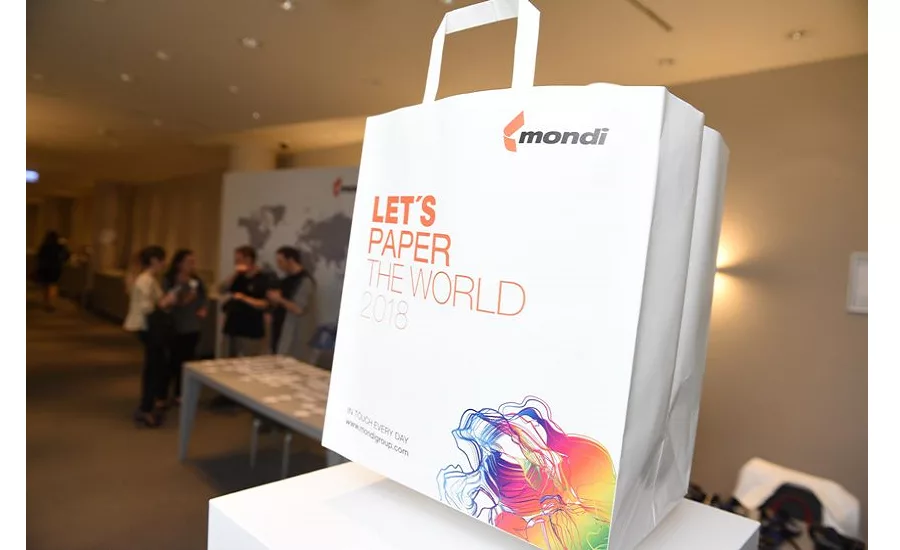
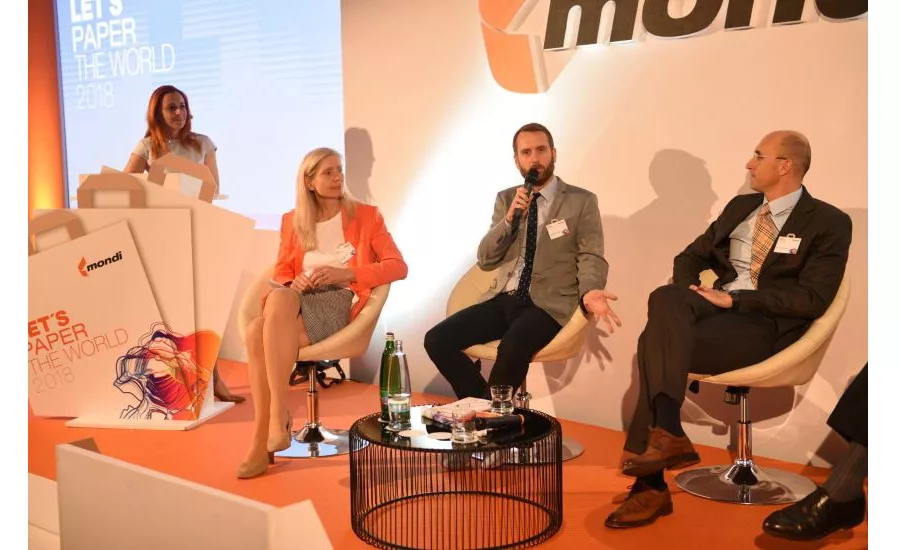
Richard Cope, senior trend consultant at Mintel,(mintel.com) was in Prague in April to give the keynote at Let’s Paper The World 2018, the first European shopping bag summit. Organized by the global packaging and paper group Mondi’s (mondigroup.com) speciality kraft paper business segment, the summit was attended by over 100 representatives from the leading shopping bag converters, their suppliers and retailers.
In his keynote, Cope shared evidence of powerful mobilization around the world—from grassroots movements to governments and international NGOs—to combat pollution from plastic packaging. Demand is increasing for manufacturers and retailers to ensure that all packaging, including shopping bags, are not only high-functioning and convenient but also entirely sustainable.
In an interview with the Mondi Newsroom, Cope expanded on insights he shared with the summit’s participants.
In your keynote, you described a huge uptake of consumer interest in, and anger about, the problems of plastic pollution and the lack of sufficient recycling. Is a sea change happening?
Richard Cope: You used the phrase sea change; at Mintel, that’s what we think this is. ‘Sea change’ is what we call our 2018 trend prediction around this topic.
Firstly, packaging pollution is a problem that people can actually see – in the ocean, in the countryside, in urban areas or where they live. They can see that some packaging is not being disposed of properly, and I think that’s what separates this from, for example, climate change and other less visible environmental issues.
Secondly, consumers get angry when they find out that brands are putting packaging on the market that can’t be recycled. I think that’s where you get this disconnect. Consumers are already doing the work. They expecting brands to do their part. Brands that don’t do it are going to start looking very backwards very fast.
The third factor: consumers can see that plastic packaging is breaking down and getting into waterways, which they see as a potential health danger. There are a lot of questions about it. This issue is becoming mainstream.
In the past, if price was a sensitivity for consumers, sustainability was often the first thing to go for some brands. Does that still hold? Are people now willing to pay more for sustainable products and packaging?
Richard Cope: Something we’re seeing is that lots of brands are talking about using reclaimed ocean plastic. Not just the premium brands you would expect – like Method and Lush – but also brands like P&G, whilst Iceland, the UK frozen food supermarket has announced that it’s going 100% plastic-free with its packaging. Their target is not affluent consumers, the profile of the eco-minded, but ordinary families. There’s a push in the industry to find a recyclable paper coffee cup and lid. This is coming rapidly.
But consumers are not prepared to pay a premium for sustainable packaging like they will for some other sustainable items. They’re expecting packaging and products to be sustainable even when the price point is low.
We’re seeing the power of government diminishing and the power of companies growing, and consumers expect companies to set the sustainability and ethical agenda. They expect brands to be ethical on their behalf, and they’re almost outsourcing their actions. Throughout society, we increasingly hire other people to do things for us. That’s what convenience culture is about. They expect companies to take it on the chin and do it for them. When you get Procter & Gamble making plastic from ocean waste, that very quickly becomes the norm and other brands need to match this pace of change.
How likely are there to be new regulations and policy changes in Europe for sustainability and packaging?
Richard Cope: It’s fragmented in Europe. Germany had a plastic bag tax years ago. The UK was one of the first governments to ban plastic microbeads; France and Sweden are likely to follow. Next, we’re going to be looking at things like liquid plastic in consumer goods products.
I do think we’re going to see more legislation across Europe and there’s certainly a big target to reduce plastic bags. The legislation is going to come in new and surprising forms—things we haven’t yet considered.
Activists and lobbyists are now in a powerful position. Greenpeace, WWF and other organisations are capturing people’s imaginations—and they’re able to get hundreds of thousands of signatures rapidly online.
The biggest generators of ocean plastic waste today are in South-east Asian countries like Indonesia, the Philippines and China. They’ve only just begun to be consumers of plastic bottles and bags so there’s a long way they need to go.
China is making radical steps to eliminate plastic from packaging. They’ve got some of the most stringent government targets coming in as early as 2030. One of the strongest government reactions I’ve seen is in Kenya. They have fines of up to $40,000 US dollars for businesses that use plastic bags.
At the grassroots level, owners are trying to eradicate things like plastic straws and bottles from their hotels and bars – the movement’s started.
What are the sustainable packaging opportunities for brands?
Richard Cope: Some of the targets that brands are now setting themselves are very ambitious. The question is, can you achieve it by 2025? In addition, there are so many opportunities for brands to sponsor very cool initiatives—like sea bins that suck ocean plastics out of harbours and sponsoring reverse vending machines that incentivize people to recycle. Savvy brands react to pending legislation really early, which lets them set the agenda.
There are many things that brands can do, like talking about the sustainable forests they support rather than the accreditation they have. Learn from lateral industries: organic dairy farmers aren’t shy about shouting about how they make the milk, like UK supermarket Waitrose’s ‘Cow Cam’ livestream that showed transparency in dairy farming—from the perspective of a cow! Show people where the packaging comes from, what resources went into it and which can come out and be reused again.
The carbon footprint of recycling plastics can be pretty low—that’s something we need to educate consumers about. At the moment, all plastic is demonised. Brands have to educate people about how it can be quite green as long as it’s easy to recycle. If you make recycled plastic bottles, it’s your job to go the extra mile and explain to consumers, on the packaging itself and your website, how to recycle it and explain its total lifecycle.
You’ve talked about a crisis of trust for consumers in brands. With all this pressure to show they are sustainable, is greenwashing even more of a concern for brands?
Richard Cope: People want evidence. They are really cynical. We live in the time of fake news; they don’t know what to believe or who to trust anymore.
It’s all very well to say things like ‘we’re making shampoo bottles from recycled ocean plastic.’ And we’re still at that stage where some people will say, ‘Brilliant! I’ll buy it.’ The next conversation will be ‘How do you certify something that’s made from recycled ocean plastics? Can you recycle it again?’
The first stage is that consumers will soon expect all packaging to be sustainable. The second stage is that you’re going to have to prove that what you’re doing is actually sustainable. Consumers want a third party to legitimise. In Italy, a staggering 44% of people surveyed by Mintel said they only trusted products that are certified.
We need proper certification around things being recyclable and recycled. At the moment, a typical take-away high street paper coffee cup has a symbol that says it can be recycled and, technically, that’s true. But few recycling plants are sophisticated enough to separate the waterproof laminate from the paper, so only 1 in 400 coffee cups are ever recycled. These are the murky waters we’re wading in. We need credible certification that says this can be widely recycled or this has been recycled to meet this credibility gap.
Seeing is believing, and brands need to be open and show people their processes. 25% of 16-to-24-year-olds in the UK want to see advertising that promotes the brands’ environmental efforts. You can show someone the plastic bottle recycling process, or live-stream your forests growing! There are brands like Reformation in the US that offer factory tours and show how much water and CO2 was used to make a particular dress or suit, then comparing its results to the industry standard.
What are the opportunities you see today for the paper packaging industry?
Richard Cope: Paper consumption is increasing year-on-year in Europe. The industry could be even more ambitious about explaining what kind of things can be made out of paper. That includes things that can be sold and things that capture people’s imagination.
We’re seeing companies making furniture out of paper that’s fully recyclable, pellets made from toilet paper used as a road-building material, replica frames for glasses crafted from cardboard and eco-friendly cigarette filter tips that release live seeds when discarded.
There are also innovative forms of paper food packaging that imitate plastics, like tactile Bemis film with the feel and sound of artisan brown kraft paper used to wrap snacks, and sachets of coconut oil in a paper pouch with a metalized barrier layer.
Paper can be a clean growth industry. With the increase of sustainably managed forests, full of oxygen-producing trees, it’s not only a renewable source but a net contributor to the environment—adding clean air into the atmosphere. In an era of diminishing resources, like coal and the oil required to make plastic, paper’s a pollution solution that can help counter pollution.
Everyone’s talking about how drone delivery could disrupt retail and packaging. What’s around the corner?
Richard Cope: Drone delivery, in my opinion, is definitely not going to go mainstream, because we’re urbanising and don’t all have a convenient backyard for drone delivery. But delivery in corrugated packaging will continue to grow and one reason is the ageing population because that is going to be the only way of shopping for the elderly. Their needs will drive e-commerce and delivery going forward.
What’s your biggest take out from the Let’s Paper The World 2018 summit?
Richard Cope: My takeaway was understanding how demanding consumers are, and also how they respond very emotionally. I see all of this as an opportunity. At the summit, we shared a better understanding of the things the packaging and retail industries can do to boast about the good work they’re already doing. I’d like to see more packaging and bags that talk about how much oxygen was produced making it. The bag itself is a space to inform and inspire customers. In my work, there’s so much focus on speed and automation. Let’s think differently. I’d like to see bags that put a name and a face to the people behind the bag. The industry has a big opportunity now to assert the credibility of its experts and the benefits it can bring to the environment.
Looking for a reprint of this article?
From high-res PDFs to custom plaques, order your copy today!