
Packaging Strategies logo
search
cart
facebook twitter linkedin youtube
  • Sign In
  • Create Account
  • Sign Out
  • My Account
Packaging Strategies logo
  • FEATURED
    • Brand Packaging
    • Extended Producer Responsibility
    • New Products & Materials
      • Featured Products
    • Packaging News
    • Packaging Perspectives Podcasts
    • Steve Fairfield Innovation Award
    • Supply Side
    • Top 100 Food & Beverage Packaging Companies
      • Submit Your Company
  • FLEXIBLE PACKAGING
  • VERTICAL MARKETS
    • Beer / Wine / Spirits Packaging
    • Beverage Packaging
    • Candy / Confectionery
    • Dairy Food Packaging
    • FoodService Packaging
    • Household Packaging
    • Meat / Seafood Packaging
    • Personal Care Packaging
    • Pet Food Packaging
    • Pharma / Medical Packaging
    • Produce Packaging
    • Snack Food Packaging
  • MATERIALS
    • Adhesives / Sealants
    • Beverage Multipacks
    • Blister Packaging
    • Cans & Bottles
    • Closures/Lids
    • Films & Coatings
    • Labels
    • Material Converting
    • Paperboard / Corrugated / Cartons
    • Rigid Containers
    • Sustainable Packaging
  • MACHINERY
    • Automation / Controls
    • Case Forming / Packing / Sealing
    • Cartoning
    • Coding / Marking / Printing
    • Conveyors
    • Form-Fill-Seal / Filling & Closing
    • Inspection / Detection / Vision
    • Labeling
    • Unitizing / Palletizing
    • Robotics
    • Track & Trace / Serialization
  • DIRECTORIES
    • Packaging Strategies Resource Guide
    • Flexible Packaging Buyer's Guide
  • EVENTS
    • Converters Expo
    • Converters Expo South
    • Global Pouch Forum
    • Industry Events
    • Webinars
  • MORE
    • Videos
    • Book Store
    • Classifieds
    • Custom Content & Marketing Services
    • eXTRA Newsletter
    • Market Research
    • PACKSTRAT Wordplay
    • PS Resource Guide
    • Sponsor Insights
  • EMAG
    • eMagazines
    • Archived Issues
    • Contact Us
    • Advertise
  • SIGN UP!
Robotics

Robots or Cobots: Which to Choose?
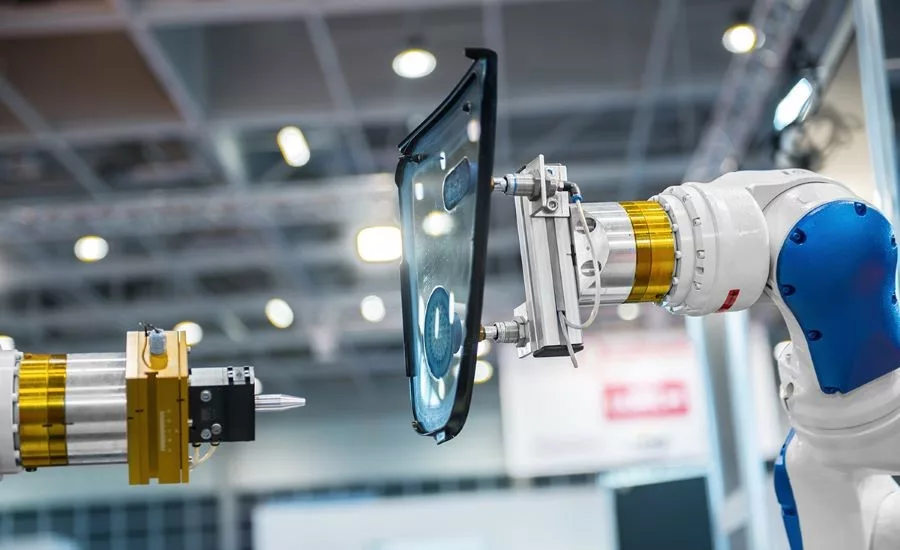
Robots or Cobots: Which to Choose?
December 17, 2019

Today’s plant managers are faced with a dearth of automation technologies but it’s not always obvious what will work best. There is rarely, if ever, a one-size-fits-all approach. Here, Jonathan Wilkins, director of industrial automation parts supplier, EU Automation, discusses what manufacturers should consider when choosing which type of robot to invest in.

If it wasn’t already clear to manufacturers that the adoption of robots is on the rise, the numbers leave little doubt. The International Federation of Robotics predicts that by 2020, over 1.7 million new industrial robots will be installed in factories worldwide.

Industrial robots have long been used to replace human workers in performing tasks that are dangerous, dirty or repetitive. These robots are often large and bulky, caged machines used to do the heavy lifting in applications such as packaging and palletizing.

Collaborative robots, otherwise known as cobots, have been designed to work safely alongside humans in a shared workspace. These robots, with their increased flexibility and dexterity, can complete more delicate tasks that conventional robots cannot, such as polishing fragile materials in the production process.


Cobots

Cobots were built to be smaller, lighter and safer than conventional industrial robots. Demand for this technology is on the rise, with the global cobot market expected to reach $9 billion by 2025.

Because of their flexibility, and relative ease of use compared to fully automatic robotic systems, cobots are generally considered to be an affordable and attractive choice for small and medium sized businesses. These manufacturers can benefit from the traditional value proposition of robots — namely that they can carry out repetitive or unsafe tasks, freeing up human workers to add value — but at a much lower cost of entry.

Before investing in cobots, it’s important that manufacturers carry out a complete and thorough risk assessment. Risk assessments could call for the addition of extra safety features, low operating speeds or even multiple stops for a cobot. Furthermore, these extra considerations aren’t free and add a significant amount to the integration costs.

In fact, according to TM Robotics’ Global Robotics Report 2018, 79 per cent of automation distributors don’t think that their customers fully understand the safety requirements of installing a cobot, and therefore are unlikely to budget for these additional safety features.


Safety First

The ISO 10218 guidelines exist to set the safety requirements for industrialized robots. However, for cobots, which will see an increased number of interactions between human and robot, these guidelines alone don’t suffice.

First introduced in 2016, the ISO/TS 15066 guidelines supplement the ISO 10218 requirements and ensure that any machines classed as collaborative meet specific safety requirements. This also includes any tools that have been adapted onto the robotic arm to perform tasks as well as any objects handled by it. For the first time, ISO/TS 15066 outlines the maximum allowed power and speed limits for cobots. It also brings increased clarity on what is necessary when carrying out risk assessments on cobot applications.

The risk assessment must consider the entire collaborative workspace and look at how the operator will interact with the robot. Manufacturers must take the time to ensure they properly risk assess all foreseeable contact situations that could arise between the operator and cobot for any job that the robot is expected to complete.

Engineers need to carefully assess every task that the robot will complete in detail — an oversimplified assessment will not accurately represent how safe the robot will be. Here, manufacturers should consider the safety concept of ALARA (as low as reasonably achievable). Manufacturers must consider all the potential risks that could arise in a robot application, not just one or two of them.


Industrial Robots

Manufacturers also need to consider the production speed and volume that they are looking to achieve when deciding between cobots and traditional industrial robots. To run efficiently, an assembly line comprised of both humans and cobots must run at the speed of human operators to avoid bottlenecks on the production line.

Manufacturers in sectors such as bottling or packaging, that need a much higher production speed or volume, can benefit from purchasing conventional robots. The logic is simple. Fewer human operators means there is less chance to slow the system down and production will increase. Multiple industrial robots can be integrated for a fully automated production line.

Industrial robots are automatically controlled and are programmable in three or more axes and they can automate an extremely broad range of processes unattended. Crucially, programming of these machines is easy, so operators don’t need to have advanced programming skills to use them. These robots can make use of AI software and machine learning to pickup processes and improve on them – self-coding their programmes when necessary.

Upgrading a factory to make use of cobots alongside existing legacy equipment and the human workforce is an attractive proposition for many businesses but it is one that requires selective investments and careful obsolescence management.

The widespread growth in the cobot market illustrates the fact that cobots are an ideal first step toward automated manufacturing processes. The initial investment is low in applications that don’t require guarding to be installed. However, for large, complex manufacturing setups, full size industrial robots may still offer better economies of scale.

KEYWORDS: cobots collaborative robots industrial robots

Share This Story

Looking for a reprint of this article?
From high-res PDFs to custom plaques, order your copy today!

Recommended Content

JOIN TODAY
to unlock your recommendations.

Already have an account? Sign In

  • Golden award trophy in the shape of a star. Text: 2026 Top 100 Food and Beverage Companies

    Top 100 Food and Beverage Packaging Companies of 2026

    Celebrating 30 years as a B2B journalist, I’ve revisited...
    Special Reports
    By: Brad Addington
  • Women In Packaging 2025 homepage hero

    Women in Packaging: Seizing Opportunities, Pushing Boundaries

    Seven women share their personal journeys in the...
    Materials
    By: Brad Addington
  • Image of the Spyder Pick and Place Joint Robot sorting pre-rolls.

    Cannabis Packaging Goes High-Tech

    Packaging Strategies doesn't often cover cannabis...
    Automation/Controls
    By: Brad Addington
Subscription Center
  • eMagazine Subscription
  • Manage My Preferences
  • Newsletters
  • Subscription Customer Service
  • Online Registration

More Videos

Sponsored Content

Sponsored Content is a special paid section where industry companies provide high quality, objective, non-commercial content around topics of interest to the Packaging Strategies audience. All Sponsored Content is supplied by the advertising company and any opinions expressed in this article are those of the author and not necessarily reflect the views of Packaging Strategies or its parent company, BNP Media. Interested in participating in our Sponsored Content section? Contact your local rep!

close
  • Hand Holding Various Semaglutide and Insulin Injection Pens for different stages of the treatment.
    Sponsored byInline Plastics

    How GLP-1 Is Reshaping Food Packaging, and Why It Matters More Than You Think

  • A stack of clear plastic containers, the bottom full of mixed fruit
    Sponsored byInline Plastics

    Packaging Trends Shaping 2026: Where Trust Is Won

Popular Stories

Podcast | Packaging EPR’s 2026 Reality Check” with guest Anna Kendall headshot and title. Also pictured Cardboard boxes on conveyor belt.

PODCAST | Packaging EPR’s 2026 Reality Check

Logo for New Earth Ventures

Atlantic Packaging Launches New Earth Ventures to Accelerate Packaging Technology

Image of persimmons fruit in plastic packaging

IFPA Issues Position on EPR as Compliance Deadlines Hit Fresh Produce Industry

See the Top 100 Food and Beverage Packaging Companies of 2026

Products

Advances in Sustainable Food Packaging Technology

Advances in Sustainable Food Packaging Technology

See More Products

Packaging Perspectives Podcast

Play Packaging Strategies' captivating WordPlay game, PackStrat! There's a new word every Tuesday.

Related Articles

  • Universal Robots- June 8, 2017

    Collaborative robots (cobots) replace shielded industrial robots

    See More
  • VOTE NOW TO CHOOSE BRANDPACKAGING'S 2017 DESIGN GALLERY WINNERS

    Vote Now to Choose the 2017 Design Gallery Winners

    See More
  • Outline brand vision

    How to Choose the Right Packaging for Your Business

    See More

Related Products

See More Products
  • nutraceutical Pkg to 2021 Cover- 250px

    Nutraceutical Packaging to 2021

  • Pharmaceutical Packaging to 2021 250px outlined

    Pharmaceutical Packaging to 2021

See More Products
×

Keep the info flowing with our Newsletters!

Get the latest industry updates tailored your way.

JOIN TODAY!
  • RESOURCES
    • Advertise
    • Contact Us
    • Directories
    • Store
    • Want More
  • SIGN UP TODAY
    • Create Account
    • eMagazine
    • Newsletter
    • Customer Service
    • Manage Preferences
  • SERVICES
    • Marketing Services
    • Reprints
    • Market Research
    • List Rental
    • Survey/Respondent Access
  • STAY CONNECTED
    • LinkedIn
    • Facebook
    • YouTube
    • X (Twitter)
  • PRIVACY
    • PRIVACY POLICY
    • TERMS & CONDITIONS
    • DO NOT SELL MY PERSONAL INFORMATION
    • PRIVACY REQUEST
    • ACCESSIBILITY

Copyright ©2026. All Rights Reserved BNP Media, Inc. and BNP Media II, LLC.

Design, CMS, Hosting & Web Development :: ePublishing