
Packaging Strategies logo
search
cart
facebook twitter linkedin youtube
  • Sign In
  • Create Account
  • Sign Out
  • My Account
Packaging Strategies logo
  • FEATURED
    • Brand Packaging
    • Extended Producer Responsibility
    • New Products & Materials
      • Featured Products
    • Packaging News
    • Packaging Perspectives Podcasts
    • Steve Fairfield Innovation Award
    • Supply Side
    • Top 100 Food & Beverage Packaging Companies
      • Submit Your Company
  • FLEXIBLE PACKAGING
  • VERTICAL MARKETS
    • Beer / Wine / Spirits Packaging
    • Beverage Packaging
    • Candy / Confectionery
    • Dairy Food Packaging
    • FoodService Packaging
    • Household Packaging
    • Meat / Seafood Packaging
    • Personal Care Packaging
    • Pet Food Packaging
    • Pharma / Medical Packaging
    • Produce Packaging
    • Snack Food Packaging
  • MATERIALS
    • Adhesives / Sealants
    • Beverage Multipacks
    • Blister Packaging
    • Cans & Bottles
    • Closures/Lids
    • Films & Coatings
    • Labels
    • Material Converting
    • Paperboard / Corrugated / Cartons
    • Rigid Containers
    • Sustainable Packaging
  • MACHINERY
    • Automation / Controls
    • Case Forming / Packing / Sealing
    • Cartoning
    • Coding / Marking / Printing
    • Conveyors
    • Form-Fill-Seal / Filling & Closing
    • Inspection / Detection / Vision
    • Labeling
    • Unitizing / Palletizing
    • Robotics
    • Track & Trace / Serialization
  • DIRECTORIES
    • Packaging Strategies Resource Guide
    • Flexible Packaging Buyer's Guide
  • EVENTS
    • Converters Expo
    • Converters Expo South
    • Global Pouch Forum
    • Industry Events
    • Webinars
  • MORE
    • Videos
    • Book Store
    • Classifieds
    • Custom Content & Marketing Services
    • eXTRA Newsletter
    • Market Research
    • PACKSTRAT Wordplay
    • PS Resource Guide
    • Sponsor Insights
  • EMAG
    • eMagazines
    • Archived Issues
    • Contact Us
    • Advertise
  • SIGN UP!
Automation/ControlsUnitizing/ PalletizingRobotics

Pick, Purchase and Program Your First Industrial Robot
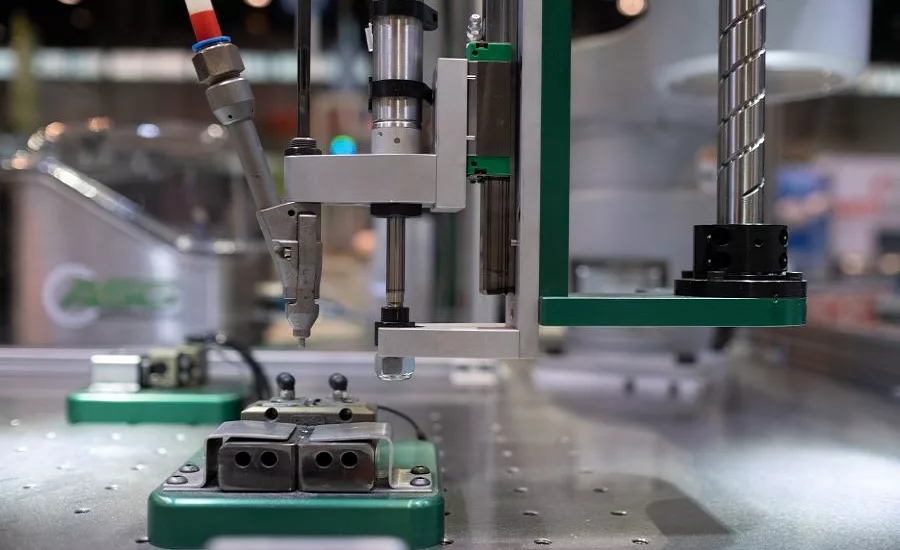
By Nigel Smith
Pick, Purchase and Program Your First Industrial Robot
January 10, 2020

Robots aren’t always given a favorable representation in pop culture. In Stanley Kubrick’s 2001: A Space Odyssey (1968), homicidal supercomputer HAL 9000 demonstrates how a robot could conspire against its human colleagues. Thankfully, industrial robots aren’t quite as menacing. Here is some advice to manufacturers to make their first robotic investment.

Pop culture aside, robots don’t disappoint. After their first industrial robot installation, manufacturers come back to TM Robotics time and time again to add further automation to their factories. Given that robots boost productivity, profitability and quality, it’s no surprise they are rife. In fact, it is estimated three million industrial robots will be in use globally by 2020, according to the International Federation of Robotics (IFR).

Unfortunately, small-to-medium sized manufacturers are often unwilling to invest in their very first robot — after all, they are hardly inexpensive. Thankfully, taking the automation plunge doesn’t have to be a worrisome process.


Choosing Your Machine

First things first, what do you want your robot to do? The desired application will determine which kind of robot is required. A , for instance, would be most suited for compact pick-and-place operations; whereas palletizing applications may require a six-axis machine that boasts a heavy payload.

That said, several factors should be contemplated beyond robot type. They include the operation, payload, number of axes, reach, accuracy, cycle time, inertia. The Ingress Protection (IP) rating should also be taken into account, a metric used to define the sealing effectiveness of electrical enclosures against foreign bodies like dirt and moisture. Careful calculation of these nine parameters should be the first step of any robot investment.

It may be time consuming but collecting this data accurately will streamline your search for the best machine. This approach is preferable to relying on estimations, which can have disastrous results. A common mistake is failing to take end-of-arm-tooling (EOAT) into the equation when determining a robot’s payload. Grippers, drills and soldering equipment can add significant weight to a robot, with the potential to push the load over the machine’s maximum lifting capacity. Suddenly, poor calculations mean that you’re left with a machine that is too feeble to fulfill its role.


Making Your Purchase

Similarly, budgets shouldn’t be estimated. Robot investments often go far beyond the initial price tag. As well as the purchasing cost, factories may need to create a segregated work cell or buy additional power units before a robot can be deployed. Not to mention variable expenditures — such as labor, energy, materials and ongoing maintenance — that are required to operate the robot long-term.

In fact, when investigating the true cost of robotics, TM Robotics found that, according to a report by the Boston Consulting Group, manufacturers should budget for three-times the robot’s price tag.

Don’t be afraid to ask for guidance when determining the cost and nine parameter requirements of your robot. Robot suppliers aren’t like the used car salesmen of the automation world — and any that behave in such a way should be actively avoided.


Programming Your Robot

Parting with your cash isn’t necessarily the most daunting part of a robot investment, however. Instead, a common objection from manufacturers is unfamiliarity with programming languages. While installing a robot usually isn’t as simple as plug-and-play, most don’t require a huge amount of programming knowledge, either.

Powerful but simple simulation tools with offline programming function can be beneficial. However, it is also vital to decide who will be responsible for maintaining the robot and ensuring they are trained. Opting for an easy-to-program robot software, like that provided by TM Robotics, the end user can benefit from extensive training to ensure that robot programming and control is simple, even for engineers embarking on their first industrial robot project.

Combined with a teach pendant — a control box for programming the motions of a robot— completing routine maintenance and adjustment becomes a pain free process. In fact, over 90% of robots use these tools. For technicians and engineers, this makes them an unintimidating piece of tech.

Kubrick’s representation of a malicious robot in 2001: A Space Odyssey may not be entirely accurate in today’s manufacturing world. And, fortunately, your first robot purchase doesn’t have to be quite so intimidating.

KEYWORDS: automating packaging lines choosing a robot industrial robots

Share This Story

Nigel smith tm robotics 200

Nigel Smith is managing director of Toshiba Machine distributor, TM Robotics. www.tmrobotics.com.

Recent Comments

Custom Boxes

You are right, this is very important before...

You can find many inspiration from Instagram app...

Check out Honista app

Great Article!

Subscription Center
  • eMagazine Subscription
  • Manage My Preferences
  • Newsletters
  • Subscription Customer Service
  • Online Registration

More Videos

Sponsored Content

Sponsored Content is a special paid section where industry companies provide high quality, objective, non-commercial content around topics of interest to the Packaging Strategies audience. All Sponsored Content is supplied by the advertising company and any opinions expressed in this article are those of the author and not necessarily reflect the views of Packaging Strategies or its parent company, BNP Media. Interested in participating in our Sponsored Content section? Contact your local rep!

close
  • Hand Holding Various Semaglutide and Insulin Injection Pens for different stages of the treatment.
    Sponsored byInline Plastics

    How GLP-1 Is Reshaping Food Packaging, and Why It Matters More Than You Think

  • A stack of clear plastic containers, the bottom full of mixed fruit
    Sponsored byInline Plastics

    Packaging Trends Shaping 2026: Where Trust Is Won

Popular Stories

Podcast | Packaging EPR’s 2026 Reality Check” with guest Anna Kendall headshot and title. Also pictured Cardboard boxes on conveyor belt.

PODCAST | Packaging EPR’s 2026 Reality Check

Main image for podcast with Kevin Kelly regarding Flexible Packaging for Produce. Main image includes Kevin Kelly’s headshot and an image of potatoes in a bag incorporating 30% PCR content.

Looking Forward to Global Pouch Forum

Logo for New Earth Ventures

Atlantic Packaging Launches New Earth Ventures to Accelerate Packaging Technology

See the Top 100 Food and Beverage Packaging Companies of 2026

Products

Advances in Sustainable Food Packaging Technology

Advances in Sustainable Food Packaging Technology

See More Products

Packaging Perspectives Podcast

Play Packaging Strategies' captivating WordPlay game, PackStrat! There's a new word every Tuesday.
×

Keep the info flowing with our Newsletters!

Get the latest industry updates tailored your way.

JOIN TODAY!
  • RESOURCES
    • Advertise
    • Contact Us
    • Directories
    • Store
    • Want More
  • SIGN UP TODAY
    • Create Account
    • eMagazine
    • Newsletter
    • Customer Service
    • Manage Preferences
  • SERVICES
    • Marketing Services
    • Reprints
    • Market Research
    • List Rental
    • Survey/Respondent Access
  • STAY CONNECTED
    • LinkedIn
    • Facebook
    • YouTube
    • X (Twitter)
  • PRIVACY
    • PRIVACY POLICY
    • TERMS & CONDITIONS
    • DO NOT SELL MY PERSONAL INFORMATION
    • PRIVACY REQUEST
    • ACCESSIBILITY

Copyright ©2026. All Rights Reserved BNP Media, Inc. and BNP Media II, LLC.

Design, CMS, Hosting & Web Development :: ePublishing