
Packaging Strategies logo
search
cart
facebook twitter linkedin youtube
  • Sign In
  • Create Account
  • Sign Out
  • My Account
Packaging Strategies logo
  • FEATURED
    • Brand Packaging
    • Extended Producer Responsibility
    • New Products & Materials
      • Featured Products
    • Packaging News
    • Packaging Perspectives Podcasts
    • Steve Fairfield Innovation Award
    • Supply Side
    • Top 100 Food & Beverage Packaging Companies
      • Submit Your Company
  • FLEXIBLE PACKAGING
  • VERTICAL MARKETS
    • Beer / Wine / Spirits Packaging
    • Beverage Packaging
    • Candy / Confectionery
    • Dairy Food Packaging
    • FoodService Packaging
    • Household Packaging
    • Meat / Seafood Packaging
    • Personal Care Packaging
    • Pet Food Packaging
    • Pharma / Medical Packaging
    • Produce Packaging
    • Snack Food Packaging
  • MATERIALS
    • Adhesives / Sealants
    • Beverage Multipacks
    • Blister Packaging
    • Cans & Bottles
    • Closures/Lids
    • Films & Coatings
    • Labels
    • Material Converting
    • Paperboard / Corrugated / Cartons
    • Rigid Containers
    • Sustainable Packaging
  • MACHINERY
    • Automation / Controls
    • Case Forming / Packing / Sealing
    • Cartoning
    • Coding / Marking / Printing
    • Conveyors
    • Form-Fill-Seal / Filling & Closing
    • Inspection / Detection / Vision
    • Labeling
    • Unitizing / Palletizing
    • Robotics
    • Track & Trace / Serialization
  • DIRECTORIES
    • Packaging Strategies Resource Guide
    • Flexible Packaging Buyer's Guide
  • EVENTS
    • Converters Expo
    • Converters Expo South
    • Global Pouch Forum
    • Industry Events
    • Webinars
  • MORE
    • Videos
    • Book Store
    • Classifieds
    • Custom Content & Marketing Services
    • eXTRA Newsletter
    • Market Research
    • PACKSTRAT Wordplay
    • PS Resource Guide
    • Sponsor Insights
  • EMAG
    • eMagazines
    • Archived Issues
    • Contact Us
    • Advertise
  • SIGN UP!
Prepared Foods

What I Learned from My Freezer
By Stephen Dombroski
What I Learned from My Freezer

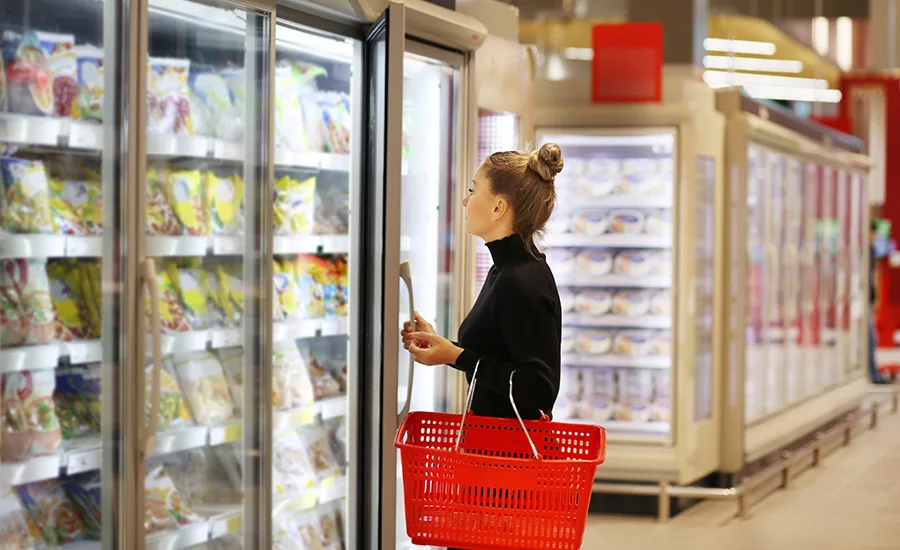
Image Courtesy of Getty Images

October 19, 2020

Like most people around the world, my family and I have been doing whatever we can to adjust to life under the restrictions that have been put in place to address the COVID-19 pandemic. One of the first things we did was determine what supplies we needed to buy to prepare ourselves for a world where we might not be able to leave our house. The first task was to go through our inventory of frozen food.

As I was sorting through the food, I couldn’t help but notice the many different types of packaging. There were boxes, bags, bags packed in boxes, loose food in boxes, packages shaped for specific foods and just random packaging that didn’t seem to fit any of those categories. It is incredible how much of the food in our freezers is either packed into a box (these were the ones I noticed with freezer burn) or put in a bag then in a box. I wondered why the loose food in boxes was not bagged and why the bag-in-the-box packages even needed a box. Why not just put a sticker on the bag or make a graphically attractive bag like so many other food items?

Food packaging has evolved significantly over the last 35 years. There have been amazing innovations on many fronts that were designed to appeal to changing consumer tastes, improve food quality and safety, preserve the environment and promote sustainability, provide companies with new ways to advertise and make their products stand out in the grocery stores. However, what my freezer cleaning project illustrates is that there is more to be done. There are still a great many improvements that can be made in packaging in the areas of quality and efficiency. Most importantly, these changes can improve the effectiveness of the supply chain.

Let’s start with the loose food packed in cardboard boxes. Cardboard boxes are not airtight and therefore can jeopardize food quality and safety through things like freezer burn, etc. Secondly, the boxes take up more space than they need to. Flexible bags or pouches allow for airtight packing and save space. These bags can be packed in shipping cartons, allowing improved inventory effectiveness, with more products able to fit on trucks and more bags able to be stocked in store freezers and display units.

Flexible bags are already very popular and common in food packaging, especially for frozen foods. There are various styles and many times depending on the product and the manufacturer, they are created in the same packing area where the food is being packed. Rolls of clear film are loaded on the machine, the packing unit is created and the food is packed. Labels are then put on the package, and into a shipping container they go. Manufacturers can also automate the processes to improve efficiency, as well as purchase pre-made bags and tailor them to their needs.

To reiterate, a good amount of the food in my freezer was packed in clear bags and then placed in a box. I am not sure what purpose that serves. The film is a bit thinner than what is used for bags that are packed without the additional box, but it seems more than substantial enough to protect the food inside. Eliminating the box would save space for the consumer, the retailer and the manufacturer. The cost savings from eliminating the box would be huge as plastic film is less expensive in most cases than cardboard. By eliminating the box, more bagged product could fit in the shipping carton, which would increase the amount of product per truckload. This could potentially reduce shipping costs. The added weight of the additional food would be offset by the reduction in weight from eliminating the carton. Eliminating the box would also simplify the manufacturing process as the boxing of the bagged food is no longer needed, thus reducing production time. These changes would not only improve supply chain and manufacturing performance, the cost savings would directly increase profits.

These changes would also promote sustainability by creating less waste. Plain and simple, while cardboard food packaging can and should be recycled, let’s face it, in many cases it isn’t. Many of the cardboard boxes that are used to pack frozen food end up in landfills. If manufacturers were to use clear bags with stickers for product identification, advertising and nutritional information, the same size bag could be used for multiple products. This change would simplify bills of materials, reduce costs and simplify the purchasing process. The stickers could be created in-house and minimize additional costs for packaging graphics.

If you stop and think about it, the possibilities are endless. Innovations in packaging, especially “flexible” packaging, are evolving to address sustainability issues and appeal to the ever-changing tastes of consumers. An in-depth analysis of this evolution would provide actionable insights and illustrate that flexible packaging can seriously improve the performance of the supply chain. The food industry, specifically food and beverage manufacturers, faces increased disruption and companies have been forced in some cases to change the way they do business. Supply chains have become extremely complex, and there are more added costs than ever before. My freezer consolidation exercise shows that there can be tremendous progress toward the dual goals of minimizing waste in the environment and promoting sustainable behaviors. Packaging manufacturers are, I am sure, doing the same thing, and in the process of implementing packaging solutions, streamlining the supply chain and reducing waste of space, time, inventory and transportation costs.

KEYWORDS: Covid-19 frozen foods packaging packaging innovations warehousing

Share This Story

Stephen Dombroski is the Director – Consumer, Food & Beverage Markets at QAD. Stephen has over 30 years experience in manufacturing that has been focused on the Consumer Products and Food & Beverage Industries.  His career has spanned across the manufacturing, software and consulting industries maintaining a solid focus in Supply Chain Management and Enterprise Systems.  He has assisted Consumer Products and Food & Beverage companies in developing S&OP strategies as well as in the implementation of ERP and Supply Chain Systems.  He has had held a number of key positions with several leading Supply Chain software companies as well as a leading Food manufacturer.  Stephen brings an in depth knowledge of manufacturing operations and is well versed in many manufacturing systems:  ERP, Supply Chain Planning, Supply Chain Network Design, and APS (Advanced Planning & Scheduling) are just some of areas of expertise. 

Recent Comments

Custom Boxes

You are right, this is very important before...

You can find many inspiration from Instagram app...

Check out Honista app

Great Article!

Subscription Center
  • eMagazine Subscription
  • Manage My Preferences
  • Newsletters
  • Subscription Customer Service
  • Online Registration

More Videos

Sponsored Content

Sponsored Content is a special paid section where industry companies provide high quality, objective, non-commercial content around topics of interest to the Packaging Strategies audience. All Sponsored Content is supplied by the advertising company and any opinions expressed in this article are those of the author and not necessarily reflect the views of Packaging Strategies or its parent company, BNP Media. Interested in participating in our Sponsored Content section? Contact your local rep!

close
  • Hand Holding Various Semaglutide and Insulin Injection Pens for different stages of the treatment.
    Sponsored byInline Plastics

    How GLP-1 Is Reshaping Food Packaging, and Why It Matters More Than You Think

  • A stack of clear plastic containers, the bottom full of mixed fruit
    Sponsored byInline Plastics

    Packaging Trends Shaping 2026: Where Trust Is Won

Popular Stories

Podcast | Packaging EPR’s 2026 Reality Check” with guest Anna Kendall headshot and title. Also pictured Cardboard boxes on conveyor belt.

PODCAST | Packaging EPR’s 2026 Reality Check

Logo for New Earth Ventures

Atlantic Packaging Launches New Earth Ventures to Accelerate Packaging Technology

Main image for podcast with Kevin Kelly regarding Flexible Packaging for Produce. Main image includes Kevin Kelly’s headshot and an image of potatoes in a bag incorporating 30% PCR content.

Looking Forward to Global Pouch Forum

See the Top 100 Food and Beverage Packaging Companies of 2026

Products

Advances in Sustainable Food Packaging Technology

Advances in Sustainable Food Packaging Technology

See More Products

Packaging Perspectives Podcast

Play Packaging Strategies' captivating WordPlay game, PackStrat! There's a new word every Tuesday.
×

Keep the info flowing with our Newsletters!

Get the latest industry updates tailored your way.

JOIN TODAY!
  • RESOURCES
    • Advertise
    • Contact Us
    • Directories
    • Store
    • Want More
  • SIGN UP TODAY
    • Create Account
    • eMagazine
    • Newsletter
    • Customer Service
    • Manage Preferences
  • SERVICES
    • Marketing Services
    • Reprints
    • Market Research
    • List Rental
    • Survey/Respondent Access
  • STAY CONNECTED
    • LinkedIn
    • Facebook
    • YouTube
    • X (Twitter)
  • PRIVACY
    • PRIVACY POLICY
    • TERMS & CONDITIONS
    • DO NOT SELL MY PERSONAL INFORMATION
    • PRIVACY REQUEST
    • ACCESSIBILITY

Copyright ©2026. All Rights Reserved BNP Media, Inc. and BNP Media II, LLC.

Design, CMS, Hosting & Web Development :: ePublishing