Few elements of a package are more important than the label. Labels convey critical information about a package’s contents, in addition to helping market the product in a consumer context. Improvements in this area have come in the form of materials, technology, and machinery. Learn more about the latest in labeling.
The second annual report explores how marketers use QR Codes, how consumers engage with them and the benchmarks shaping QR Code adoption across industries.
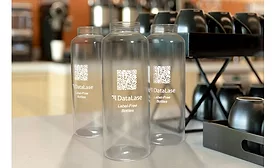
The combined advantages—including label-free decoration, elimination of consumables, customization options, reduced packaging waste, and simplified end-of-life processing—offer a solution for brands looking to minimize their environmental impact while improving production efficiency.
In this article, Sharat Potharaju of Uniqode provides brands with valuable tips on how to prepare for 2D barcode requirements coming down the pike. More than just a compliance task, the new labeling landscape will redefine the role of packaging.
From monitoring the temperature of perishables to facilitating the reuse of food containers, track-and-trace technology is an increasingly critical component of packaging.
We present some of the most intriguing stories that surfaced in 2025. From pharmaceutical packaging to foodservice packaging to the shipment of perishable goods, track-and-trace technology plays a critical role, as the following stories illustrate.
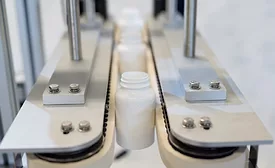
An aid in compliance with 21 CFR 111 and 21 CFR 117, which comprises the Food Traceability Rule, the BCV1 Bottomless Conveyor automatically captures plastic, glass, and metal bottles from a conveyor, suspends them between dual hugger belts, and moves them above a printer.
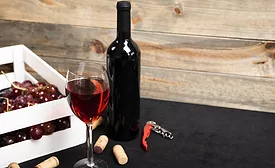
TricorBraun WinePak also uses a sophisticated Lifecycle Analysis (LCA) tool to evaluate the full supply chain impact of the bottles included in its EcoStep catalog.
With a limited release of 10,624 bottles, one for each of the Babe's plate appearances, the bottle is a gorgeous blend of Art Deco-inspired design and interactive technology that pays homage to the finest baseball and bourbons of the 1920s.
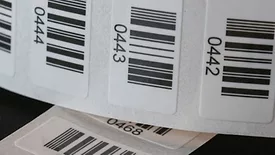
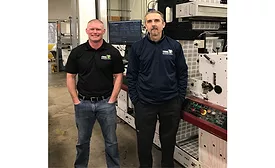
The company now operates three K600i units in its Cleveland, Ohio facility — two 22-inch dual-bar units and one 17-inch single-bar unit — enhancing its ability to produce high-quality variable data and sequential barcoded labels at greater speeds and volumes.