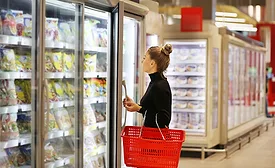
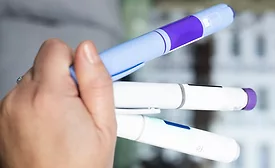
GLP-1 medications are changing how consumers eat—and that shift is quietly reshaping food packaging. Here’s what it means for portion sizes, formats, and the future of grab-and-go.
June 1, 2026
Consumer behavior is shifting dramatically due to GLP-1 medications, leading to smaller portion sizes and intentional eating. Food businesses must realign packaging strategies to meet these new demands, emphasizing flexibility, freshness, and food safety to succeed.
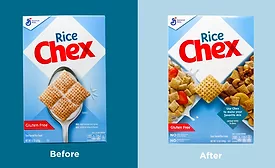
In the new design, they’ve cleverly utilized the checkerboard aesthetic to create a split-screen feel—on one side is a bowl of Rice Chex with milk and strawberries, on the other a bowl of Chex-heavy snack mix.
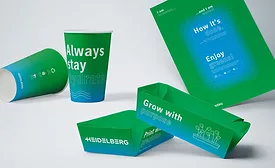
The process developed jointly by Solenis and HEIDELBERG enables the industrial, partial and therefore cost-effective application of barrier coatings to paper packaging.
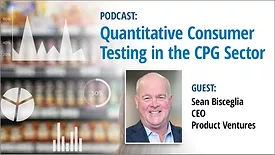
Sean Bisceglia, CEO of Product Ventures, says the traditional focus group of 25 or 50 people is not sufficient when it comes to deciding whether to pour millions of dollars into launching a new product.
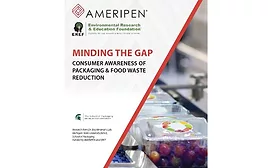
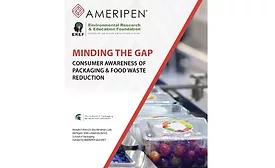
In this article, AMERIPEN’s Dan Felton offers additional insights on a recent study gauging consumers’ understanding of the role of packaging in food waste reduction.
New white paper aims to illuminate the role that packaging can play in reducing household food waste while providing insight into consumer knowledge of packaging’s value.
Survey found that recyclable carton packaging solutions are the preferred option for many consumers, with over half of respondents favoring this material due to its ease of recycling.
A recent consumer survey reveals that a considerable amount of uncertainty surrounds how to be truly eco-friendly when it comes to purchasing and disposing of ready-to-eat food packaging.
Nine months into 2023, there is still a lot of work to do as far as reducing consumer confusion surrounding eco-friendly packaging – and reducing unnecessary packaging “waste” going to landfills.