
Meeting Retail & Consumer Demand for Food Packaging Conformity
Daniela Verhaeg, a Product Inspection specialist with Mettler Toledo (mt.com/us), explains how advanced detection technologies can meet retailer and consumer demand for packaging conformity in the food sector.
Why is packaging conformity so important in the food industry?
Correct packaging, according to specification, is a given in the food sector. It’s about ensuring safety and compliance, and upholding brand reputation.
Conformity of packaged food takes many guises, but the fundamental requirement is that the food is free from unwanted contaminants and high quality; the outer packaging must be accurate and the label correctly positioned; plus, the product needs to be within the correct weight tolerances. Failure to achieve these expected standards can result in supermarkets and other retailers rejecting products and cancelling supplier agreements, expensive recall costs and further consequences of non-compliance with food safety and labeling regulations.
Non-conforming packaging can also result in accelerated food deterioration, with customers potentially unaware that they are consuming spoiled foodstuff. That can have a huge impact on brand image and reputation, as well as financial implications.
How much consideration do consumers give to how food is packaged and what it looks like on the shelves?
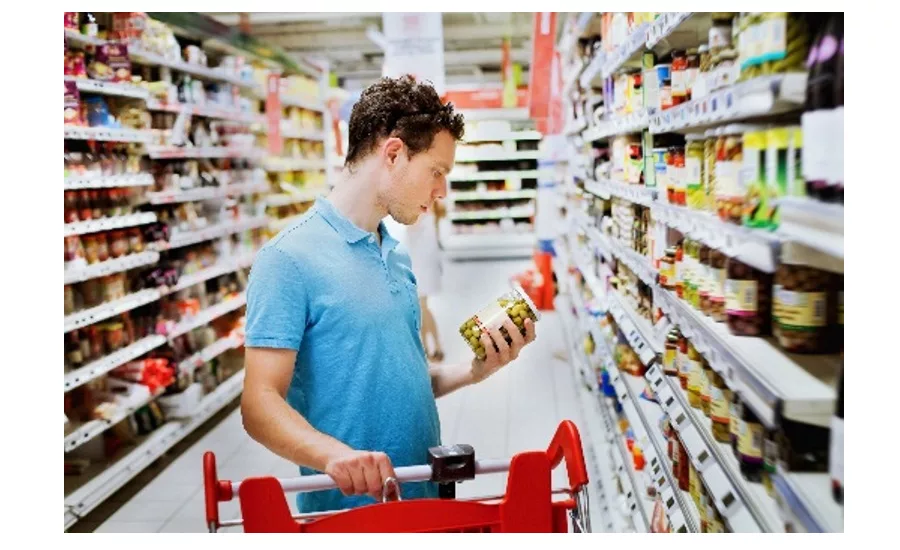
Food packaging is very important for consumers. They expect the products and packages that they buy to be perfectly presented, with no defects, and to accurately reflect the values advertised at the time of purchase. Conformity acts as a means of ensuring customers get what they’ve paid for: for example, that a metallic or plastic component such as a toy is contained within a cereal box, or to ensure that each package contains the correct number of items.
A lot of customer loyalty is based on repeatable appearance, so it is essential that the product is identical to the previous time the consumer selected it. Consistency gives comfort to the consumer, and it acts as a means of continually meeting their individual expectations. Gaining consumer confidence and loyalty takes time, but it can be quickly lost and is a struggle to regain.
Has ensuring food conformity become more difficult as brands have introduced new types of sophisticated packaging to enable them to stand out in crowded retail environments?
There’s no doubt that manufacturers face a rapidly evolving food industry. They are under pressure to produce more intricate combination food options, at competitive prices, packaged in new innovative and sustainable materials, and supplied in smaller batches to quickly accommodate consumers’ changing tastes. This, coupled with stringent food and labeling regulations, industry codes of conduct, plus everyday business concerns add to the pressure. Integrating advanced product inspection solutions into robust food safety management processes can overcome some of these challenges by ensuring that packaging conformity is right first time.
How does technology make it easier for food manufacturers to deliver packaging conformity?
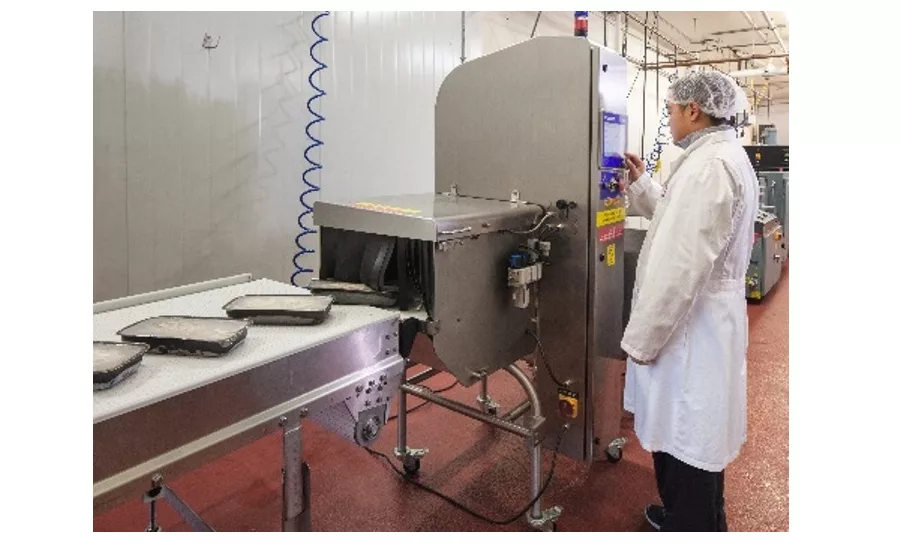
Safety is the starting point. To protect the wellbeing and health of consumers, all packaged food must be free from unwanted contaminants. This is delivered through a combination of technologies - primarily metal detection and x-ray systems - which are used to detect and remove contaminated packages from production lines, at high throughputs. The crucial consideration here is to select the correct detection technology based on the potential types of contaminants, and the nature and format of the packaged products.
Another major area is checking the integrity of the product. Packaged food can be compromised if the integrity of the seal or cap is not upheld. For example, if the closure is misaligned or dense product is trapped under the seal (or film) then this can lead to spillage, spoilage or risk of bacterial contamination. Here, the solution would be a combination of advanced vision systems and x-ray technologies, both of which perform a range of in-line integrity checks to ensure product quality.
There has been some real innovation with x-ray technology. Can you give some additional examples of how it might be used to delivery conformity of packaged foods?
X-ray inspection has become one of the primary means of delivering packaging conformity. For example, following the final sealing process, x-ray technology can be used to inspect for missing items within the primary or secondary package.
In the primary package, this can range from counting sausages to ensure the correct amount are in one pack to checking for promotional giveaways in cereal packets and identifying the presence of a plastic measuring scoop in infant formula containers. Within secondary packaging, x-ray systems are installed at the very end of the line, before dispatch, to check that each box contains the correct number of primary packs. This ensures complete product integrity.
X-ray technology can also be used to deliver accurate fill levels, even within multi-packs. The technology is so sophisticated that if one yoghurt drink was underfilled but another one was overfilled within the same pack due to a processing issue further up the line, then the x-ray system would identify this as a quality issue.
Why is weight such an important factor when it comes to packaged food conformity?
Regulations have evolved to protect consumers from short weights or measures, so each package must be within pre-defined tolerances. In this area, checkweighing technology is a crucial tool used by food manufacturers and processors, as it has the capability to inspect each package in real time and rejects any under- or overfilled packs for further investigation and, if possible, reworking. This avoids customer dissatisfaction, reduces product giveaway and protects profits.
Ultimately, the greater the weighing precision, the smaller the loss of product and bottom line profits. The checkweigher rejects any under- or overfilled packs, based on predetermined content weight. This enables the manufacturer to investigate the cause, for example it may identify filling problems within the processing stage, and facilitates reworking of product.
For increased automation, modern checkweighers have a feedback option for controlling of upstream filling machines, or ‘fill heads’, that detects trends away from the target content weight. The technology automatically adjusts the connected filling machine back to the original specified weight, thus avoiding costly giveaway from the start of the production process.
And how else can technology be used to ensure that manufacturers and retailers don’t fall foul of these regulations?
Gross mass measurement checks the overall weight of each pack and will reject any non-conforming products outside of a specified weight range. However, zoned mass measurement using x-ray detection should be applied when multiple areas need to be inspected and the mass of individual items inside the pack must be examined - for example each compartment of a ready meal. This is important as, during processing, an underfill in one compartment (for example, rice) could be compensated by an overfill in another compartment (for example, curry sauce). In this instance, the full weight of the ready meal may meet weight requirements and, thus, remain undetected by a checkweigher; but it would be rejected by x-ray technology which is capable of assessing the individual components for conformity.
Labeling and outer package integrity are other areas where non-conformity of packaged food can occur. How can technology ensure that, for example, labels contain the correct information and are positioned where they are meant to be?
Configured to an individual manufacturer’s packaging conformity requirements, vision inspection technology can be an extremely valuable tool when it comes to ensuring the positioning and content of labels, even at high production speeds. In the first instance, such systems can ensure that the right label is attributed to the correct package and that all the information is correctly displayed. That’s absolutely crucial to ensuring consumer safety around ingredients and allergens.
Label position is important, too. It ensures that the brand image is maintained through repeatable appearance, which is important to consumers. And vision systems can be used to track lot number, barcodes and use by date for efficient tracking of products throughout the supply chain.
It sounds like conformity is delivered through a combination of technologies – metal detection, x-ray, checkweighing and vision. Why is effective integration of such systems so important?
If manufacturers and brand owners are to consistently produce conforming packaged food, they need to implement a combination of advanced product inspection technologies, in tandem with robust food safety management programs and quality assurance processes. That’s the route to ensuring consistency and reliability, time after time. Ultimately, that’s the way to meeting retailer and consumer expectations, and to build a sustainable business.
Looking for a reprint of this article?
From high-res PDFs to custom plaques, order your copy today!