Four Factors Propelling Growth for Pouch Packaging
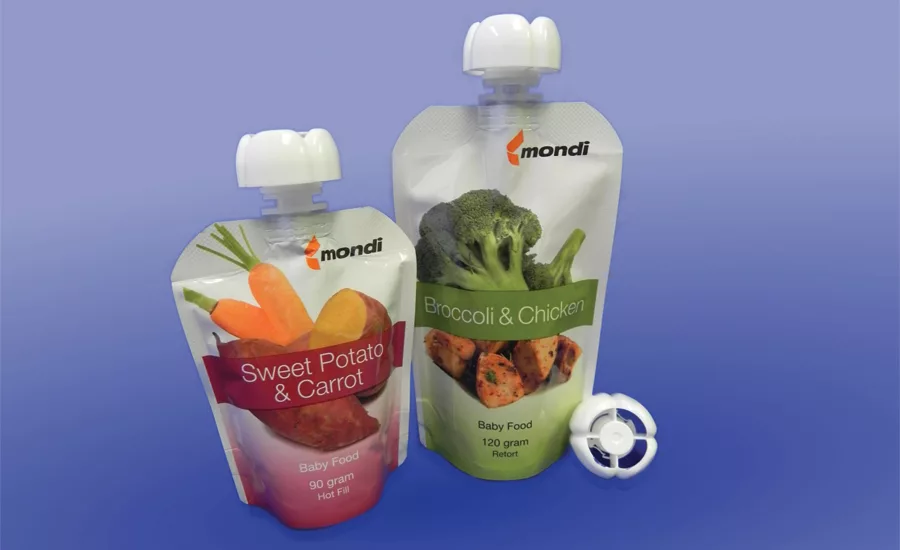
Design innovations are driving pouch popularity. A new type of pouch closure is the choke-avoidance safety cap for baby food and children’s snacks. Photo courtesy of Mondi North America.
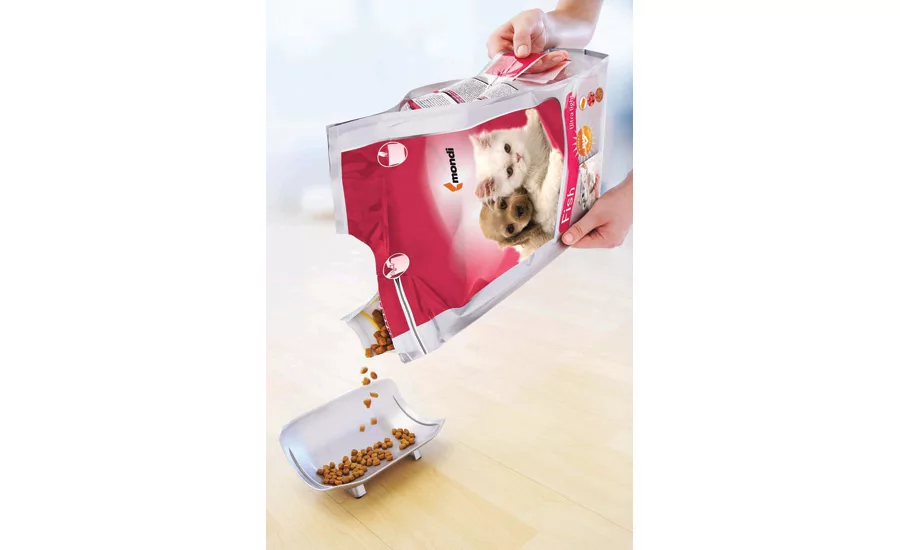
Pouches give packagers a wide array of printing options, enabling them to feature sharp, colorful graphics to enhance their brand image. Photo courtesy of Mondi North America.
Whether consumer packaged goods brands are making an initial foray into pouches or expanding their use, it’s important to stay current on key developments. Notable advancements are happening in pouch design, seal and barrier properties, printing and sustainability.
Each pouch innovation promises to keep this packaging type on its strong growth trajectory. On a global scale, the pouch market is expected to grow 6.2 percent per year through 2018, reaching $37.3 billion, according to The Freedonia Group Inc.’s January 2015 study, “Plastic Film.” In the United States, pouch demand will increase 4.6 percent annually to reach $9.4 billion by 2018, predicts Freedonia. This means pouches could represent almost half of U.S. flexible packaging sales in the next three years.
Here are four drivers of pouch packaging’s strong expansion.
1. Pouch Design
Many brand packagers are benefiting from pouch design versatility. Pouches can be printed, via rotogravure or high-definition flexographic processes, on all sides with vivid colors for enhanced shelf appeal. Perhaps even more importantly, pouches literally can be formed to fit a brand’s needs, responding to consumer lifestyle trends.
Consider consumer responsiveness to single-serve and recloseable food packages. These features appeal to both senior and Millennial consumers who are concerned about wasting food. It also can be easier for seniors to handle and open small, single-serve pouches than larger bags, containers or jars with lids.
Pouches can be fitted with handles, zippers, easy-tear openings, spouts, straws, spoons and caps, to name just a few types of closures and fitments. They can be formed into different shapes for handling ease and distinctive shelf displays. Pouches offer portability and convenience for consumers at home and on the go. For example, in the home, they can eliminate the need for separate containers to microwave or store food. Away from home, pouches provide flexibility for parents to feed children — or let toddlers and young children feed themselves — without a lot of mess. Design innovations have led to pouch openings that only allow food to dispense when the consumer sucks on the pouch. Also, new choke-avoidance safety caps are designed to be too large for a child to swallow, and they feature air vents to allow breathing if a cap does become lodged in the throat.
Brand packagers who cater to active consumers are leveraging pouches for novel applications, such as powders that can be quickly mixed with water and blended into energy-boosting protein shakes — all self-contained within a single-use, disposable package.
Some brands have made a clear financial case to transition rigid or semi-rigid packaging lines to pouch form/fill/seal (f/f/s) lines, confident of return on their investment. Most are opting to purchase pre-made pouches and invest in new filling machinery. Yet others have chosen to use third-party converters with diverse filling line capabilities to fill pouches to their specifications. With these various approaches, CPG companies can determine the type of pouch material and design that best serves their target application.
2. Seals and Barriers
Pouch material advancements and stringent seal integrity are enabling brands to guarantee greater freshness, longer shelf life and less food spoilage for more types of products. The food and beverage industry, the largest pouch market, has been the primary beneficiary of these developments. Freedonia found that food packaging film is experiencing the fastest growth in the films industry, “driven by expanding popularity of pouches for a variety of food items.”
Most food pouches are made of laminated films, or “laminates.” Today, there are more laminates that can withstand high autoclaving temperatures required for sterilization or pasteurization. Some are transparent films that allow for clear-window pouch designs. In addition, some pouches are formed of laminates engineered to resist staining from acidic substances, such as tomato sauce and wine. As a result, there are more pouch material choices available for food and beverage brands.
New pouch materials also are making inroads into fresh produce packaging. High-barrier plastic laminates, some constructed with up to nine super-thin layers, allow certain gasses to pass through while blocking others. This composition enables an appropriate moisture level to stay in the pouch, keeping produce fresh while preventing fog build-up that could impede the consumer’s product view.
Given new innovations, it is important for brand packagers to discuss their desired shelf presentation and shelf life with pouch suppliers. Older assumptions about what can and cannot be achieved with pouches may no longer hold true. For example, with nano-coating technology, pouch suppliers can offer stronger barrier properties in clear film. Nano-coating is a process whereby tiny particles, designed to create a unique barrier layer, can be coated onto a pouch laminate with a printing press. The process is cost competitive because it relies on equipment most integrated pouch suppliers already own.
Nano-coating has helped clear films close the shelf-life gap with foil and metalized films for some pouch applications. While aluminum foil and metalized films continue to offer the strongest barrier properties, and therefore the longest shelf life, their opacity precludes pouch transparency. By comparison, clear film pouches present brands with creative printing options that support strong branding and offer content visibility. Both can convey a greater sense of product freshness and quality to the end consumer.
Brand packagers should ask pouch suppliers about 100 percent in-line inspection of retort pouches as well as some other types of pouches that will be filled with hot or cold food and beverages. Brands require total confidence, supported by documented evidence, that every pouch will withstand high-temperature sterilization while maintaining air-tight seal integrity. Top pouch suppliers often are certified by the National Food Laboratory LLC (NFL) or other independent testing organizations. The NFL conducts tests to ensure that suppliers’ pouches meet the highest standards for leak-proof, hermetically sealed performance. A perfect seal is necessary to prevent bacteria from growing inside the pouch. Leading suppliers usually can provide proof of additional burst testing and immersion biotesting of their pouches.
3. Printing Methods
For brand packagers, pouch printing is a huge focus. With so much riding on brand presentation, it’s helpful to understand the basic advantages and disadvantages of different pouch printing methods. The good news is that virtually every pouch printing option provides an opportunity for the brand message to pop on the shelf.
Ten-color rotogravure printing is the gold standard, offering the greatest color and design possibilities. It is typically used in retort pouch applications because it can withstand the sterilization process. Because of set-up costs and time, this method is ideal for high-volume quantities of 200,000 pouches or more.
New high-definition flexographic printing also presents strong pouch branding prospects. Some brand marketers may associate flexo printing with its standard form, in which rounded dots apply ink, sometimes creating ragged edges or pitted color areas. However, with high-definition flexo printing, flattop dots can produce sharper, life-like images and highly legible type. Because it is easier and less costly to swap out flexo printing plates versus rotogravure plates, this printing method is economically feasible for smaller runs of 15,000 to 20,000 pouches.
Extended gamut printing is another option that can provide photorealistic results with strong contrasts. A type of flexo printing, it uses a seven-color process to generate 85 percent of the 1,800 PMS colors. With standard four-color process printing, only 50 percent of the PMS colors are possible to create.
4. Sustainability
Finally, pouches leave less of an environmental footprint by some sustainability metrics. For example, according to Flexible Packaging Association (FPA) data, beverage pouch production consumes anywhere from 0.54 to 2.90 fewer mega joules of energy per 8oz container than the manufacture of comparable glass bottles/metal caps, plastic bottles/caps and aluminum cans. Also, FPA findings say that less CO2 is emitted during production of pouches versus these other packaging types.
Empty pouches are lighter and less bulky to transport and require less space to store. There is a 26:1 ratio in truckloads needed to transport unfilled glass jars versus unfilled flexible pouches, with both capable of packaging equal amounts of product, according to DuPont data cited by the FPA.
The FPA also presents compelling evidence that pouches offer a more efficient product-to-packaging ratio and occupy less landfill space than some other packaging types.
In conclusion, pouches can provide competitive advantages for brand packagers. With manufacturing technology and material advances, their value proposition in terms of shelf appeal, shelf life and sell-through promises to keep yielding great returns.
Looking for a reprint of this article?
From high-res PDFs to custom plaques, order your copy today!