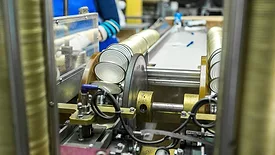
Stefan Welker, Strategic Segment Manager, Rigid Packaging, at Industrial Physics, discusses how targeted reduction strategies can help beverage manufacturers optimize resources without compromising quality.
Stefan Welker of Industrial Physics discusses how targeted reduction strategies can help beverage manufacturers optimize resources without compromising quality. Welker posits that few categories illustrate the balancing act of resource reduction more clearly than metal cans.
From monitoring the temperature of perishables to facilitating the reuse of food containers, track-and-trace technology is an increasingly critical component of packaging.
We present some of the most intriguing stories that surfaced in 2025. From pharmaceutical packaging to foodservice packaging to the shipment of perishable goods, track-and-trace technology plays a critical role, as the following stories illustrate.
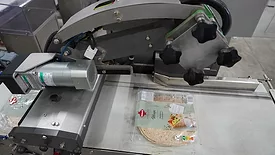
Recent announcements regarding packaging for core quesadilla ingredients — including tortillas, cheese, and spinach — got me to thinking about one of my favorite Mexican dishes.
I occasionally help in the kitchen at home, and quesadillas are among my signature dishes. They’re quick, hot, cheesy, and tasty (in my humble opinion). Some recent packaging announcements about the main quesadilla ingredients — tortillas and cheese — got me thinking about this culinary favorite.
Direct-to-Object printing, inks that withstand water immersion, and cylinder embellishments are just some of the innovations helping beverage companies meet their packaging needs.
With just a few weeks of summer remaining — and with coolers full of ice-cold beverages by the lake soon to become a distant memory — I thought exploring how coding, marking, and printing experts are helping beverage companies meet their packaging needs would be fun.
Switching from traditional multi-material flexible packaging to recyclable mono-material packaging supports sustainability but brings unique printing challenges. The right coding technology can render packaging both eco-friendly and high-performing.
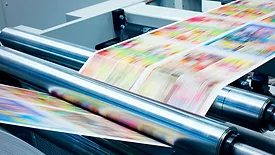
In this insightful article, Tom Herold of Unilux explains the unparalleled advantages of stroboscopic inspection for print professionals working with high-speed roll-to-roll presses.
Imagine being able to freeze motion on a high-speed printing press running at hundreds of feet per minute, allowing you to spot the tiniest imperfection with nothing more than your naked eye. This isn't science fiction — it's the remarkable capability of stroboscopic inspection technology.
Paul Edwards of INX International explains why digital label printing is gaining steam. Reasons include improved image quality, embellishment options, and digital chipping away at certain analog advantages in terms of economic run lengths.
We recently interviewed Paul Edwards, Vice President of the Digital Division at INX International Ink Company, to understand why digital print is expected to grow to 15% of label sales by 2025.
The embrace of robotics in packaging makes sense as the industry aims for efficient, error-free production. By effectively utilizing this technology, companies can improve every stage of the packaging process while addressing workforce turnover concerns. Recent advancements in robotics have led to significant improvements.
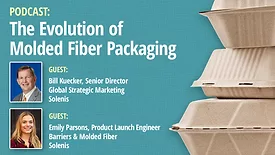
With bans on PFAS and polystyrene popping up across the packaging landscape, Bill Kuecker and Emily Parsons of Solenis explain how a new generation of molded fiber is responding to the call for sustainable packaging options that also offer high performance.
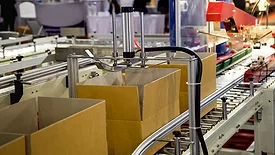
From machines that can form cartons, cases or trays to robotic case-packing systems, 2024 was a year of unrivaled innovation when it comes to case forming and packing.
The Case Forming Machinery Market is projected to grow from $2.78 billion in 2022 to $4.12 billion by 2030, driven by demand for automated and sustainable packaging solutions. Learn more about cutting-edge forming and packing solutions.