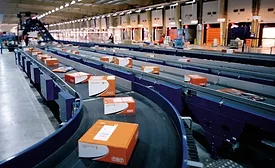
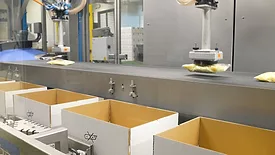
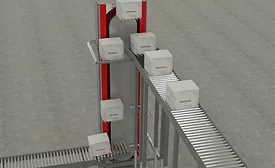
The strategic consolidation under one brand name enables customers across industries including food and beverage, logistics, packaging, automotive, airports and more to access a broader range of conveyor technologies through one trusted partner.
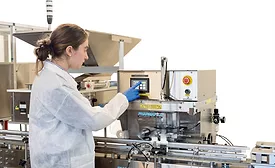
The right conveying system can support consistent throughput and protect product integrity, while the wrong choice can introduce bottlenecks and undermine overall packaging-line performance. Learn about the respective advantages of belt conveyors, vibratory conveyors, and horizontal-motion conveyors.
Bobby Bauman of AMMEGA discusses the strategic role of conveyor belts in packaging, explaining how they meet complex demands while boosting productivity and safety.
Bobby Bauman of AMMEGA discusses how each stage of packaging demands specific belt materials and performance properties, noting that packaging belt applications span converting, form-fill-seal, filling and capping, case packing, palletizing, and warehousing.
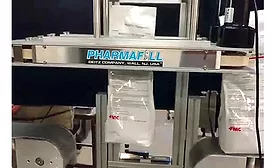
Ideal for food, chemical, pharmaceutical, and other manufacturers seeking increased filling and packaging line speed and efficiency, the bottomless conveyor is often specified for printing on the bottoms of bags of coffee, tea, protein powder, dried nuts and fruits, pet treats, lawn and garden powders and other products.
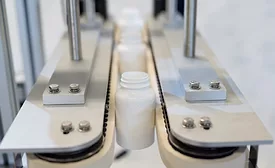
An aid in compliance with 21 CFR 111 and 21 CFR 117, which comprises the Food Traceability Rule, the BCV1 Bottomless Conveyor automatically captures plastic, glass, and metal bottles from a conveyor, suspends them between dual hugger belts, and moves them above a printer.
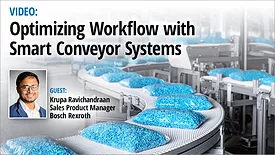
In this interview, Krupa Ravichandraan of Bosch Rexroth explains why the company’s VarioFlow belt conveyor line is perfectly suited for the mass transport of unstable or bulk film-packed products. It also is suited to large or wide products, such as packs of paper towels.
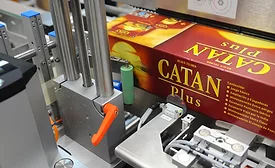
Sealing board games, playing cards and puzzles with sealing labels instead of wrapping them in film is a more sustainable path, and HERMA offers a solution.
 RSS
RSS