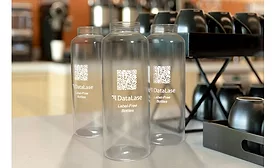
The combined advantages—including label-free decoration, elimination of consumables, customization options, reduced packaging waste, and simplified end-of-life processing—offer a solution for brands looking to minimize their environmental impact while improving production efficiency.
Mergers & Acquisitions, construction on new facilities, and packaging for dates ranked among the most popular stories in 2025. Find out which other stories made the Top 10.
TIPA’s Daphna Nissenbaum makes three bold predictions on compostable packaging as it relates to small-format sachets, paper-based packaging, and the bags used by retailers.
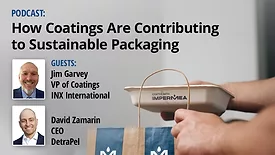
We recently spoke to Jim Garvey, Vice President of Coatings at INX International, and David Zamarin, CEO of DetraPel, to discuss how the latest coating technologies improve packaging functionality while simultaneously addressing sustainability.
Under the legislation, companies may make environmental claims only if they are scientifically verified and recognized by existing recycling or composting programs.
In this interview, Ashley Burkle of Identiv explains how technologies such as ultra-thin NFC inlays are enabling a new balance between form and function. Integrated discreetly within materials, these technologies preserve the visual brand goals of packaging while adding subtle intelligence and interactivity.
Position paper identifies six policy levers — Funding Model, Funding System Design, Fee-Setting & Eco-modulation, Performance Targets, Responsible End Markets, and Covered Materials — that states can use to build structured, harmonized EPR systems.
 RSS
RSS

.webp?height=168&t=1767810098&width=275 "TIPA-IndustryOutlook-2026")