
Machinery
Selecting the Right Sanitary Conveyor Platform for Food Packaging Application
Conveyors are a prime target for contamination, but understanding the nuance of how equipment works with specific applications ensures upgrade success.
Sanitary conveyors are designed to carry a variety of raw and packaged goods, including mushrooms.
Image courtesy of Dorner
Regulatory legislation such as the Food Safety Modernization Act (FSMA) has been the driving force behind food manufacturers and packagers taking a closer look at their conveyor systems to ensure compliance and hygienic standards are making the grade. The result of these reviews has led companies to identify troublesome areas in their processes and initiate plans to make capital improvements in their equipment. That’s a positive step in reaffirming confidence with customers that their products are produced safely with minimal risk of contamination.
The key to conforming to FSMA standards, however, is installing the right equipment for specific applications. It’s good when a company proactively chooses to upgrade its processing or packaging equipment, but the expectations of a cleaner, hygienic line can be diminished if the conveyors aren’t properly matched for the application. Having a better understanding of the relationship between different styles of sanitary conveyors and how they are designed to work within specific applications will ensure the upgrade meets production objectives and hygienic goals.
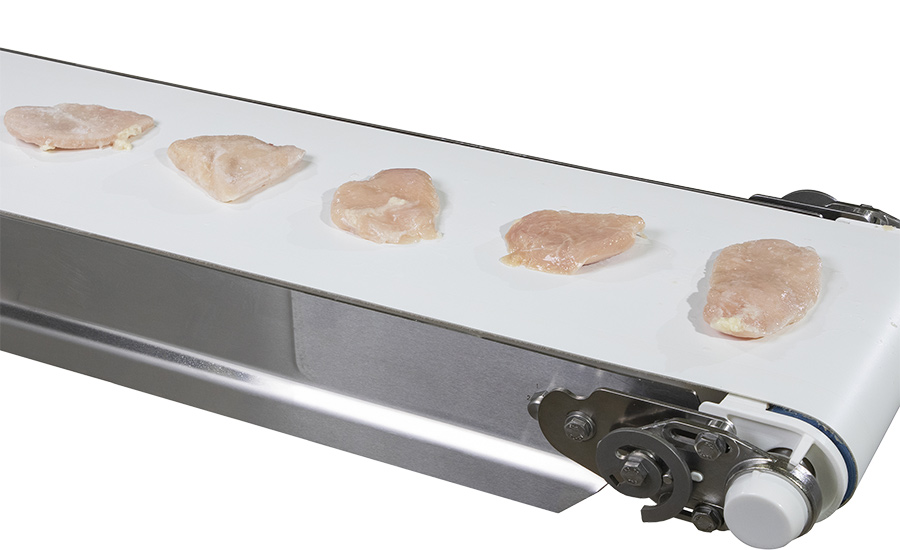
Image courtesy of Dorner
What Makes a Conveyor Sanitary?
Enacted back in 2011, the FSMA aims to ensure the U.S. food supply is safe by shifting the focus to preventing contamination from occurring in the first place. As such, this law has really shined a spotlight on the kinds of equipment food manufacturers and processors are using in their facilities — such as conveyors.
By their very nature, conveyors are a prime target for contamination due to the role they play in food manufacturing, especially on the processing side where raw food and ingredients are being moved. Small nooks, crevices and fasteners on conveyors can become catch points for water, food particles and other particulates — all of which are perfect breeding environments for bacteria to grow. That’s why so much scrutiny has been placed on conveyors as areas for upgrade and improvement.
The goal of a sanitary conveyor is to, as best as possible, eliminate any chance of contamination. A sanitary conveyor works to eradicate those areas where contamination can happen.
So, what exactly makes a sanitary conveyor hygienic? Since the rollout of the FSMA, many people rushed out and purchased stainless steel conveyors believing they were sanitary and hygienic, because after all, it’s stainless steel. That’s hygienic, right? Not exactly.
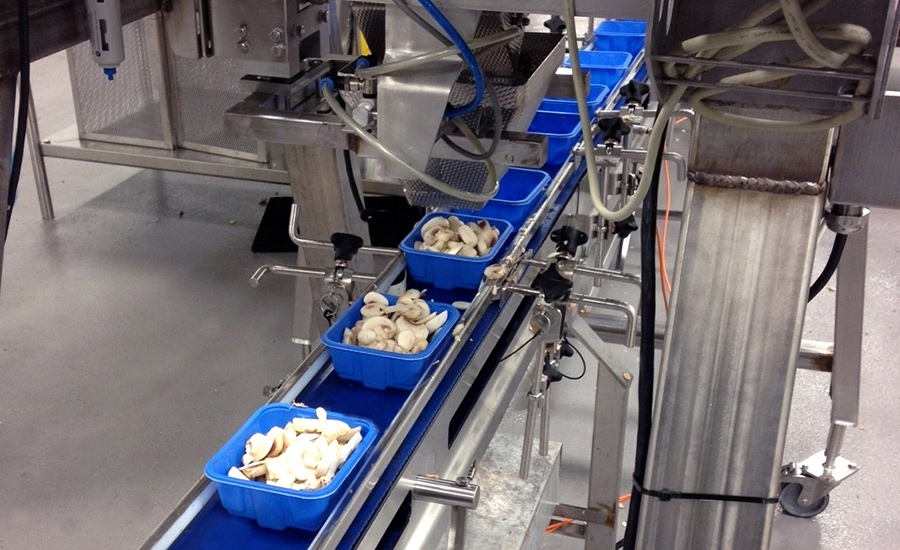
Image courtesy of Dorner
Stainless steel is certainly the right material to use in applications that call for regular washings with light chemical cleaning agents. A basic stainless steel conveyor can be cleaned throughout the day as needed, but it’s not necessarily sanitized. That’s because sanitizing a conveyor involves an entirely different process than simply washing it down, and the effectiveness of achieving a sanitized conveyor depends on the way it was initially designed.
A true sanitary conveyor gives the user complete and easy access to all areas of the conveyor for cleaning. By being able to reach every part of the conveyor with water, soap or other cleaning agents, there’s no chance of product collecting and growing into bacteria. In addition, components must be able to withstand much harsher environmental conditions such as caustic solutions or high-pressure fluid streams.
Furthermore, a sanitary conveyor removes harbor points, blind spots and flat level surfaces within the frame structure, and replaces them with rounded cross members preventing food and water from accumulating. This design element is important because it doesn’t take long for components within the conveyor, like the motor, to begin heating up collected food particles and speeding up contamination. Also, the overall openness of the frame is designed so that any product that falls off the belt will land either in a catch pan below or on the floor; nothing gets trapped within the frame.
Beyond FSMA, some conveyor OEMs put their sanitary designs to the test through third-party testing validation. Organizations such 3-A Sanitary Standards and others have established the bar for hygienic attributes in conveyors — which further distinguishes a sanitary platform from a standard stainless-steel model.
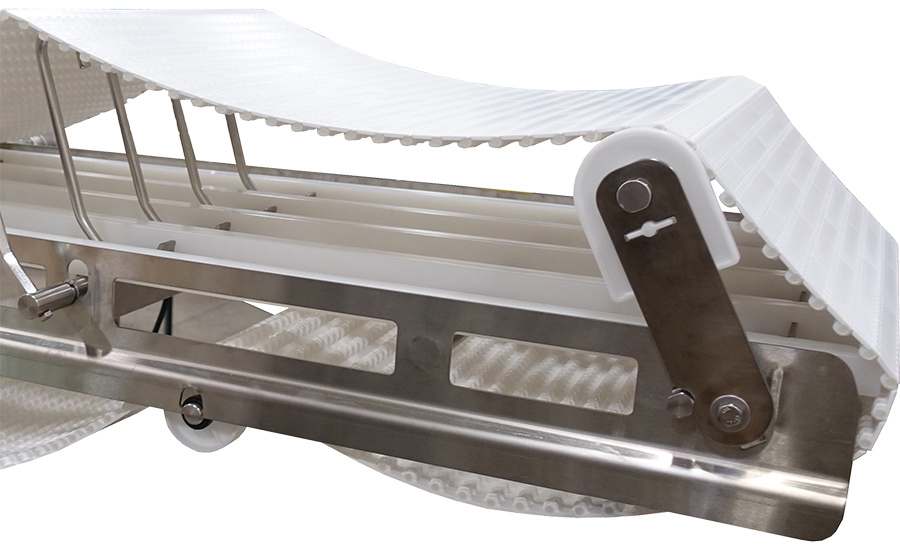
Image courtesy of Dorner
Different Environments Call for Different Sanitary Conveyors
Now that you understand what makes a conveyor system sanitary and hygienic, let’s take a look at the applications and environments they’ll be operating in. It’s important to identify where the conveyor will be located along the processing/packaging line to select the right platform.
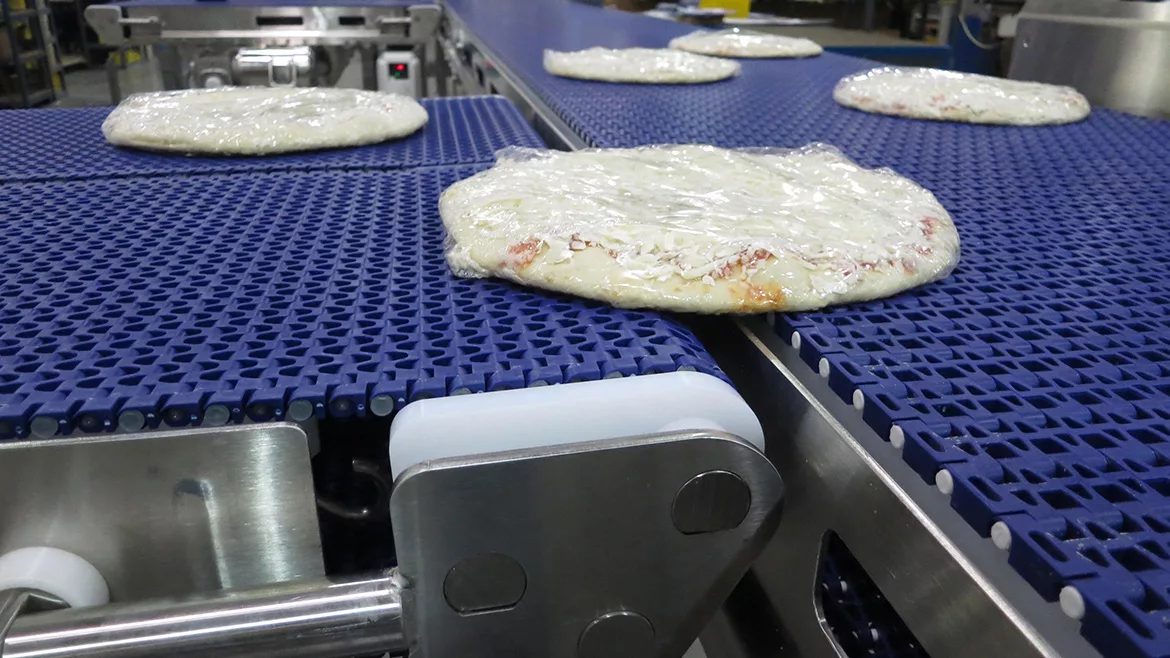
For applications that involve moving raw food and ingredients, such as those typically found early in the manufacturing process, a more advanced sanitary platform is required. For example, if the conveyor is moving raw chicken, that platform frequently needs to be completely disassembled and sanitized with appropriate cleaning agents.
As product continues along the processing line and enters the final stages of where its packaged and being prepped for shipment, the hygienic concerns of contamination are not as great as those in the early stages of production. While a sanitary platform is still called for in this stage of production, it doesn’t need all the strong hygienic attributes. In this area of moving sealed products, conveyors often accumulate corrugated dust from the cardboard packaging, and that can be cleaned by light washdown without chemicals or simply wiping down the conveyor.
The important takeaway here is to match the proper conveyor to the appropriate level of sanitation required for the application. In the examples above, both conveyors are sanitary but are built to different hygienic standards.
Installing the Wrong Sanitary Conveyor
The problem of installing the wrong conveyor, e.g., a simple stainless steel model for an application that calls for a strong sanitary, hygienic conveyor, is that it’s going to be a costly mistake in the long run. That stainless steel conveyor likely isn’t designed for heavy washings multiple times daily like a true sanitary conveyor. The belt, motor and bearings, among others, will be prone to premature wear and increased service. That means more down time and added expense. But more importantly, the risk of contamination remains high. Nothing can erode consumer confidence in a brand faster than having a major product recall or highly publicized contamination outbreak. When you add in the role that social media can play in these types of events, bad news spreads fast. Installing the right conveyor for the job can help eliminate these concerns. Here is a listing of applications/industries sanitary-designed conveyors best operate in:
BASIC SANITARY CONVEYOR
General washdown or wipedown, low-pressure cleaning, non-caustic cleaners
- Secondary packaging
- Bakery — cookies, crackers, bread and buns
- Confectionary — bulk candy handling, packaged goods
- Personal care products
- Household chemicals
- Cosmetics
- Beverages (excluding dairy and juices)
- Dry pet food
- Pharmaceutical — dry products
- Medical devices
HYGIENIC SANITARY CONVEYOR
Heavy washdown, low- or high-pressure cleaning, compatible with caustic cleaners
- Primary food packaging areas
- Baking — dough handling and pies/pastries
- Confectionary — enrobing areas, prepackaged goods
- Raw produce handling and processing
- Dairy — fluid milk, yogurt and cheese
- Raw meat, seafood and poultry
- Ready-to-eat foods
- Unpackaged snack foods
- High-moisture pet foods
- Pharmaceutical — wet products
The FSMA is placing much of the onus on companies to ensure their machinery, equipment and manufacturing practices work together to produce safe food products. To do that successfully requires an understanding of the science behind sanitary conveyors and selecting the right platform for your specific application.
Looking for a reprint of this article?
From high-res PDFs to custom plaques, order your copy today!