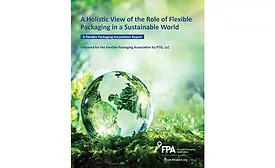
The Flexible Packaging Association (FPA) commissioned PTIS, LLC to provide a holistic view on the sustainability benefits that flexible packaging offers. The resulting report, “A Holistic View of the Role of Flexible Packaging in a Sustainable World,” achieved this goal.
With increasing concerns about food safety and the environment, there are pros and cons to using plastic packaging for fresh foods. Add to that, consumer demand for convenience, and the question becomes even more complicated. A recent study revealed that about one-third of shoppers prefer to buy their fresh foods in plastics containers.
The plastic protective packaging market is projected to pass 9 million tons in 2019, according to a new study. This is due to the focus of manufacturers on streamlining and optimizing plastic protective packaging, to advancements in plastic properties in line with reduced waste.
Nearly all of the world's countries have agreed on a deal to better manage polluting plastic waste, except the U.S., United Nations environmental officials recently stated.
Toray Plastics (America) has joined the SPC, a membership-based collaborative that believes in the power of industry to make packaging more sustainable.
It is a new year — with a new Congress, and many new state legislatures — but the same trade wars and scrutiny over packaging and plastics exists; so, what is the outlook for flexible packing in the U.S.? Still strong and growing.
STO Responsible gives cannabis companies answer to packaging problems. The product line is made with an oxygen-driven additive in the material allowing it to degrade safely without harming the environment, and the packaging is also child-resistant and pet-resistant.
With e-commerce sales predicted to be at an all-time high this holiday season, and online grocery orders expected to increase at least 50 percent, transporting products in a safe and efficient way is more important than ever.