Move over soda, there’s some new bottled (and canned) beverages that have consumers excited about buying beverages again, and one of them is beer, which isn’t a huge surprise. Another is water, but more on that later.
In the packaging business, the subject of environmental impact has been front and center for decades, primarily in terms of products' end-of-life. Packaging that goes to the landfill is targeted for replacement by recyclable, reusable and renewable materials. The goal is to reduce waste.
It is not surprising that in our Top 50 Food Packaging Companies list, Nestlé, Tyson, JBS, PepsiCo and Mars are consistently the top names. The ongoing concern over health is a topic that frequently rises to the top of their lists. Is an increased healthy portfolio the secret to sales growth?
The market for flexible packaging has grown steadily over the last decade, and it is not showing signs of slowing down. The use of plastic in packaging overall has grown 8% since 2012, and bags and pouches have grown 3.5%.
Now celebrating its 20th year, the Global Pouch Forum will be held June 14-16 at the Intercontinental Hotel in Miami, FL. Known for its strong educational agenda, excellent networking opportunities and extensive flexible packaging exhibition space, the forum attracts a large attendance each year.
Consumer focus on wellness, environmental impact and macroeconomic factors such as the growth of the middle class creating more disposable income are shaping the global packaging market, said Charles D. Yuska, president and CEO, PMMI, The Association for Packaging and Processing Technologies.
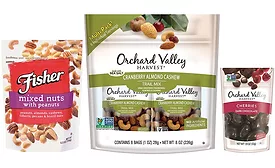
Flexible packaging is everywhere and pouch users know of their benefits. They’re easy to hold, carry, store, pour from, snack from and scoop from. While there are already so many innovations in the segment, there may be just as much opportunity.
For consumer packaged goods companies (CPG), the need to mark and code products at high speeds, with little to no errors, is of increasingly high value.
On May 20, 2016, the FDA announced that the industry will be required to implement a new Nutrition Facts Panel for packaged foods to reflect new scientific information, including the links between diet and chronic diseases such as obesity and heart disease.