AMERIPEN welcomed today’s hearing on the PACK Act, saying that it would establish a uniform federal framework for recyclable, compostable, and reusable claims on consumer packaging.
Cutting back on single-use plastics, using automation and AI to achieve right-sized packaging, and prioritizing household-recyclable materials are among the tools in the company’s arsenal.
Survey notes that 71% of respondents believe fiber-based packaging will be perceived as the most sustainable solution by 2045, citing advances in barrier coatings that are set to unlock food applications that were previously the exclusive domain of plastics.
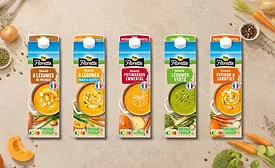
Florette relaunched its vegetable soup lineup in Pure-Pake Sense cartons, replacing PET plastic bottle packaging in a move to reduce waste, increase visibility for retailers and improve practicality for consumers.
Every product is packaged in tin, aluminum or wood with zero plastic and formulated with Mexican-origin ingredients, including five native chiles, tepezcohuite and cactus flower.
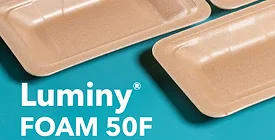
Luminy FOAM 50F is engineered as drop-in replacement for polystyrene, allowing converters to run it on existing extrusion lines with comparable throughput and minimal modification.
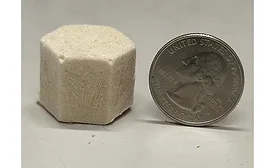
Waste that was swept off a sawmill floor, plant-based binders and beeswaxes created foams with potential for sustainable packaging and building materials.
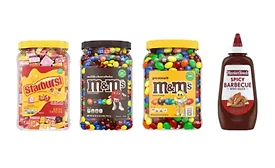
As part of its efforts, Mars has invested hundreds of millions of dollars when it comes to reducing its packaging and making it compatible with current and future regulations.
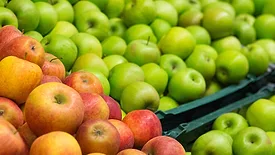
Despite their small and innocuous size, produce stickers are a major focus of new packaging mandates. As policymakers continue to look for viable ways to curb packaging waste and reduce greenwashing, Gary Tee of TIPA Compostable Packaging argues that compostable stickers can address key circularity challenges. Get Gary’s insights.
 RSS
RSS